Chemistry tutor near me in San Francisco, CA
Build confidence through skilled chemistry tutoring
Filters
Level
Topics
Specialities
Price
Education
Tools Used
Special Needs
Curriculum
Level
Topics
Chemistry
Organic Chemistry
Chemical Reactions
Physical Chemistry
Inorganic Chemistry
Analytical Chemistry
Show more
Specialities
Homework help
Test prep strategies
Visual learning
Personalized learning plans
Real world application
Review sessions
Show more
Price
Education
Tools Used
Digital whiteboard
Quizzes
Assessments
Show more
Special Needs
ADHD
ASD
Learning Disabilities
Show more
Curriculum
International Baccalaureate
Common Core State Standards
State-Specific Standards
Show more

Chemistry classes with expert tutors in San Francisco
Mission District, Richmond, Sunset neighborhoods takes chemistry tutoring
Radhika taught 13 days ago
The Tutor and Student reviewed hydrocarbon nomenclature, distinguishing between alkanes, alkenes, and alkynes based on their bonding and general formulas. They practiced naming complex alkenes and alkynes, and were introduced to the concepts of aromatic compounds and Hückel's rule for identifying them. The Tutor requested the student send the course index and textbook details for future sessions.
Alkanes
Alkenes
and Alkynes: Defining Hydrocarbons
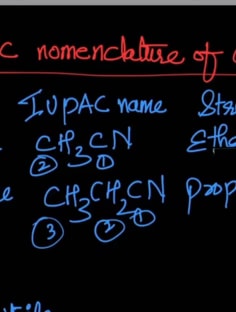
Nomenclature of Alkenes and Alkynes
Hybridization and Bonding in Alkenes/Alkynes
Aromatic Compounds and Hückel's Rule
Simran taught 19 days ago
The Student and Tutor reviewed conformational analysis of cyclic organic molecules, including cyclohexane derivatives with double bonds and heteroatoms. They practiced drawing and analyzing chair and half-chair conformations, explored the anomeric effect, and analyzed fused ring systems to determine the most stable conformers. The session concluded with plans to review bisected and eclipsed conformations.
Half-Chair Conformation
Anomeric Effect
Fused Ring Systems and Conformational Stability
Dr.Trusha taught 24 days ago
The student and tutor worked through a series of practice problems related to chemical thermodynamics, specifically focusing on Gibbs free energy, enthalpy, and entropy. They practiced calculating spontaneity under various conditions and determining the equilibrium constant, with a plan to review additional materials in the next session.
Relationship Between ΔG°
K
and Temperature
Le Chatelier's Principle
Spontaneity Under Varying Conditions (ΔH and ΔS)
Gibbs Free Energy and Reaction Spontaneity
Lipika taught 30 days ago
The student and tutor worked through stoichiometry problems, including balancing chemical equations, calculating moles, and determining mass relationships in various reactions such as combustion and car battery chemistry. They practiced applying molar ratios and molar masses to solve quantitative problems. The session concluded with a plan to address remaining problems in a future class.
Balancing Chemical Equations
Types of Chemical Reactions
Stoichiometry: Moles and Mass Calculations
Molar Mass Calculation
Ionic Equations and Spectator Ions
Vaishnavi taught about 1 month ago
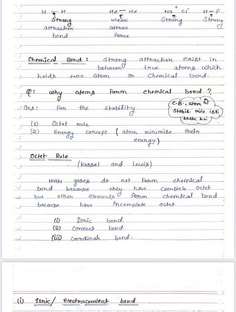
The Tutor guided the Student through drawing Lewis structures for various chemical compounds and ions, reinforcing the octet rule and valence electron calculations. They practiced molecule drawing and identified areas needing further review, with plans to cover naming covalent compounds next.
Lone Pairs vs. Bonding Pairs
The Octet Rule
Valence Electrons and Atomic Structure
Drawing Lewis Structures
Kelechi taught about 1 month ago
The Tutor and Student reviewed intermolecular forces, including London dispersion forces, dipole-dipole forces, and hydrogen bonds, and their impact on physical properties like boiling points. They practiced identifying these forces in various compounds and applying this knowledge to compare boiling points and solubility, and the Tutor began explaining molality calculations.
Intermolecular Forces (IMFs)
Relationship Between IMFs and Boiling Point
Polarity and Solubility
Phase Transitions and Phase Diagrams
Overcome chemistry struggles with test prep in San Francisco


Experienced chemistry tutors near San Francisco for all ages
Catch up on chemistry homework and missed lessons


San Francisco's Chemistry in Innovation, Environment, and Education

San Francisco, California, a city celebrated globally for its trailblazing innovation and iconic landmarks, is profoundly shaped by the intricate and powerful science of chemistry. This essential discipline is the unseen engine behind the city's world-renowned biotechnology sector, its commitment to environmental stewardship, and its leading-edge academic institutions. For students charting a course in science and parents seeking impactful career opportunities, San Francisco’s dynamic chemical landscape offers an unparalleled environment for learning, discovery, and professional growth.
From Foundational Science to a Thriving Career: Chemistry in San Francisco
The journey into chemistry in San Francisco begins with its dense network of prestigious universities that serve as powerful hubs for chemical education and research, attracting top talent from around the world. At the forefront is the University of California, San Francisco (UCSF), a global leader in health sciences where chemistry is applied at the highest levels in pharmaceutical chemistry, biochemistry, and biophysics. San Francisco State University (SFSU) features a robust Department of Chemistry and Biochemistry, offering American Chemical Society (ACS)-approved degrees that provide a strong, hands-on foundation for the demanding Bay Area job market. Complementing these, the University of San Francisco (USF) provides a strong chemistry program within a liberal arts context, excellent for pre-med students seeking personalized, faculty-mentored research. This local academic excellence is further amplified by the immense influence of regional powerhouses like UC Berkeley and Stanford University, whose world-class chemistry departments contribute to the Bay Area's unparalleled scientific ecosystem. For students beginning their journey, the City College of San Francisco offers crucial foundational chemistry courses, serving as a vital transfer pathway to these four-year universities.
This academic knowledge directly fuels San Francisco's most innovative industries, most notably the biotechnology sector. The city is the birthplace of the biotech industry, a revolution sparked by discoveries at UCSF and Stanford that led to the founding of Genentech. Today, the Mission Bay campus of UCSF is a vibrant hub surrounded by biotech companies, from giants like Gilead Sciences and AbbVie to a thriving ecosystem of startups, all of which rely on chemists for drug discovery, synthesis, and quality control. Beyond biotech, chemistry is essential for environmental health. The San Francisco Public Utilities Commission (SFPUC) relies on chemists for advanced water treatment and purification processes, while the Bay Area Air Quality Management District (BAAQMD) utilizes chemical analysis to monitor and regulate air pollutants. The city's burgeoning food-tech industry also depends on chemists for developing sustainable and innovative food products.
For any student, building a strong foundation in chemistry is key to unlocking these opportunities. A great way to start is to visualize the invisible; think of atoms and molecules as tiny building blocks that connect in different ways to build everything around you. Connect what you learn to the world you see. In San Francisco, the rust on the Golden Gate Bridge is a slow chemical reaction called oxidation, and the unique flavor of local sourdough bread comes from the fascinating biochemistry of fermentation. Visiting a place like the Exploratorium can also make chemical principles come to life. As you advance, these foundational skills will open doors to incredible careers in the Bay Area.
Here are the most important steps to take:
- Embrace Undergraduate Research: Actively seek out research opportunities at UCSF, SFSU, or USF. Working in a faculty lab, whether in medicinal chemistry, materials science, or environmental chemistry, provides invaluable hands-on skills and a significant advantage for graduate school or industry applications.
- Target Biotech Internships: The high concentration of biotech and pharmaceutical companies in the Mission Bay area and the broader Bay Area provides immense internship opportunities. Pursuing a role at companies like Genentech or smaller startups gives direct exposure to the industry and allows students to apply their chemical knowledge to real-world problems.
- Develop Interdisciplinary Skills: The most sought-after chemists in San Francisco often possess interdisciplinary expertise. Complementing a chemistry degree with skills in bioinformatics, data science, or molecular biology can open up unique and high-demand career niches, especially in personalized medicine and drug discovery.
- Network Effectively: Utilize university career centers and attend local professional meetups and seminars. The Bay Area's collaborative scientific community offers numerous chances to connect with professionals and learn about emerging opportunities.