

Maths tutor near you in Gold Coast, QLD
Whether a student needs to strengthen fundamentals or prepare for senior exams, online maths tutoring offers focused, one-on-one support. Learners on the Gold Coast work through number, algebra, geometry, and calculus, with NAPLAN and QCE preparation geared toward strong ATAR outcomes. Lessons emphasize real understanding, helping students approach assessments with confidence.
Free Trial
15-days refund
Free tutor swap
No cancel fee
Summary
Podcast

We match you with best tutors for your requirements

Maths tutoring classes happening across the Gold Coast
Classes underway around Broadbeach, Burleigh Heads
Natania taught 11 days ago
The Student and Tutor reviewed key statistics concepts including mean, median, mode, range, quartiles (Q1, Q3, IQR), and outlier identification. They then introduced bivariate data, covering explanatory and response variables, Pearson correlation coefficients, and the coefficient of determination. The session involved extensive practice problems to reinforce understanding of these topics.
Descriptive Statistics: Mean
Median
and Range
Quartiles (Q₁
Q₃) and Interquartile Range (IQR)
Identifying Outliers Using Boundaries
Bivariate Data and Pearson Correlation Coefficient (r)
Coefficient of Determination (R²)
Reshma taught 21 days ago
The session focused on reviewing and practicing quadratic equations, with the Tutor guiding the Student through factorization using the 'X-method'. The Student practiced solving various quadratic problems and clarified common pitfalls related to signs and special cases. Homework was assigned to work on the quadratic formula and analyze graphs for upcoming retests.
Quadratic Factoring: The X-Method
Solving for Roots (Zero Product Property)
Special Cases in Solving Quadratic Equations
Application of the Quadratic Formula
Hussan ul taught 29 days ago
The Tutor and Student explored an International Mathematical Olympiad (IMO) problem centered on number theory concepts, specifically Greatest Common Divisor (GCD) and Least Common Multiple (LCM). They practiced analyzing a recursive process of replacing numbers on a blackboard with their GCD and LCM, using numerical examples to demonstrate the process's termination and the independence of the final product from specific choices. The Tutor encouraged the Student to further explore the problem and similar techniques.
Greatest Common Divisor (GCD)
Least Common Multiple (LCM)
GCD-LCM Identity
Blackboard Game: Number Transformation Rule
Termination of the Blackboard Process
Invariance of the Final Result
Reshma taught about 2 months ago
The Student and Tutor worked through a complex trigonometry problem involving a sine function to determine specific time intervals, and then practiced several application-based trigonometry questions from a test paper. These questions focused on concepts like special triangles and angles of elevation and depression. The Tutor also provided study tips for an upcoming chemistry test.
Solving Sinusoidal Equations for Time
Special Right Triangles (30°-60°-90°)
Angles of Elevation and Depression
Right Triangle Trigonometry (SOH CAH TOA)
Natania taught about 2 months ago
Student and Tutor engaged in an exam revision session covering key Mathematics concepts. They practiced finding equations of parallel and perpendicular lines, solved problems related to networks including the Handshaking Lemma and minimum spanning trees, and reviewed time calculations. The session focused on problem-solving techniques and understanding core principles for each topic.
The Equation of a Straight Line: y = mx + c
Parallel Lines: Identical Gradients
Perpendicular Lines: Negative Reciprocal Gradients
Finding the Equation of a Line: A Step-by-Step Guide
Network Fundamentals: Vertices
Edges
and Degrees
The Handshaking Lemma: Counting Network Connections
Bhawna taught 2 months ago
The Student and Tutor reviewed core concepts in data and statistics, including data definition, population vs. sample, and interpretation of data from tables and tally marks. They practiced converting fractions to percentages and evaluating algebraic expressions with exponents. The next session will focus on mean, median, and mode.
Understanding Data: Population & Sample
Data Representation: Tables & Tally Marks
Converting Fractions to Percentages
Simplifying Fractions
Evaluating Algebraic Expressions with Exponents
Maths tutoring in Gold Coast for ATAR and HSC preparation


Maths tutors near Gold Coast helping every Year 9-12 student
QCE tutors helping students master difficult concepts


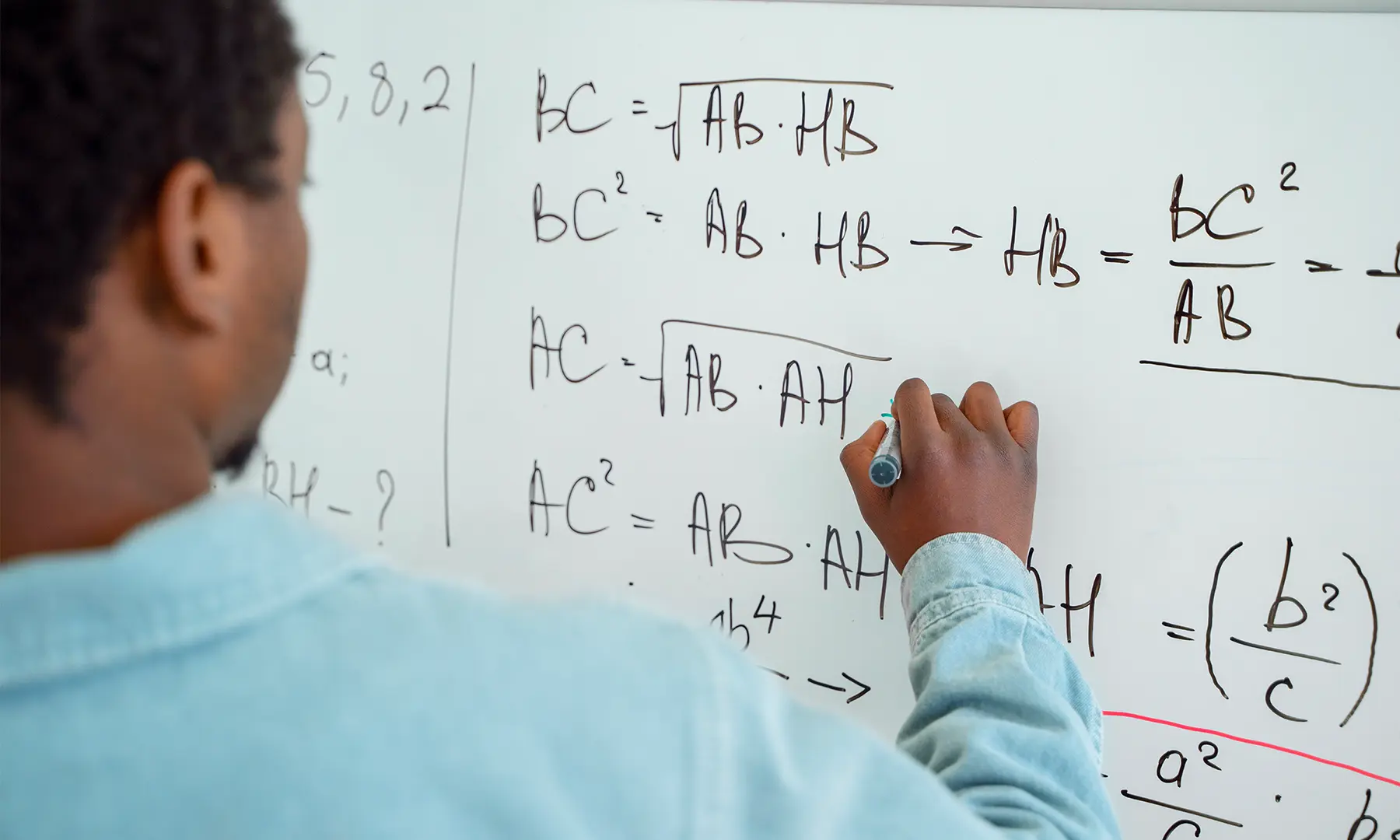
Maths tutors in Gold Coast helping students build lasting skills

The Gold Coast blends lifestyle and learning in a way few cities can. From classrooms near Griffith University to study programs inspired by Gold Coast City Libraries, students of all ages are working to strengthen their maths skills. Yet many learners feel lost when numbers stop making sense. Tutors across the Gold Coast are helping students follow a clear, practical process that turns confusion into progress.
Step 1: Understand how you learn best
Every student learns differently. Tutors in Southport begin by identifying each learner’s strengths and habits. Some prefer visual examples, while others understand better through hands-on practice. Lessons often include interactive activities using shapes and measurements found in real environments like Broadwater Parklands. Discovering a personal learning style builds the foundation for long-term success.
Step 2: Strengthen the basics
Without solid fundamentals, advanced concepts quickly unravel. Tutors near Robina dedicate early sessions to reinforcing arithmetic, fractions, and algebra through structured exercises. Using visual aids and short quizzes, they ensure students master basic logic before progressing. This groundwork helps learners approach complex topics with clarity and confidence.
Step 3: Build problem-solving habits
Memorising formulas rarely leads to understanding. Tutors in Burleigh Heads guide students to think critically about why each step matters. In structured study environments like Bond University Library, learners work through word problems that show how maths applies to everyday situations. These sessions replace guesswork with reasoning, turning difficult questions into logical sequences.
Step 4: Practise consistency and rhythm
Progress grows from small, steady effort. Tutors across Varsity Lakes recommend short daily practice over cramming before exams. Setting mini-goals such as solving ten equations or reviewing one topic per day creates a learning rhythm. Progress logs help students track achievements and identify areas that need more focus.
Step 5: Apply maths to everyday life
Relating lessons to real scenarios strengthens understanding. Tutors in Palm Beach create exercises around shopping budgets, travel planning, or sports statistics. Students calculate distances along Currumbin Creek or explore percentages using game results. These examples make learning enjoyable and relevant, improving both motivation and memory.
Step 6: Prepare for assessments with purpose
Exams can feel stressful when preparation lacks structure. Tutors around Helensvale conduct mock assessments under timed conditions, helping students practise pacing and focus. After each test, tutors review errors and provide constructive feedback. Over time, practice builds familiarity, and real exams begin to feel manageable instead of intimidating.
Step 7: Review and connect old knowledge
Forgetting earlier material is common when new topics appear. Tutors near Coolangatta use spiral revision, briefly revisiting older lessons before introducing new content. This reinforces links between topics, helping students view maths as a continuous story rather than disconnected ideas.
Step 8: Reflect and grow confidence
After completing each topic, tutors encourage reflection. Students summarise what they’ve learned and identify areas for improvement. These self-checks, often done in quiet study settings like HOTA - Home of the Arts, build awareness and independence. Reflection transforms learning from repetition into real understanding.
Step 9: Celebrate progress and set new goals
Recognising growth motivates continued effort. Tutors in Miami end each month by reviewing achievements and setting new goals. Celebrating small wins helps students see progress as part of the process. Goal setting keeps motivation alive, reminding learners that success in maths develops gradually through curiosity and consistency.
Following these nine steps, students across the Gold Coast move from uncertainty to mastery. With the guidance of patient tutors and support from a city that values creativity and education, learners gain not just better grades but confidence in problem solving skills that will serve them far beyond the classroom.


