

Maths tutor near you in Canberra, ACT
From building core skills to senior secondary exam readiness, online maths tutoring meets each student where they are. Learners in Canberra receive one-on-one instruction across number, algebra, geometry, and calculus, with NAPLAN preparation and support toward the ACT Senior Secondary Certificate and a strong ATAR. Every session is tailored to the individual student.
Free Trial
15-days refund
Free tutor swap
No cancel fee
Summary
Podcast

We match you with best tutors for your requirements

Private Maths classes delivered to local learners in Canberra
Private lessons conducted around Kingston, Manuka
Hussan ul taught about 23 hours ago
The session focused on advanced mathematics, including a detailed explanation of circular geometry, discussions on topological dimensionality, and a strategic approach to solving problems in higher dimensions. The Student actively engaged in analyzing a complex IMO geometry problem, demonstrating strong problem-solving intuition. For homework, the Student was asked to watch a video on topology and continue working on the IMO problem.
Circular Geometry Essentials
Topological Dimensionality vs. Euclidean Dimension
The Circumcenter and Perpendicular Bisectors
Generalizing to Higher Dimensions: A Problem-Solving Framework
Tackling Advanced Geometry Problems
Taruna taught 10 days ago
Student and Tutor collaborated on a mathematics assignment focused on designing a railway track using piecewise functions, requiring the integration of exponential, logarithmic, and trigonometric functions with specific start and end points. They discussed a general equation structure to meet these requirements and verified its ability to satisfy the boundary conditions. The Tutor will prepare a Desmos graph for review, and the Student was encouraged to practice inputting piecewise functions.
Railway Track Design with Piecewise Functions
Curve Continuity: Position and Gradient
Establishing a Baseline Linear Track
Integrating Diverse Functions without Disrupting Endpoints
Basic Exponential Function Transformation
Rahul taught 24 days ago
The Tutor and Student worked on solving quadratic equations without a constant term, demonstrating the factoring process. They then progressed to finding the eigenvalues of a 3x3 matrix, which involved calculating its determinant to derive a cubic characteristic equation, followed by using polynomial long division and factorization to find its roots. The Tutor was advised to review the solution after class.
Solving Quadratic Equations by Factoring (Missing Constant)
Eigenvalue Calculation for 3x3 Matrices (A - λI)
Determinant Calculation for 3x3 Matrices
Solving Cubic Equations: Factor Theorem & Polynomial Long Division
Roots and Factors of Polynomials
Reshma taught about 1 month ago
The Student and Tutor reviewed key trigonometry concepts, including trig symmetry, sine/cosine waves, and various problem-solving techniques. They worked through a practice test to identify knowledge gaps, particularly focusing on applying trigonometric identities to solve specific problems. The Student was advised to clarify a discrepancy in a practice test solution with their teacher and continue practicing.
Trigonometric Symmetry & Wave Basics
Fundamental Trigonometric Identity: sin²θ + cos²θ = 1
Finding Exact Values Using Angle Identities
Strategic Test Preparation & Self-Assessment
Reshma taught about 1 month ago
The Student and Tutor reviewed recent math test results, focusing on identifying areas for improvement based on past performance. The session then introduced new trigonometry concepts, including unit circle properties, the CAST rule, and angle conversions. They practiced determining angle measures and their quadrants, including co-terminal angles.
Unit Circle & Angle Conversions
Quadrants and the CAST Rule
Evaluating Trigonometric Expressions in Radians
Co-terminal Angles and Angle Sketching
Exact Values for Special Angles
Cherubim taught about 2 months ago
The Student and Tutor practiced elementary mathematics, focusing on addition and subtraction, solving word problems using visual aids, and creating fact families and number bonds. The Student completed a review of previous homework and received new coloring and arithmetic problems for follow-up homework.
Reviewing Subtraction with Visual Aids
Solving Subtraction Word Problems with Drawing
Fact Families: Linking Addition & Subtraction
Understanding Number Bonds
Solving Basic Addition Problems with Visuals
Identifying Parts & Wholes in Subtraction Word Problems (Advanced)
Maths tutoring in Canberra for Year 11-12 exam success


Local maths tutors nearby Canberra for ATAR success
Experienced tutors preparing students for university entry
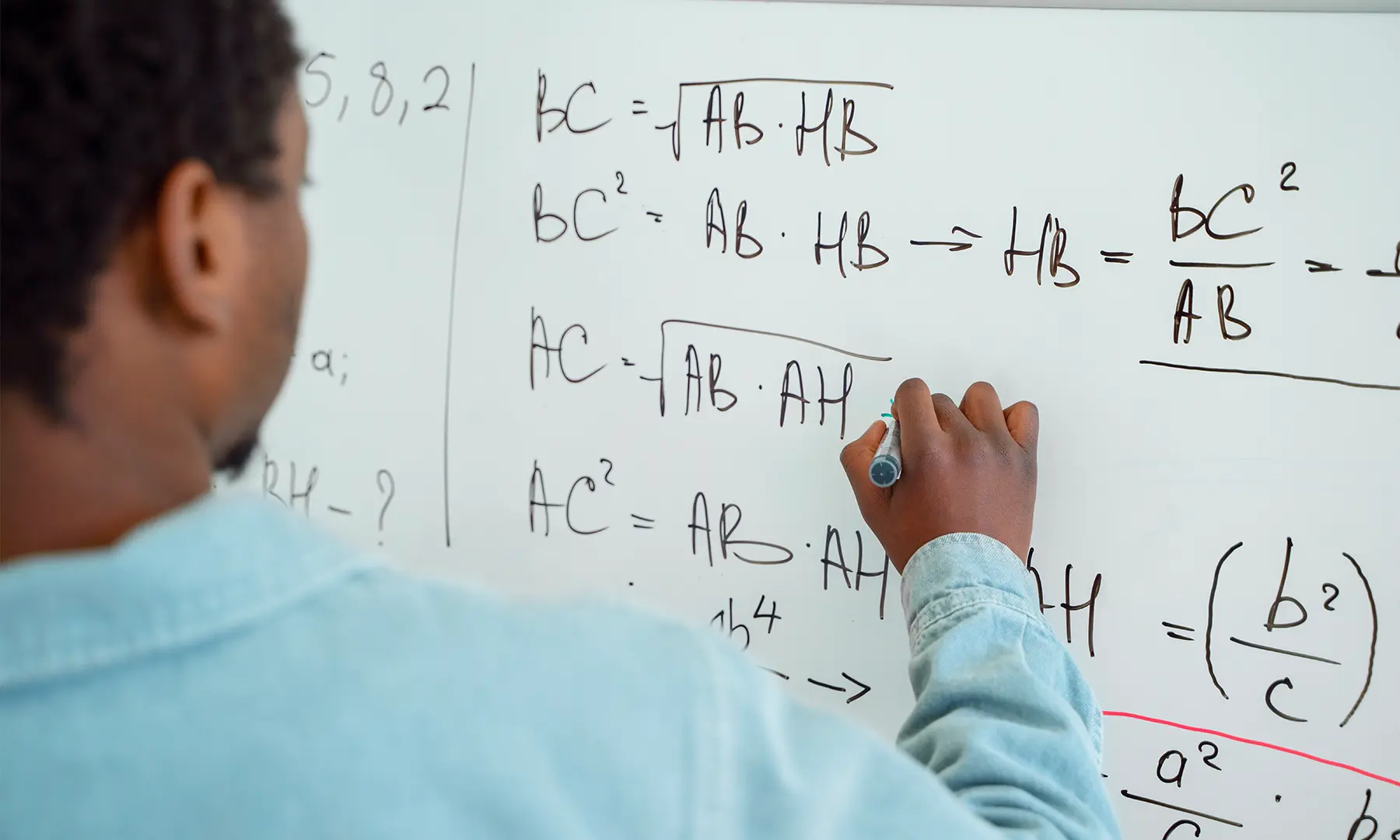


Maths tutors in Canberra helping students grow through insight and progress

Canberra’s education system has long been recognised for its academic strength and analytical approach. From classrooms at the Australian National University to programs at the Canberra Institute of Technology, learners benefit from exceptional academic resources. Yet despite this foundation, many students still struggle with maths. Tutors across the city are now combining data, feedback, and modern teaching insights to strengthen both understanding and confidence.
Trend: Increased demand for maths support
Reports from Canberra Grammar School show a growing number of students seeking extra guidance outside regular lessons. Parents recognise that a single teaching approach cannot match every learner’s pace. Tutors across Civic Square and Kingston respond with diagnostic assessments that identify precise problem areas. By analysing where errors occur, they personalise methods to target specific weaknesses, ensuring each session directly supports improvement.
Insight: Consistent short practice boosts retention
Findings from Canberra City Library show that short, focused study sessions improve memory and accuracy more effectively than long, unfocused hours. Tutors encourage practice intervals, reviewing one concept at a time. When this structured rhythm continues for several weeks, both confidence and recall increase. The message is simple: repetition with focus builds lasting skills.
Trend: Visual learning enhances understanding
Tutors near the Belconnen Arts Centre have found that incorporating graphs, diagrams, and visual mapping helps students grasp complex problems faster. Visual learners respond particularly well to seeing equations translated into shapes or data charts. This shift toward visual representation has made lessons more interactive and accessible for diverse learning styles.
Insight: Real-world application strengthens motivation
Maths becomes engaging when students see its purpose in everyday life. Tutors in Manuka and Braddon design exercises that link numbers to relatable experiences like budgeting, travel planning, or sports statistics. At the National Library of Australia, students analyse real datasets and interpret results. Applying maths to local and practical examples builds curiosity, motivation, and long-term comprehension.
Trend: Collaborative learning drives results
Group tutoring sessions at the Ainslie Arts Centre reveal how collaboration enhances learning. When students explain methods to one another, they reinforce their understanding. Tutors organise structured group activities that involve shared problem solving and strategy discussion. This approach builds communication skills alongside mathematical reasoning.
Insight: Tracking progress improves focus
Tutors across Lyneham use data tracking tools to monitor growth in accuracy, speed, and understanding. Students record results on simple charts that highlight steady progress over time. Seeing their improvement visually motivates them to stay disciplined and builds a sense of achievement that sustains consistent study habits.
Trend: Integration of digital tools
Technology now plays a central role in maths tutoring throughout Canberra. Tutors at the Tuggeranong Arts Centre integrate adaptive learning software that provides instant feedback and identifies patterns of error. This allows tutors to refine explanations immediately. Blending digital tools with personalised teaching keeps sessions efficient, interactive, and tailored to each learner’s needs.
Insight: Balanced teaching creates long-term results
Tutors across Woden Valley stress the importance of combining conceptual learning with practical exercises. Students who understand why a method works before practising how to use it retain knowledge longer. Lessons alternate between discussion, application, and review, helping learners stay both flexible and confident.
Canberra’s maths tutors are leading a quiet shift in how learning happens. By using data-driven insights, visual learning, and steady reflection, they turn small adjustments into measurable progress. Supported by the city’s mix of academic tradition and technological innovation, students are discovering that maths is not about memorisation, it’s about logic, curiosity, and steady improvement. Across libraries, schools, and community centres, Canberra’s tutors continue to help learners turn confusion into clarity, one carefully reasoned step at a time.


