

Physics tutor in Chicago, IL
Master Physics concepts with expert tutors
Free Trial
15-days refund
Free tutor swap
No cancel fee
Summary
Podcast

We match you with best tutors for your requirements

Students in Chicago learn physics from expert tutors
Explored by learners in Gold Coast, River North
Harjinder taught 29 days ago
The session reviewed free fall calculations and extensively covered Newton's First Law of Motion, also known as the Law of Inertia. The Tutor explained concepts such as net force, uniform motion, normal force, and different types of inertia using examples and practice questions. Future scheduling for upcoming sessions was also discussed.
Free Fall and Gravitational Acceleration
Newton's First Law of Motion: The Law of Inertia
Understanding Net Force and Equilibrium
Inertia: The Resistance to Change in Motion
Normal Force: A Contact Force
AMAN taught 2 months ago
The Tutor and Student reviewed projectile motion, including calculating range, maximum height, and time of flight for objects thrown at different levels. They then progressed to understanding the independence of horizontal and vertical motion and began exploring concepts of forces and equilibrium by drawing free-body diagrams and resolving forces into components to solve problems.
Projectile Motion Analysis
Resolving Forces and Equilibrium
Newton's Laws of Motion
Garima taught 4 months ago
Student and Tutor solved two physics problems. The first problem involved calculating the mass of a submerged shipping container with a balloon using principles of buoyancy. The second problem applied the Stefan-Boltzmann equation to calculate the time for net radiant energy emission from skin. The session concluded with a conceptual review of fluid dynamics and heat transfer topics relevant to the student's upcoming examination.
Buoyant Force & Equilibrium in Fluids
Gauge Pressure in Fluids
Heat Transfer by Radiation (Stefan-Boltzmann Law)
Fundamental Fluid Concepts
Bipin taught 5 months ago
The tutor and student reviewed fundamental electrostatics concepts, including charge units and scientific notation operations. They worked through problems related to electric fields, forces, field line sketching, and calculations involving parallel plates, culminating in a detailed explanation of lightning formation and phenomena like thunder and distance estimation.
Lightning: A Natural Electric Discharge
Powers of Ten and Scientific Notation Review
Force and Electric Field Relationship
Electric Field Lines Rules
Electric Field Fundamentals
Garima taught 6 months ago
The student and tutor reviewed physics concepts related to electrostatics and electromagnetism through practice problems. They covered topics like electric fields, potential, induction, Ampere's Law, work done, and common potential. The tutor provided study advice for the upcoming exam, emphasizing reviewing formulas and problem-solving approaches.
Electric Field and Potential
Electrical Induction
Work Done in Moving Charges
Electromagnetic Waves and Maxwell's Equations
DC Circuits and Inductors
Zahoor Ahmad taught 6 months ago
The Tutor and Student worked through physics past paper questions, focusing on interpreting speed-time graphs, calculating resultant forces using vector addition (both graphically and mathematically), and applying Newton's second law. They also reviewed concepts related to friction and the distinction between average speed and average velocity, with homework assigned to prepare for the next session.
Interpreting Speed-Time Graphs
Vector Addition and Resultant Forces
Average Speed vs. Average Velocity
Newton's Second Law of Motion
Reducing Friction and Air Resistance
Physics test prep and homework help near Chicago


Physics tutors near Chicago helping learners
Get personalized help from private tutors in Chicago

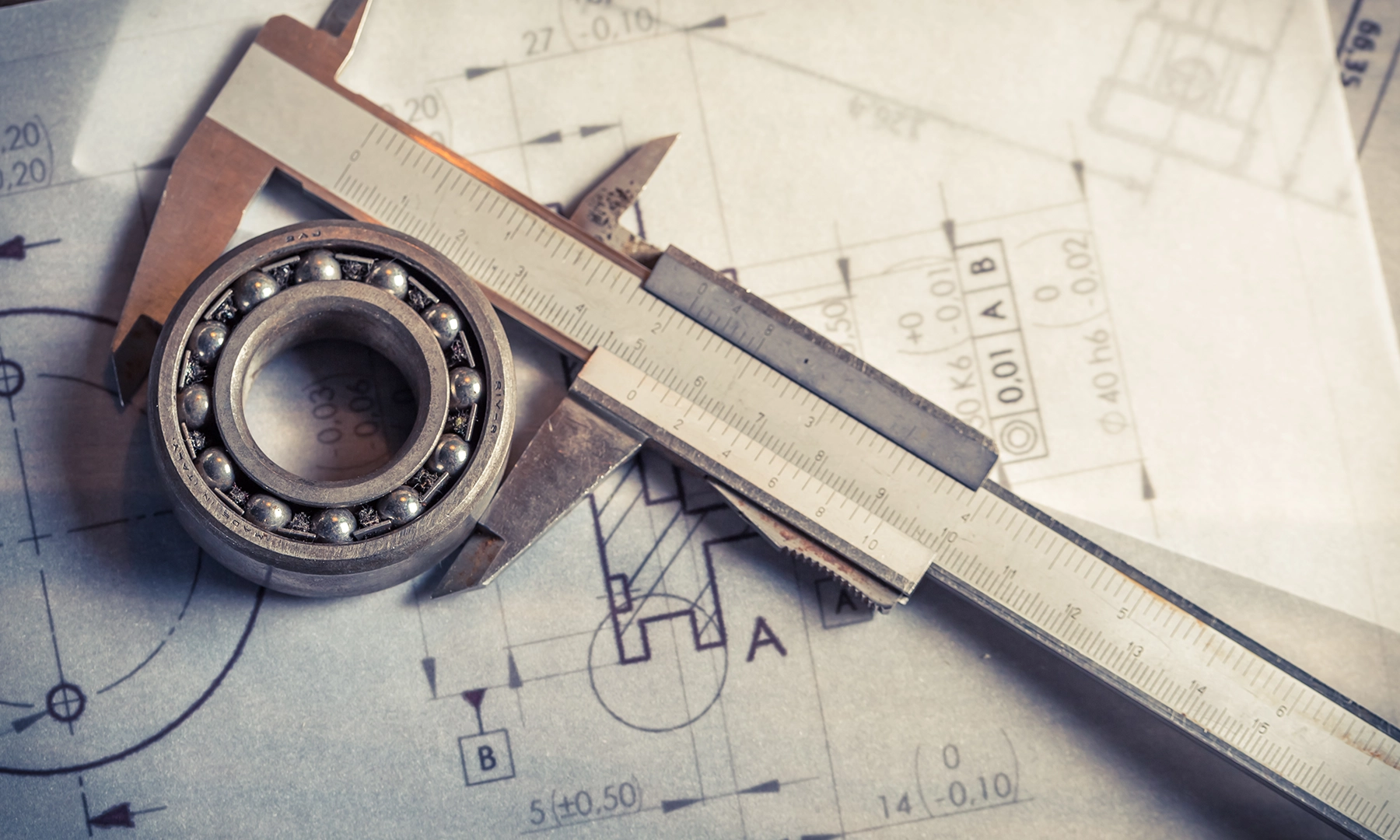

Studying Physics in Chicago - Local Insights and Academic Pathways

Chicago’s schools, universities, and research hubs
Chicago has long been a center for science and engineering in the Midwest, and physics plays a big part in that reputation. The city’s diverse education network, from public high schools to world-class universities, ensures that students at different stages can find the right level of physics education. With a metropolitan population of over 9.4 million, the demand for skilled graduates in STEM fields continues to grow.
High-achieving schools like Whitney M. Young Magnet High School and Lane Tech College Prep offer advanced physics courses, preparing students for AP Physics exams and competitive STEM programs. On the university side, institutions such as the University of Chicago and Illinois Institute of Technology provide pathways into specialized fields like astrophysics, medical physics, and quantum information science.
Chicago is also uniquely positioned near two of the nation’s most important research facilities: Fermilab in Batavia and Argonne National Laboratory in Lemont. These sites don’t just produce world-leading experiments in particle physics and energy systems; they also run workshops, internships, and public science talks that give local students a rare inside look at modern physics in action.

Why Chicago offers a distinct edge for physics learners
The city’s public science events, such as the Chicago Science Fest, make advanced physics concepts approachable for learners of all ages. These events often feature live demonstrations, interactive booths, and talks by university researchers, allowing attendees to see how theories in mechanics, optics, and electromagnetism apply to everyday life. They also create networking opportunities for students to connect with professors, industry professionals, and other aspiring scientists.
Chicago’s industry landscape further strengthens its appeal. Local companies in energy, transportation, and manufacturing actively hire physics graduates for roles in research, engineering, data analysis, and technology development. For example, physics plays a key role in designing energy-efficient public transit systems, optimising manufacturing processes, and developing renewable energy solutions. Students often find internships and cooperative education programs that let them apply their academic knowledge to these sectors.
The city’s museums provide another layer of learning. The Adler Planetarium offers hands-on astronomy and astrophysics experiences, from telescope workshops to digital simulations of celestial mechanics. The Museum of Science and Industry brings physics to life through large-scale exhibits on motion, magnetism, energy transfer, and materials science. Both institutions host school partnerships and public programs that align closely with classroom learning, helping students bridge the gap between theory and practice.

Community and outreach programs
Adler Planetarium
Located on the Museum Campus along Lake Michigan, the Adler Planetarium is one of Chicago’s most iconic science institutions. It offers public programs in astronomy, astrophysics, and planetary science that directly connect to core physics concepts like gravity, orbital motion, and light behaviour. Regular events such as Adler After Dark, Skywatch Live!, and telescope observation nights allow students and visitors to explore celestial phenomena interactively. The planetarium also partners with schools across the city to integrate space science into physics curricula.Museum of Science and Industry (MSI)
Situated in the Hyde Park neighbourhood, the Museum of Science and Industry is the largest science museum in the Western Hemisphere. Its physics-related exhibits include the Science Storms gallery, where visitors can see real tornado simulations, explore wave patterns, and experiment with the laws of motion. The Energy Transformation Lab demonstrates principles of magnetism, electricity, and renewable energy. MSI also hosts Science Works career days, connecting students with professionals in the engineering and physics fields.Chicago Public Schools (CPS) STEM Clubs
Throughout the city, CPS operates STEM clubs in schools such as Whitney M. Young Magnet High School, Northside College Prep, and Lane Tech College Prep. These clubs offer physics-focused activities like robotics competitions, science fairs, and engineering design challenges. Students often participate in citywide events like the Chicago Student Invention Convention and the Illinois Junior Academy of Science Regional Fair, both of which encourage applying physics to solve real-world problems. Many of these programs take place in school labs, community centres, and partner venues such as the Chicago Children’s Museum Tinkering Lab and the DePaul University STEM Centre.
Frequently asked questions
Where can I find quality physics learning resources in Chicago?
How do I get faster at solving physics problems during exams?
Are there budget-friendly physics tutoring options in Chicago?
What careers can I pursue with a physics background in Chicago?
Can I work in research with just an undergraduate physics degree?
Can physics tutoring improve my child’s college readiness?


