
Bipin Babu
Let's find where Physics stopped making sense and FIX that together. Classical, Thermodynamics or Quantum let's tackle as a team


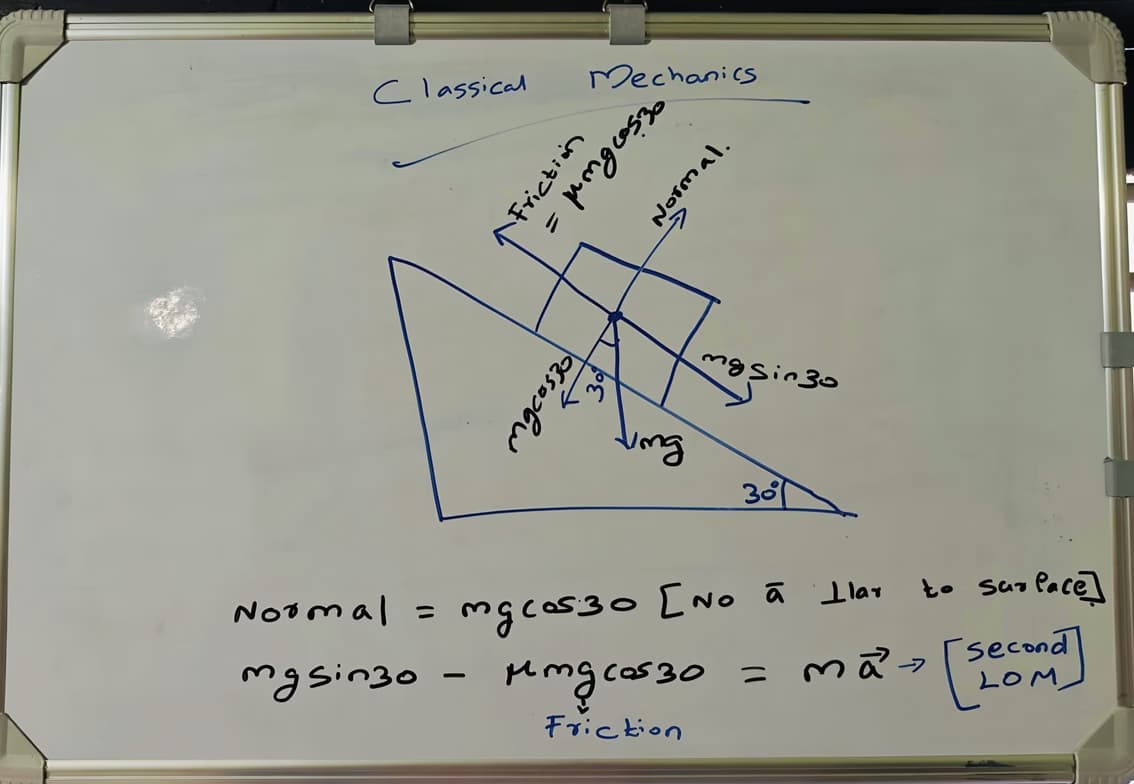

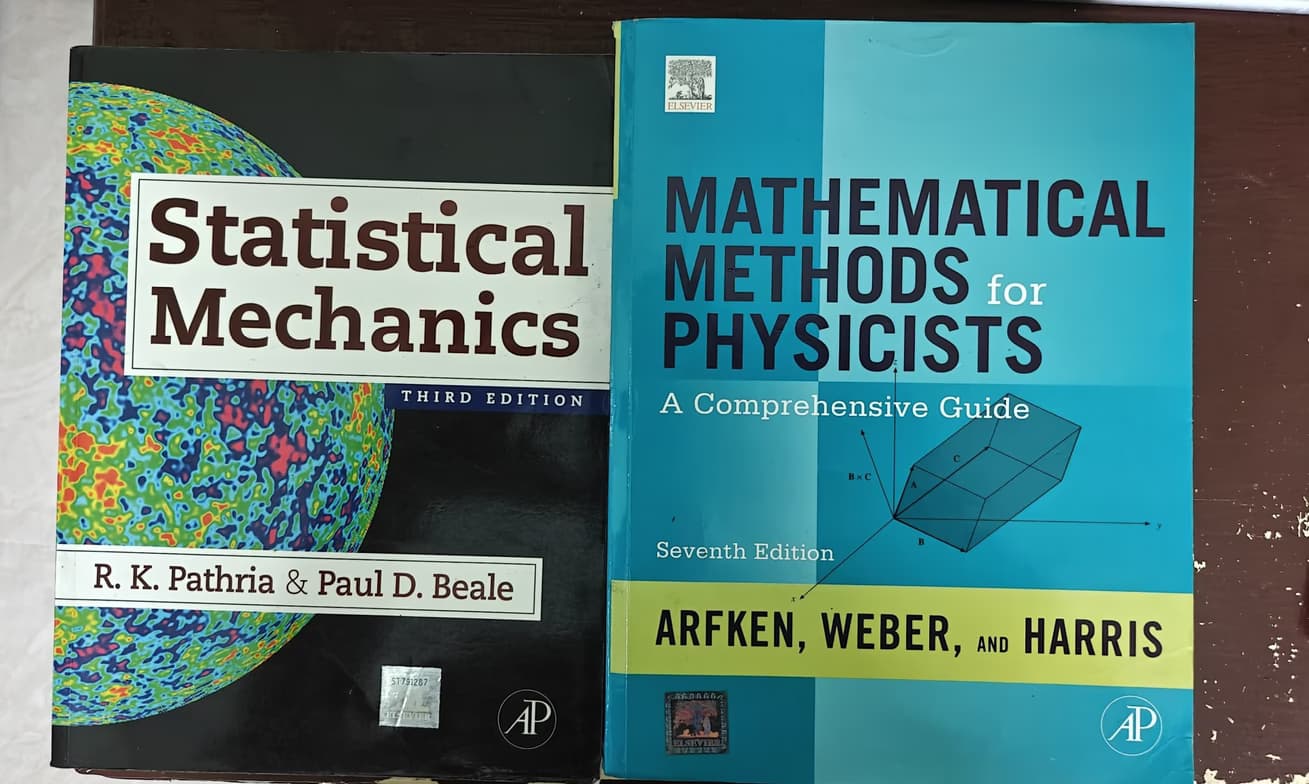
Show all photos
Bipin Babu
Masters degree
/ 55 min
Bipin - your physics tutor
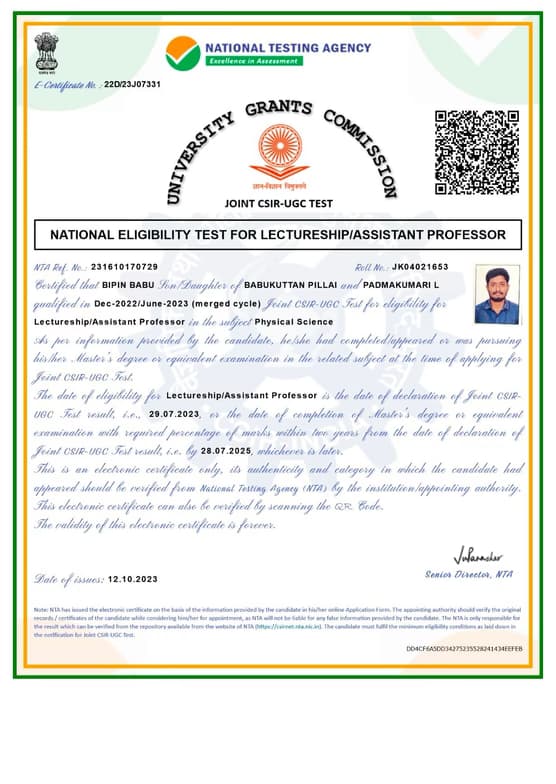
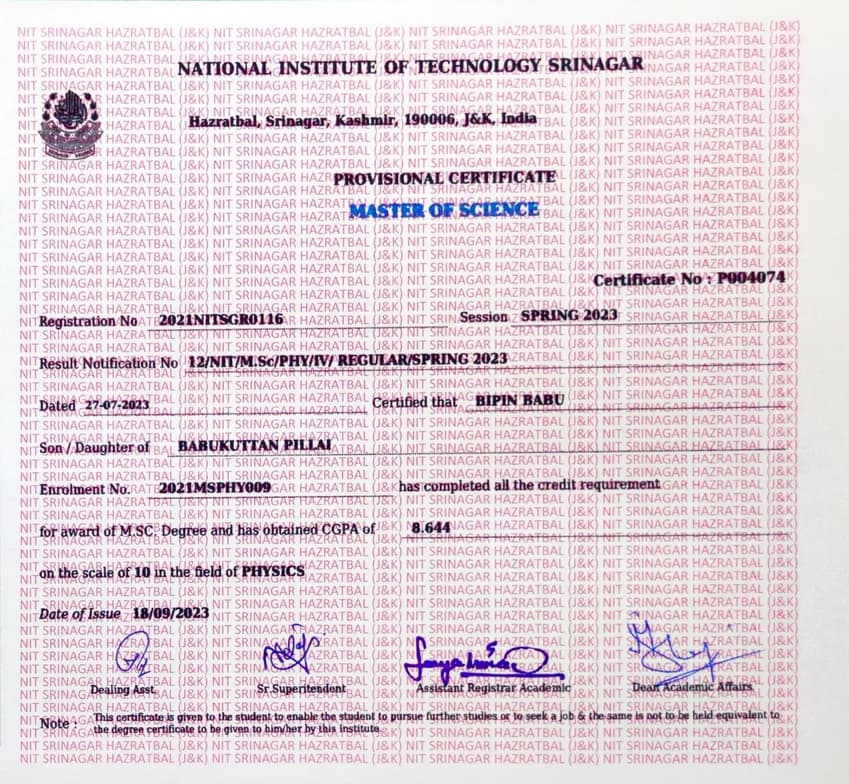
I'm Bipin Babu, a passionate Physics tutor with a Master's degree from NIT Srinagar and a CGPA of 8.64. I've qualified CSIR-NET twice and have more than 7 years of experience teaching Physics — most of it online, working with students across different levels and backgrounds. But honestly, beyond the qualifications, what drives me is a genuine love for this subject. And I would love nothing more than to share that with you. My approach is simple. I focus on helping you understand Physics from the most fundamental level — because when the foundation is solid, everything else follows naturally. Grades included. Every student struggles differently. Sometimes it's a lack of the right examples. Sometimes it's a mathematical confusion that nobody caught early enough. Sometimes it's just that nobody ever gave you a proper picture of what's actually happening. Whatever the case, we'll find it together and fix it. I build customised learning paths for each student because no two people learn the same way. We'll work through problems, real examples, and sometimes the stories behind discoveries — because understanding why something matters makes it stick far better than theory ever will. Physics can feel intimidating. I know that. But it doesn't have to stay that way. If you're willing to give it a real shot, I'm ready to make that journey with you. Hop in — I'd be delighted to help.
Meet Bipin
Bipin graduated from National Institute of Technology Srinagar
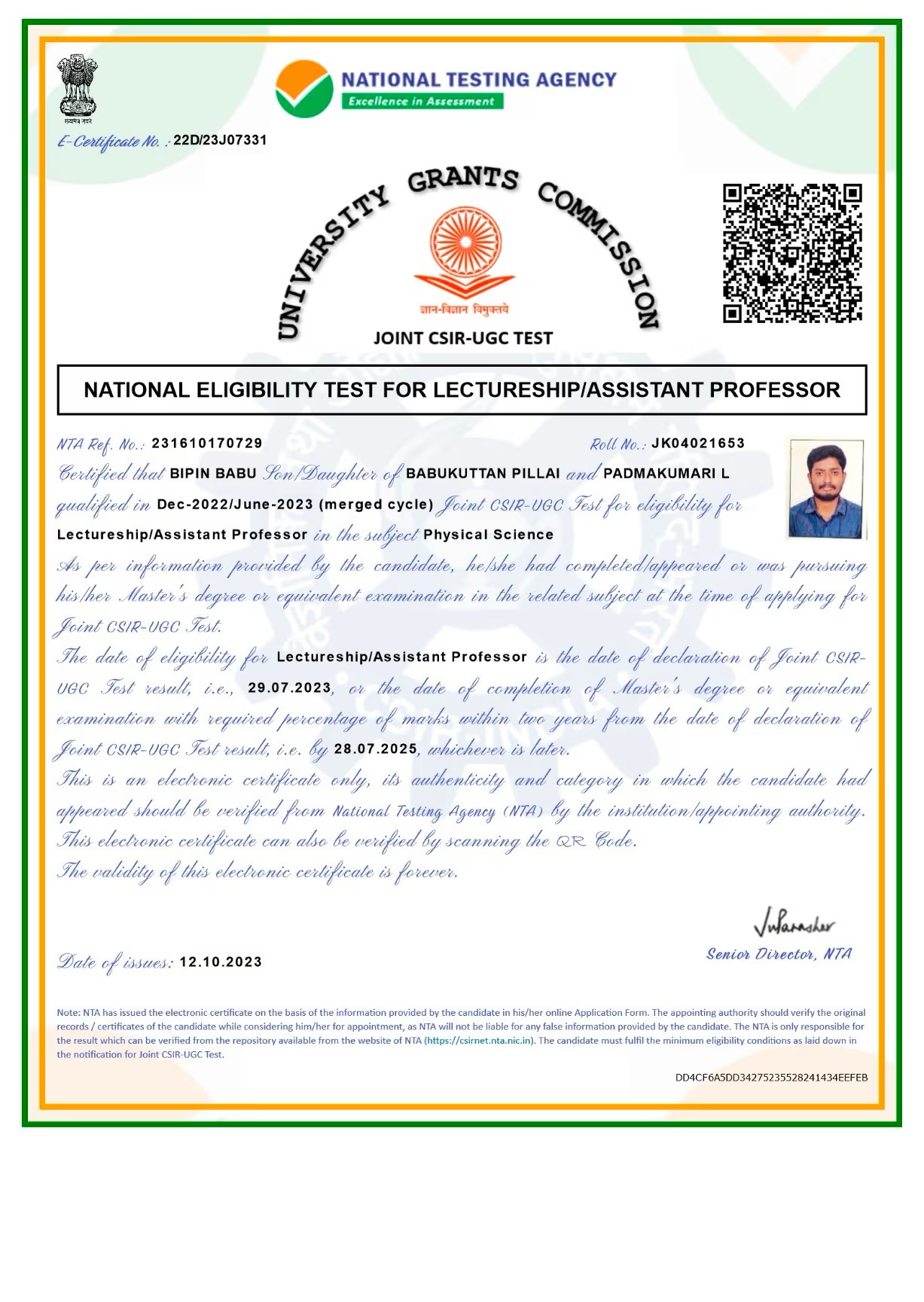

Academic expertise of your physics tutor

Physics lab skills
Personalized learning plans

International Baccalaureate (IB)
Real world application

A-Levels (UK)

Provincial-specific curriculum (CA)

Advanced Placement (AP) Program (USA)

Common Core State Standards - CCSS (USA)

Next Generation Science Standards - NGSS (USA)
Review sessions
 CoTutor
AI modules
Summary
Podcast
Quiz
Learnings
Flashcard
Spotlight
Zero Risk Guaranteed
15-days refund
Free tutor swap
No cancel fee
1-yr validity
24/7 support
Student types for physics class

Anxiety or Stress Disorders

Middle School students

Home schooled

ADHD
High School students
College students
Bipin - Physics tutor also teaches
Physics
Thermodynamics
Electromagnetism
Quantum Mechanics
Atomic Physics
Mechanics

Physics concepts taught by Bipin
The Student and Tutor planned an introductory mechanics lesson, discussing the sequence of topics like speed and force for Year 10 students. They reviewed a reaction time experiment and extensively covered calculating speed, including unit conversions and the interpretation of distance-time graphs. A follow-up session was scheduled to finalize lesson plans before the Student's upcoming class.
Measuring Reaction Time: The Ruler Drop Experiment
Calculating Speed: Δd/Δt and Average Speed
Speed Unit Conversion: m/s to km/h
Distance-Time Graphs: Visualizing Speed with Slope
The Student and Tutor reviewed complex parallel circuits, focusing on calculating equivalent resistance and understanding current distribution. They discussed the principles of household electrical connections and the fundamental concepts of current and voltage. The session then transitioned to nuclear physics, covering the definition of half-life, the conservation of total mass during radioactive decay, and interpreting half-life from graphs. The next session will cover mass-energy equivalence.
Household Circuit Connections
Equivalent Resistance (Parallel Circuits with Wires)
Mass in Radioactive Decay (Conservation)
Half-Life (Definition & Graph Interpretation)
Understanding Voltage and Current (Analogy)
Current Flow in Parallel Circuits (Resistor Removal)
The Student and Tutor reviewed key physics concepts, including the role of neutrons in nuclear reactions and the Rutherford Gold Foil Experiment. The primary focus was on understanding current behavior in parallel circuits through problem-solving and a review of electricity test questions. For follow-up, the Tutor will send additional practice problems for the Student to work on.
Advanced Circuit Analysis: The X-Method & Equivalent Resistance
Series Circuit Fundamentals
Parallel Circuit Current Dynamics
Rutherford's Gold Foil Experiment Review & Activity
The Tutor and Student explored the scientific principles governing why objects float or sink. They discussed how material composition, shape, mass, and volume contribute to this phenomenon, culminating in the definition and calculation of density. The Student received homework to research the story behind the term "Eureka."
Understanding Mass
Factors Influencing Buoyancy: Material and Shape
Floating and Sinking: Everyday Observations
Understanding Volume
Introducing Density (Mass per Unit Volume)
The Rule of Density: Floating vs. Sinking
The Tutor and Student revisited key concepts in electrical circuits for Year 10. They covered definitions of resistance, current, and voltage in the context of series and parallel circuits. The session involved problem-solving related to current and voltage distribution and discussed practical applications of variable resistors in household appliances, with the Student planning to use these analogies in their upcoming class.
Electrical Resistance and Flow
Current in Series vs. Parallel Circuits
Voltage in Series vs. Parallel Circuits
Power Consumption & Brightness: Series vs. Parallel
Real-world Applications of Variable Resistors
Energy Efficiency: Incandescent vs. LED Bulbs
The session reviewed core concepts in nuclear physics, including types of radiation, decay series, and carbon dating. The Tutor then provided guidance to the Student on introducing basic electrical circuit principles using analogies. The Student also practiced solving a circuit analysis problem.
Nuclear Stability and N/P Ratio
Introduction to Electrical Potential Difference
Mass Defect and Energy Release (E=mc²)
Carbon Dating Principles
Half-Life and the Decay Equation
Radioactive Decay Series & Gamma Emission
Alpha
Beta
Classroom tools used by physics tutor

Practice worksheets

Assessments
Video conferencing

Quizzes

Presentations

Physics tutors on Wiingy are vetted for quality
Every tutor is interviewed and selected for subject expertise and teaching skill.
