
Lipika Lipika
Engage in Interactive Physics Classes with challenging preparation and a variety of teaching approaches to suit your learning style.




Show all photos
Lipika Lipika
Masters degree
/ 55 min
Lipika - your physics tutor
I'm Lipika, a Bachelors-educated tutor with a wealth of experience in College-level School Science tutoring. My specialized subjects include Electricity, Mechanics, Dynamics, Optics, Rotational Motion, Thermodynamics and more. My tutoring style is all about personalized learning. I leverage a range of specialities like gamification of Math, gamification of Math, and science experiments to make subjects like Physics engaging and fun. I focus on concepts learning and exam simulation to ensure a deep understanding and effective preparation. I excel in creating tailored learning plans that cater to individual student needs, guaranteeing grade improvement and test success. From Physics lab skills to French culture immersion, I cover it all. Let's embark on this educational journey together for a brighter academic future!
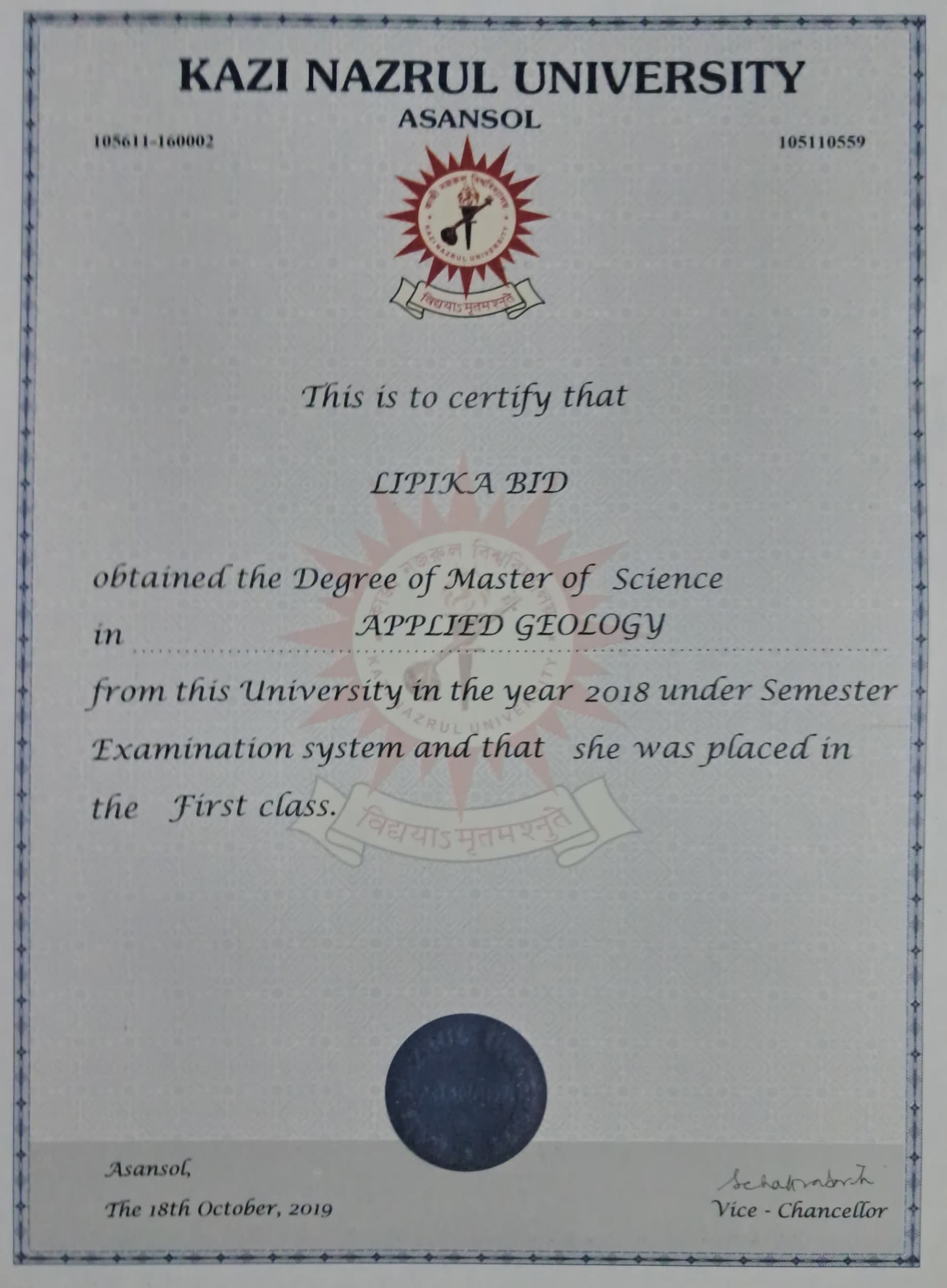
Lipika graduated from Kazi Nazrul University
Academic expertise of your physics tutor

Australian Curriculum (AU)

Personalized learning plans

Advanced Placement (AP) Program (USA)

State-Specific Standards (USA)
Test prep strategies

Next Generation Science Standards - NGSS (USA)

Homework help

Common Core State Standards - CCSS (USA)
 CoTutor
AI modules
Summary
Podcast
Quiz
Learnings
Flashcard
Spotlight
Zero Risk Guaranteed
15-days refund
Free tutor swap
No cancel fee
1-yr validity
24/7 support
Student types for physics class

Home schooled

High School students
College students

Anxiety or Stress Disorders
Middle School students
Elementary School students
Physics class snapshot
My personalized tutoring approach blends collaborative learning, data analysis, visual models, and the scientific method to create a supportive environment for college students studying Forces and Motion, Earth Science, Environmental Science, and more. I leverage a variety of tech tools like interactive quizzes, digital whiteboards, and game-based learning apps to enhance engagement and understanding. By following curricula such as A-Levels (UK) and Advanced Placement (AP) Program (USA), I ensure alignment with academic standards while tailoring lessons to each student's unique needs. My strength lies in providing interactive lessons that cater to diverse learning styles, fostering a deep understanding of complex scientific concepts for high school as well as college-level students. I try providing real life examples for better understanding.
Lipika - Physics tutor also teaches

Nuclear Physics
Physics
Thermodynamics
Electromagnetism
Quantum Mechanics
Atomic Physics

Physics concepts taught by Lipika
Student and Tutor reviewed core Biology concepts including cellular metabolism (anabolism and catabolism), enzyme kinetics and inhibition, and the application of thermodynamics to biological systems. The session then moved to homeostatic mechanisms such as pH regulation and blood glucose control, followed by the specific actions of steroid and peptide hormones, and an overview of the endocrine system's role in the fight-or-flight response. The next two sessions are scheduled for Monday and Tuesday, with a final review class planned for November 5th, ahead of the student's exam on November 6th.
Cellular Metabolism: Anabolism & Catabolism
The Endocrine System and Adrenaline Response
Blood Glucose Regulation: Insulin and Glucagon
Hormone Signaling Pathways: Steroid vs. Peptide Hormones
pH Homeostasis and Blood Acid-Base Balance
Biological Thermodynamics: Energy Flow in Living Systems
Enzyme Function and Regulation
Student and Tutor reviewed the detailed processes of photosynthesis, including the light-dependent and light-independent (Calvin) reactions, chloroplast structure, and the role of the phospholipid bilayer. They then explored the distinct photosynthetic adaptations of C3, C4, and CAM plants. The Student received several explanatory images and will schedule the next session.
Photosynthesis Fundamentals & Cellular Sites
Light-Dependent Reactions
The Calvin Cycle (Light-Independent Reactions)
C3 Plants: The Standard Photosynthetic Pathway
C4 Plants: Spatial Separation for Efficiency
CAM Plants: Temporal Separation for Arid Survival
The Student and Tutor reviewed key biology topics, including organism responses to pathogens, the life cycles of bacteriophages (lysogenic and lytic), and various types of genetic mutations. They also practiced interpreting phylogenetic trees and discussed the evolution of land plants. The Tutor provided worksheets and an image for reference, and planned to send a comprehensive textbook covering relevant topics.
Organism Response to Pathogens: Initial Defenses
Bacteriophages: Structure and Lysogenic Cycle
Lytic Cycle vs. Lysogenic Cycle
Gene Mutations: Point and Frameshift
Phylogenetic Trees (Cladograms)
The Student and Tutor reviewed fundamental concepts in molecular biology, including the detailed stages of DNA replication, the roles of various enzymes, and the processes of transcription and translation. They also discussed the structure and function of exons and introns and practiced applying these concepts by answering review questions from a textbook. They confirmed their next session's schedule.
DNA Replication: Stages and Key Enzymes
Gene Linkage on Chromosomes
Exons and Introns: Gene Coding Regions
Translation: mRNA to Protein
Transcription: DNA to mRNA
Okazaki Fragments and Lagging Strand Synthesis
The Student and Tutor focused on foundational Physics concepts, specifically understanding forces, free body diagrams, and their application to Atwood's machine problems. They practiced identifying various forces, determining their directions, and calculating net forces in different scenarios. The Student was advised to continue practicing Atwood's machine problems.
Identifying Key Forces in Mechanics
Force as a Vector Quantity
Calculating Net Force and Interpreting Direction
Analyzing Atwood's Machine
Understanding Free Body Diagrams (FBDs)
Student and Tutor focused on chemistry calculations, specifically practicing graph construction for absorbance and concentration data, hydrate calculations including finding the percentage of water in hydrated salts, and determining the number of water molecules in an unknown hydrate. They also reviewed mole-to-mole and mass-to-mass stoichiometry problems. The Tutor provided additional mass-mass stoichiometry problems for the Student to practice during the school holidays, with a follow-up session planned after the break.
Determining 'X' in Hydrates
Mass-to-Mass Stoichiometry
Mole-to-Mole Stoichiometry
Hydrate Salt Percentage Calculation
Beer-Lambert Law & Spectrophotometry Graphing
Classroom tools used by physics tutor
Video conferencing

Digital whiteboard

Assessments

Practice worksheets
Engaging physics lessons

Mobile joining

Note taking

Open Q&A

Record lessons

Parent feedback

Physics tutors on Wiingy are vetted for quality
Every tutor is interviewed and selected for subject expertise and teaching skill.
