Physics tutor near me in Chicago, IL
Master Physics concepts with expert tutors
Filters
Level
Topics
Specialities
Price
Education
Tools Used
Special Needs
Curriculum
Level
Topics
Nuclear Physics
Physics
Thermodynamics
Electromagnetism
Quantum Mechanics
Atomic Physics
Show more
Specialities
Homework help
Test prep strategies
Visual learning
Personalized learning plans
Real world application
Review sessions
Show more
Price
Education
Tools Used
Digital whiteboard
Quizzes
Assessments
Show more
Special Needs
ADHD
ASD
Learning Disabilities
Show more
Curriculum
International Baccalaureate
Common Core State Standards
State-Specific Standards
Show more

Students in Chicago learn physics from expert tutors
Explored by learners in Gold Coast, River North
Hareethha taught 8 days ago
The student and tutor worked through a problem in classical mechanics involving differentiation of vector quantities and the application of conservation laws derived from symmetries, specifically using identities with the Levi-Civita symbol. They then delved into Noether's theorem, explaining the relationship between symmetries and conservation laws like energy, momentum, and angular momentum, with plans to cover the Runge-Lenz vector in future sessions.
Symmetry and Conservation Laws
Lagrangian Mechanics
Angular Momentum Conservation
Hamiltonian Mechanics
Hareethha taught 23 days ago
The tutor and student reviewed concepts of relative motion, practicing problems involving objects moving in the same and opposite directions, as well as scenarios of crossing a river with a current. They also began exploring more complex vector-based problems requiring velocity resolution and planned to cover Newton's second law in the next session.
Relative Motion Basics
River Crossing Problems
Boat and Stream Problems
Velocity Components and Aiming Angle
Hareethha taught about 1 month ago
The Student and Tutor reviewed MRI physics concepts, focusing on magnetic fields, Larmor frequency, flip angles, and gradient magnetic fields. They worked through practice questions related to thermal equilibrium, resonant frequency, and spatial encoding. The session concluded with plans to cover magnetic sequencing in detail during the next lesson.
Thermal Equilibrium
Larmor Frequency and Resonance
Flip Angle and Signal Strength
RF Field Orientation
Non-ionizing Radiation in MRI
Phase Coherence and Transverse Magnetization
Spatial Encoding with Gradient Magnetic Fields
Garima taught 5 months ago
The session covered magnetic forces and fields, including equilibrium conditions for current loops, applications of the right-hand rule, and Ampere's Law. The Student practiced applying these concepts to solve problems involving straight wires and circular loops. The Tutor assigned completing numerical calculations for homework and will provide a derivation of the equation for magnetic field inside and outside a conducting slab using Ampere's Law.
Equilibrium
Magnetic Field of a Straight Wire
Magnetic Field of a Circular Loop
Torque on a Magnetic Dipole
Stable Orientation of Magnetic Dipole
Right-Hand Rule Variations
Ampère's Law
Circle Product Rule
Ismail taught Clarence 8 months ago
During their physics lesson, Ismail and Clarence delved into challenging concepts such as Archimedes' principle, buoyancy, the nuances between Newtonian physics and relativity, and the Bernoulli equation. Clarence received valuable advice on problem-solving strategies and insights into upcoming topics, with Khan Academy recommended as a helpful resource. They scheduled a follow-up lesson for next Wednesday, and Clarence outlined his plan to practice extensively on problems related to gravity, fluids, and relativity in preparation for his test.
Relativity
Buoyancy
Bernoulli's Principle
Lorentz Factor
Approximations in Physics
Ismail taught Clarence 8 months ago
Ismail tutored Clarence on physics, reviewing vector addition, energy conservation in rolling motion, and the relationship between linear and angular motion. Clarence practiced problem-solving techniques and clarified the difference between delta and derivative notations. They discussed strategies for upcoming exams, including focusing on problem-solving and reviewing solutions.
Vector Addition
Angular vs. Linear Velocity
Derivatives and Limits
Kinematic Equations
Problem-Solving Strategies
Importance of Conceptual Understanding
Physics test prep and homework help near Chicago


Physics tutors near Chicago helping learners
Get personalized help from private tutors in Chicago

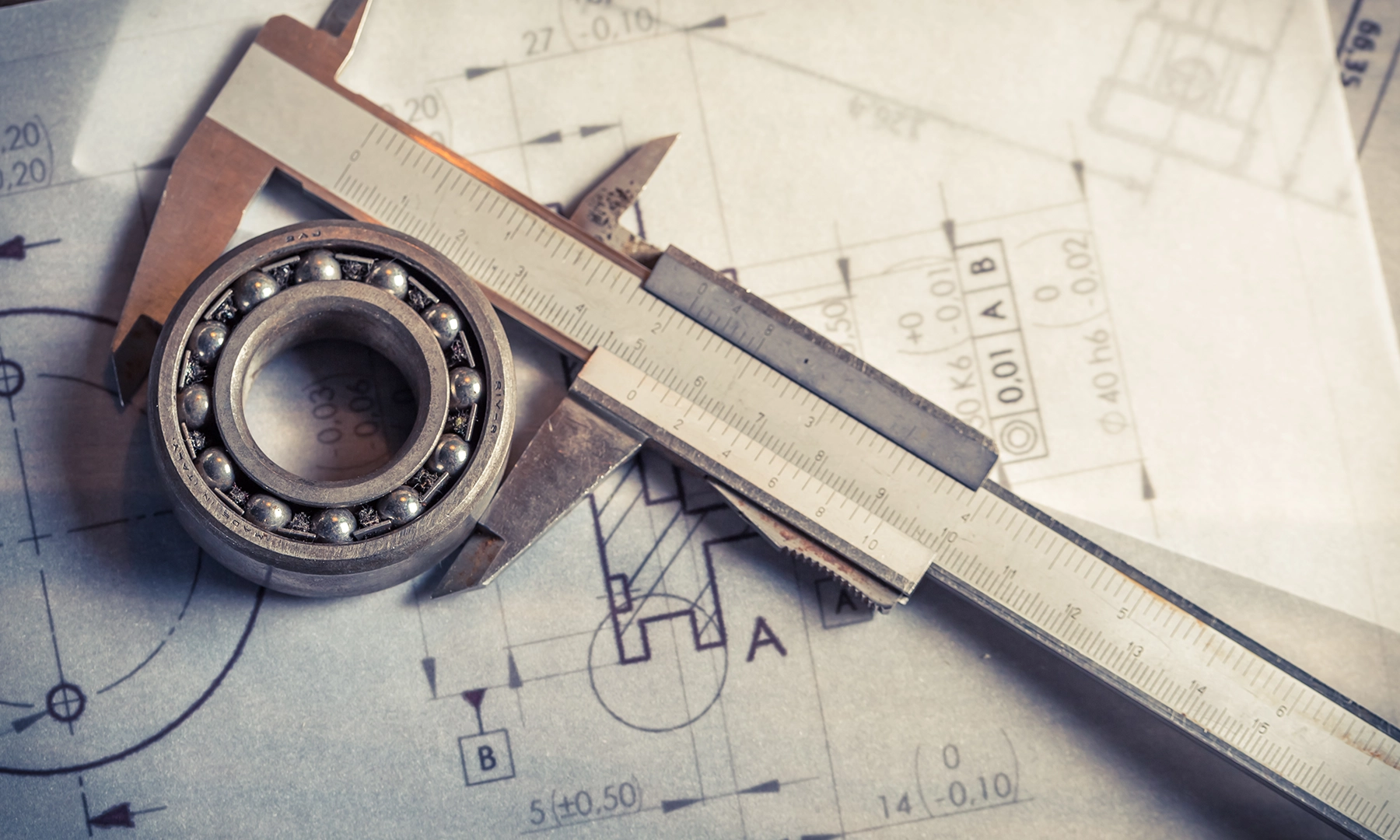

Studying Physics in Chicago - Local Insights and Academic Pathways

Chicago’s schools, universities, and research hubs
Chicago has long been a center for science and engineering in the Midwest, and physics plays a big part in that reputation. The city’s diverse education network, from public high schools to world-class universities, ensures that students at different stages can find the right level of physics education. With a metropolitan population of over 9.4 million, the demand for skilled graduates in STEM fields continues to grow.
High-achieving schools like Whitney M. Young Magnet High School and Lane Tech College Prep offer advanced physics courses, preparing students for AP Physics exams and competitive STEM programs. On the university side, institutions such as the University of Chicago and Illinois Institute of Technology provide pathways into specialized fields like astrophysics, medical physics, and quantum information science.
Chicago is also uniquely positioned near two of the nation’s most important research facilities: Fermilab in Batavia and Argonne National Laboratory in Lemont. These sites don’t just produce world-leading experiments in particle physics and energy systems; they also run workshops, internships, and public science talks that give local students a rare inside look at modern physics in action.

Why Chicago offers a distinct edge for physics learners
The city’s public science events, such as the Chicago Science Fest, make advanced physics concepts approachable for learners of all ages. These events often feature live demonstrations, interactive booths, and talks by university researchers, allowing attendees to see how theories in mechanics, optics, and electromagnetism apply to everyday life. They also create networking opportunities for students to connect with professors, industry professionals, and other aspiring scientists.
Chicago’s industry landscape further strengthens its appeal. Local companies in energy, transportation, and manufacturing actively hire physics graduates for roles in research, engineering, data analysis, and technology development. For example, physics plays a key role in designing energy-efficient public transit systems, optimising manufacturing processes, and developing renewable energy solutions. Students often find internships and cooperative education programs that let them apply their academic knowledge to these sectors.
The city’s museums provide another layer of learning. The Adler Planetarium offers hands-on astronomy and astrophysics experiences, from telescope workshops to digital simulations of celestial mechanics. The Museum of Science and Industry brings physics to life through large-scale exhibits on motion, magnetism, energy transfer, and materials science. Both institutions host school partnerships and public programs that align closely with classroom learning, helping students bridge the gap between theory and practice.

Community and outreach programs
Adler Planetarium
Located on the Museum Campus along Lake Michigan, the Adler Planetarium is one of Chicago’s most iconic science institutions. It offers public programs in astronomy, astrophysics, and planetary science that directly connect to core physics concepts like gravity, orbital motion, and light behaviour. Regular events such as Adler After Dark, Skywatch Live!, and telescope observation nights allow students and visitors to explore celestial phenomena interactively. The planetarium also partners with schools across the city to integrate space science into physics curricula.Museum of Science and Industry (MSI)
Situated in the Hyde Park neighbourhood, the Museum of Science and Industry is the largest science museum in the Western Hemisphere. Its physics-related exhibits include the Science Storms gallery, where visitors can see real tornado simulations, explore wave patterns, and experiment with the laws of motion. The Energy Transformation Lab demonstrates principles of magnetism, electricity, and renewable energy. MSI also hosts Science Works career days, connecting students with professionals in the engineering and physics fields.Chicago Public Schools (CPS) STEM Clubs
Throughout the city, CPS operates STEM clubs in schools such as Whitney M. Young Magnet High School, Northside College Prep, and Lane Tech College Prep. These clubs offer physics-focused activities like robotics competitions, science fairs, and engineering design challenges. Students often participate in citywide events like the Chicago Student Invention Convention and the Illinois Junior Academy of Science Regional Fair, both of which encourage applying physics to solve real-world problems. Many of these programs take place in school labs, community centres, and partner venues such as the Chicago Children’s Museum Tinkering Lab and the DePaul University STEM Centre.
Frequently asked questions
Where can I find quality physics learning resources in Chicago?
How do I get faster at solving physics problems during exams?
Are there budget-friendly physics tutoring options in Chicago?
What careers can I pursue with a physics background in Chicago?
Can I work in research with just an undergraduate physics degree?
Can physics tutoring improve my child’s college readiness?