

Top-rated online Chemistry tutor
Chemistry blends abstract concepts with constant problem-solving, and one shaky unit can unravel all the rest. An online chemistry tutor helps high school and university students master stoichiometry, bonding, reactions, and equilibrium, one clear step at a time. Lessons follow your course, turn formulas into understanding, and rebuild confidence before the next big exam.
Free Trial
15-days refund
Free tutor swap
No cancel fee
Summary
Podcast

We match you with best tutors for your requirements

Students explore chemistry concepts through online lessons
Online chemistry classes taken by students from LA, NYC, Dallas
Chirani taught 11 days ago
The Student and Tutor reviewed advanced atomic structure in Chemistry, covering the Bohr model, applying the Rydberg equation, and performing De Broglie's wavelength calculations. They further explored quantum numbers, the Pauli exclusion principle, Hund's rule, and practiced electronic configurations, including exceptions for chromium and copper. For follow-up, the next session is scheduled for Wednesday to cover stoichiometry, and the Student is tasked with reviewing periodic table trends in preparation for upcoming midterm discussions.
The Bohr Model of the Atom: Quantized Energy Levels
Rydberg Equation and Energy Transitions
De Broglie Wavelength: Particles as Waves
Quantum Numbers: Electron 'Addresses'
Electron Configurations and Exceptions
Srishti taught 28 days ago
Student and Tutor reviewed key concepts in protein functions and structure, including ligand binding, hemoglobin cooperativity, antibody recognition, and muscle contraction, and began working through practice questions to prepare for an upcoming exam. They planned to continue practicing problems related to protein chemistry and amino acid titration curves in a follow-up session.
Protein-Ligand Interactions & Affinity
Hemoglobin: Oxygen Transport & Cooperativity
Carbon Monoxide (CO) Poisoning
Antibodies
Antigens
& Induced Fit
Antibody-Based Diagnostic Techniques
Muscle Contraction: The Actomyosin Cycle
Srishti taught about 1 month ago
The Student and Tutor reviewed key organic chemistry concepts, including conjugated pi systems, chair conformations, and cis/trans isomerism in cyclic compounds. They practiced drawing chair structures, determining stability, and performing ring flips. The session also included a brief conceptual introduction to IR spectroscopy, with plans to cover it and NMR spectroscopy in detail in upcoming sessions.
Conjugated Pi Systems & Resonance
Functional Group Identification: Esters
Ketones
Carboxylic Acids
Cyclohexane Chair Conformations: Drawing & Stability
Chair Conformation Ring Flips & Stereoisomerism
Reshma taught about 2 months ago
The Tutor and Student reviewed the calculation of percent composition from chemical formulas, using examples and practice problems to solidify understanding. The session concluded with the assignment of further practice problems to prepare for calculating empirical formulas from given percentages in the next class.
Atomic Mass Unit (amu) and Grams per Mole (g/mol)
Calculating Molar Mass
Percentage Composition
Applying Percentage Composition to Real-World Examples
Pooja taught 3 months ago
The Student and Tutor reviewed fundamental chemistry concepts including the definitions of solute, solvent, and solution. They then delved into calculating solution concentrations using Molarity (M=n/V) and practiced various numerical problems involving unit conversions. The session also covered the concept of dilutions using the C1V1=C2V2 formula and introduced Avogadro's number, with a plan to cover its related numerical problems in a subsequent session.
Understanding Solutions: Solute
Solvent
and the Mixture
Essential Unit Conversions for Chemical Calculations
Molarity (M) and Molar Concentration
Calculating Number of Moles (n) from Mass
Dilution Equation: C₁V₁ = C₂V₂
Avogadro's Number: Counting Particles in a Mole
Dr.Trusha taught 3 months ago
The Tutor and Student began a new topic focusing on SI units, described as foundational for both chemistry and physics. They covered the definitions of fundamental and derived units, and the Student practiced identifying the fundamental components within derived units like density, force, speed, and acceleration. The Student was assigned homework to learn the fundamental units, with a combined math and chemistry test and worksheets planned for future sessions.
Introduction to SI Units: The Universal Measurement System
Fundamental (Base) SI Units
Derived SI Units
The Meaning of 'SI'
Learn chemistry online with tutors who cover all your needs



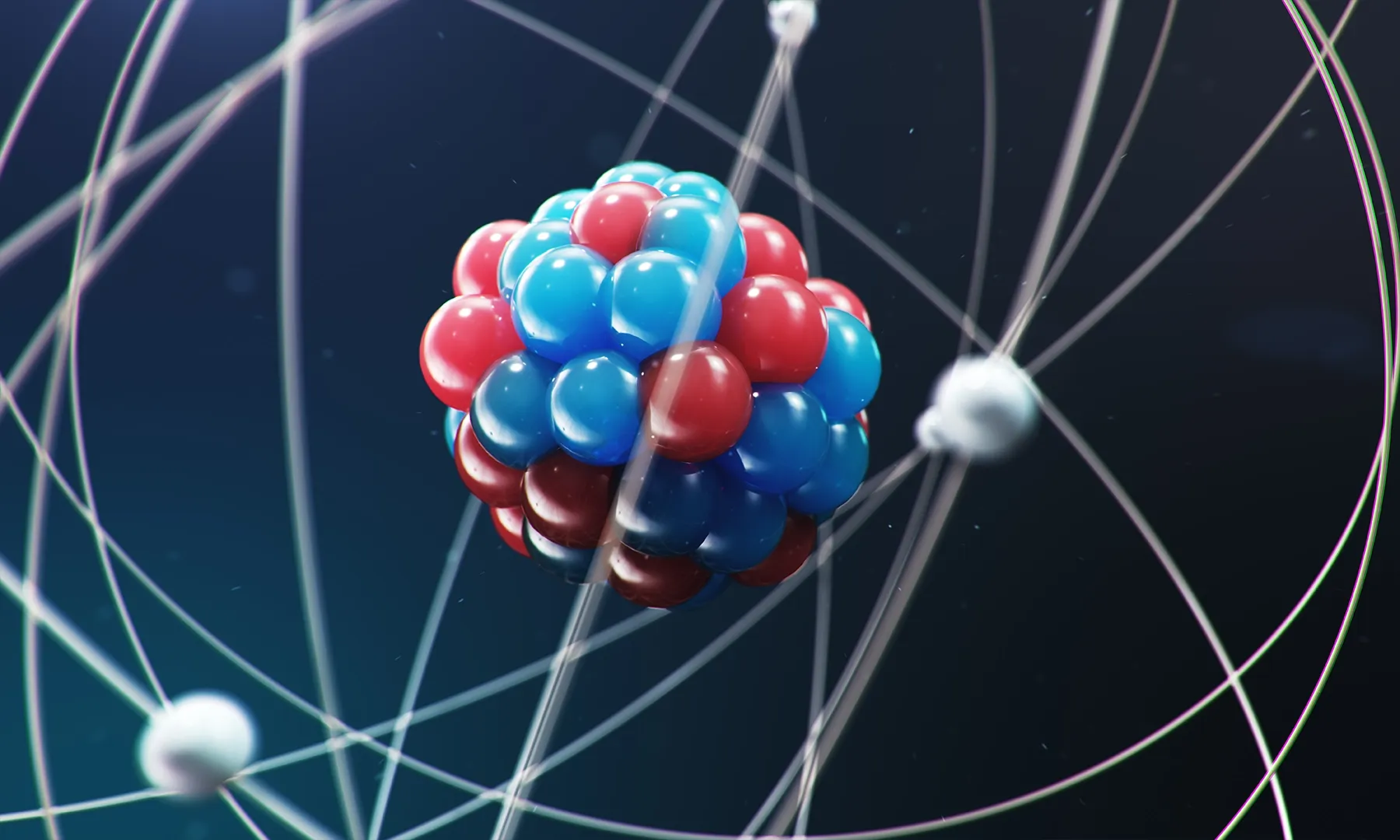

Online chemistry tutoring insights

Total Online Chemistry tutors
858 Chemistry tutors available

Experienced Online Chemistry tutors
Average 6 years of teaching experience

Online Chemistry Tutor Qualifications
80% hold a Master’s or PhD degree
Learning chemistry online, Tips and tools

How can you learn chemistry online?
Chemistry is the study of matter and its transformations, with applications ranging from pharmaceuticals to renewable energy. Learning chemistry equips you with critical problem-solving skills that can drive innovation in various fields.
However, In-person classes can be overwhelming. They often use long lectures and old lab setups. There are few interactive activities. Research shows many educators believe traditional methods cause mental overload. It can be hard for you to picture 3D molecules and atomic structures from flat diagrams. Following complex reaction steps in one lecture may be difficult.
Online resources let you learn at your own pace. They offer clear video lessons, modular content, and interactive simulations. Khan Academy, MIT OpenCourseWare, and LibreTexts provide structured lessons. They include practice exercises and quizzes. Simulation software and virtual labs give immediate feedback. This makes difficult ideas easier to understand.
By supplementing your offline education with these digital resources, you can overcome traditional challenges and build a deeper, more practical understanding of chemistry.
Why take chemistry tutoring online? Exploring the key benefits
Online chemistry tutoring provides you with a customized learning environment that directly addresses the subject’s complexities. You have the flexibility to schedule lessons at convenient times. This allows you to study from any location, eliminating the need to adhere to rigid classroom timetables.
In these personalized sessions, you receive undivided attention focused on key topics such as reaction mechanisms, thermodynamics, and periodic trends. Instant, real-time feedback allows you to clear doubts immediately. This is essential for mastering challenging concepts.
Interactive visual resources such as PhET Interactive Simulations and ChemCollective virtual labs let you see chemical reactions in real time. These tools make abstract concepts like electron movement and molecular interactions easier to understand.
Additionally, online chemistry tutoring resources enable you to work at your own pace, revisiting difficult material until you achieve full clarity. This tailored approach not only improves your grasp of chemistry but also boosts your confidence and academic performance.
With expert guidance from chemistry tutors online and supportive digital tools, you are better prepared for exams and real-world applications, ensuring sustained success in chemistry every day.
Tips to select the right chemistry tutor online
Identify Your chemistry needs
Clarify your specific challenges, whether balancing chemical equations, understanding reaction mechanisms, or difficulty in test prep. Knowing your needs helps you choose a tutor with the right expertise.
Review tutor qualifications
Opt for a tutor holding at least a bachelor's degree in Chemistry—or a related field. They should have extensive teaching experience, excellent ratings, and proven proficiency with online platforms and interactive tools tailored for chemistry.
Experience a free trial lesson
Book a trial session to assess their teaching style, clarity, and engagement. If the lesson meets your expectations, continue with regular sessions. Wiingy offers online chemistry tutoring at an affordable rate of $28.
Leverage Wiingy’s Guarantee
If unsatisfied, Wiingy’s perfect tutor match guarantee ensures you quickly switch to another expert. This process guides you in selecting the ideal online chemistry tutor to meet your needs, ensuring a stress-free learning experience.
Frequently asked questions
What are the best online resources to learn chemistry?
Which fundamental chemistry concepts can be mastered effectively online?
How can online chemistry tutors help me with my test prep?
How can I manage my school schedule with online chemistry tutoring?
How can an online chemistry tutor help me if I am underconfident?
What are the benefits of an online chemistry tutor?
Can I arrange my chemistry tutoring sessions at my convenience?
What factors should you consider while choosing an online chemistry tutor?


