Advanced AP Chemistry tutor online
Learn AP Chemistry with expert online tutors
Filters
AP Courses
Specialities
Price
Education
Tools Used
AP Courses
AP Biology
AP Calculus AB
AP Calculus BC
AP Chemistry
AP Computer Science A
AP Computer Science Principles
Show more
Specialities
Test prep
Grade improvement
Concepts learning
Practice Exams
Mock Tests
Test taking techniques
Show more
Price
Education
Tools Used
Digital whiteboard
Quizzes
Presentations
Show more

AP Chemistry learners prepare for exams with online guidance
AP Chemistry learners from major cities get online exam support
Vaishnavi taught about 2 months ago
The student and tutor worked through problems involving thermochemistry, specifically calculating enthalpy of reaction and molar enthalpy of precipitation using formulas like Q=mcΔT and Moles = Concentration x Volume. They practiced identifying limiting reagents and understanding thermal equilibrium, with the tutor providing corrected definitions and problem-solving strategies.
Enthalpy of Reaction (Q = mcΔT)
Molar Enthalpy of Precipitation
Thermal Equilibrium and Heat Transfer
Vaishnavi taught about 2 months ago
The tutor and student reviewed concepts in thermochemistry, including kinetic and potential energy, enthalpy, and heat transfer measurement using calorimeters and the formula Q=MCΔT. They worked through a practice problem calculating the enthalpy of neutralization for an acid-base reaction, and planned to continue practicing stoichiometry in future sessions.
Thermodynamics: Energy and Its Forms
Potential Energy in Chemical Bonds
Measuring Heat Transfer: Calorimetry
Enthalpy vs. Heat
Enthalpy of Neutralization
Vaishnavi taught 3 months ago
The Student and Tutor covered reaction rates and kinetics, including the definition of reaction rate, factors affecting it, and its importance in chemistry. The Student practiced calculating average reaction rates using provided data and learned how to account for coefficients in balanced chemical equations when expressing reaction rates. They also differentiated between the rate of reaction, rate of consumption, and rate of formation and will practice questions on this in the next session, and a homework sheet will be provided for practice.
Rate of Reaction Definition
Expressing Rate of Reaction
Average Reaction Rate
Rate of Reaction Units
Rate with Balancing Coefficients
Rate of Consumption vs. Rate of Formation
Zeina taught 6 months ago
Zeinab tutored Rishita on the history of atomic theory, covering Dalton's postulates, Thomson's discovery of the electron, Millikan's oil drop experiment, Becquerel's discovery of radioactivity, and Rutherford's gold foil experiment. They reviewed the key experiments and models associated with each scientist. The next session will cover the Bohr model, Schrodinger, and isotopes.
Dalton's Atomic Theory
Cathode Ray Tube Experiment
Plum Pudding Model
Rutherford's Gold Foil Experiment
Radioactivity
Zeina taught 7 months ago
Zeinab helped Rishita review key chemistry concepts, including physical and chemical properties, substances versus mixtures, intensive and extensive properties, and matter. They also practiced stoichiometry problems involving mole calculations and molar mass. Zeinab assigned practice problems converting mass to moles for the next session.
Physical Changes
Chemical Changes
Intensive Properties
Extensive Properties
Mole (Chemistry)
Molar Mass
Zeina taught 7 months ago
Zeinab and Ahmed discussed Le Chatelier's principle, including the effects of concentration, pressure, temperature, and catalysts on equilibrium. Ahmed practiced predicting shifts in equilibrium and precipitate formation using Q and K values. Zeinab assigned practice problems and will continue with acid-base chemistry in the next session.
Le Chatelier's Principle
Effect of Concentration
Effect of Dilution
Effect of Pressure
Effect of Temperature
Reaction Quotient (Q)
Solubility Product (Ksp)
Learn complex AP Chemistry topics with online guidance


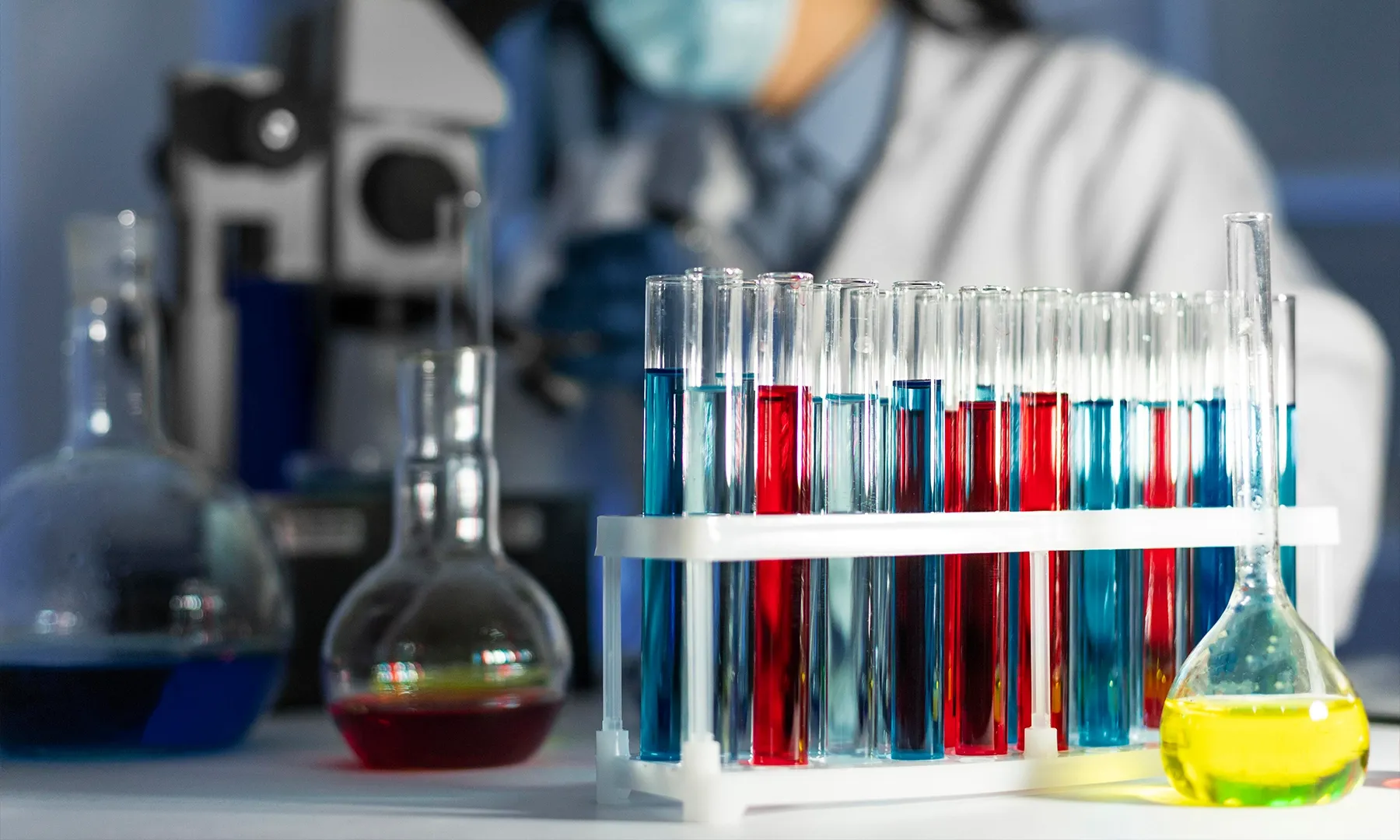


Mastering AP Chemistry through online tutoring

Ways to prepare for AP chemistry online
AP chemistry covers advanced topics like chemical reactions, atomic structure, and energy changes. It has real-world applications in medicine, technology, and the environment.
This course prepares you for college science and future careers, but traditional classes can be challenging. Limited lab time and fast lectures make concepts like equilibrium and titrations harder to grasp.
Studies show that students learning online may perform up to 13% better than those in regular classrooms.
To bridge this gap, you can leverage digital resources. Platforms such as Khan Academy and Bozeman Science offer comprehensive video lessons, and interactive tools like PhET simulations let you explore experiments virtually.
Additionally, YouTube channels like Crash Course Chemistry and Tyler DeWitt simplify complex ideas. Online AP chemistry tutoring provides tailored support and flexible scheduling.
Using these resources, you can study at your own pace and master the intricacies of AP chemistry.

The advantages of choosing online AP chemistry tutoring
AP chemistry is a challenging course that covers stoichiometry, equilibrium, and thermodynamics.
Traditional classrooms often have limited lab time and little personal guidance. This can make it harder for you to understand topics like redox reactions and reaction kinetics.
Online AP chemistry tutoring helps you overcome these obstacles. It provides the flexibility to schedule sessions at any time and from any location, ensuring your study fits around your lifestyle.
With one-on-one attention, your AP chemistry tutor can focus on your unique struggles. They can offer instant feedback and time doubt-clearing on complex topics, such as balancing equations or understanding periodic trends. AP chemistry tutors also use visual tools and interactive videos to bring abstract concepts to life through virtual experiments.
Online resources give you extra practice and personalized study materials. Studies show that personalized tutoring improves understanding and exam scores. This builds your confidence in AP chemistry.

How to select a perfect online AP chemistry tutor?
Identify your needs
Determine whether you’re struggling with specific topics (stoichiometry, thermodynamics, chemical equilibrium, organic chemistry) or aiming to boost your AP exam score. Knowing your priorities will help you find an AP chemistry tutor who matches your goals.
Check qualifications & tools
Choose tutors with solid chemistry credentials (and AP chemistry teaching experience). Check student reviews and ratings to gauge their track record with students, and confirm they use digital tools (interactive simulations, virtual labs) for engaging online lessons
Take a trial lesson
Opt for a free trial session to evaluate the tutor’s teaching style and clarity. This firsthand experience lets you verify they explain complex concepts clearly and match your learning style
Ensure a match guarantee
Wiingy offers a Perfect Match Guarantee – if the first tutor isn’t a fit, they’ll replace them at no extra cost. If you are satisfied with the tutor you can sign up for paid AP chemistry tutoring at an affordable rate of $28 per lesson.
Frequently asked questions
Which top online resources can help me prepare for the AP Chemistry?
What core topics in AP Chemistry benefit most from digital instruction?
How can online AP Chemistry tutors help me with my assignment?
How can online AP Chemistry tutors improve my performance and scores?
How can an online AP Chemistry tutor assist me with revision for better results?
What advantages do online AP Chemistry tutors offer?
Is it possible to book online AP Chemistry tutoring sessions at my preferred times?
What factors should you consider while choosing an online AP Chemistry tutor?