Chemistry tutor near me in Staten Island, NY

Personalized support for your toughest Chemistry challenges

Chemistry homework and concept help for Staten Island learners

Homeschool students

Homeschool students

Engaging chemistry lessons designed for homeschoolers

Grade improvement

Grade improvement

Improve understanding of key chemistry concepts

Learning disabilities

Learning disabilities

1 on 1 tutoring for students with learning disabilities

Homework help

Homework help

Understand topics & finish assignments effectively

Tutoring

Tutoring

Get help with chemistry concepts & labs

keyLearning

A look inside chemistry lessons in Staten Island

Tutors work with students in Stapleton, Todt Hill, West New Brighton

Reshma taught 8 days ago

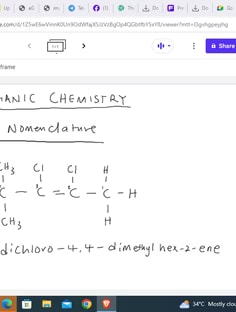
The session centered on chemical nomenclature, specifically naming ionic and molecular compounds. The student practiced naming compounds from formulas and writing formulas from names, focusing on polyatomic ions and transition metals with multiple charges. The homework is to complete the practice problems on binary molecular compounds and to note any final exam hints from the teacher.

Naming Ionic Compounds

Transition Metals with Multiple Charges

Polyatomic Ions

Oxyanions: -ate

-ite

hypo-

and per-

Writing Formulas from Names (Crossover Rule)

Show more

Robert taught 12 days ago

The Student and Tutor reviewed electron arrangements and hybridization, before working on SN1 reactions, carboation stability, and nucleophilic attack mechanisms. The Student practiced identifying sigma bonds, determining hybridization states, and predicting the products of SN1 reactions, including considering carboation rearrangements. The next session is scheduled for tomorrow to continue working on homework problems.

SN1 Reaction Mechanism: Carbocation Formation

SN1 Reaction: Nucleophilic Attack and Stereochemistry

Carbocation Rearrangements: Hydride and Methyl Shifts

Carbocation Stability Hierarchy

Sigma (σ) Bonds and Hybridization

Electron Arrangement Prediction

Show more

Reshma taught 17 days ago

The Student practiced calculating empirical and molecular formulas from various data sets. They worked through worksheet problems involving mass percentages and molecular weights, focusing on correctly applying the formulas and steps involved in the calculations. The plan is to review any remaining problems from the molecular formula worksheet in the next session and then move on to the next topic.

Empirical Formula Calculation

Atomic Mass and Molar Mass

Molecular Formula Determination

Calculations are Time Consuming

Show more

Robert taught about 1 month ago

The Student and Tutor reviewed intermolecular forces, solubility, and phase diagrams, including the unique properties of water. They worked through problems related to these concepts, focusing on interpreting phase diagrams and understanding the factors affecting the strength of intermolecular forces. The next session is scheduled to continue studying Chemistry.

Surface Tension

Cohesive

and Adhesive Forces

Slope of Solid-Liquid Line in Phase Diagrams

Phase Diagrams

Intermolecular Forces and Hydrogen Bonding

Solubility and Polarity

Ionic Bond Strength and Lattice Energy

Show more

Reshma taught about 2 months ago

The Student reviewed concepts from chemical kinetics, focusing on rate laws, reaction orders, and using ice tables to solve equilibrium problems. The Student practiced identifying key information in problems and setting up a structured approach to problem-solving. The plan is to renew sessions and continue with practice problems.

ICE Tables for Equilibrium

Problem Solving Strategy: Given

Equations

Find

Reaction Rate and Temperature

Reactant and Product Sign Conventions

Determining Reaction Order from Experimental Data

Integrated Rate Laws: First Order Reactions

Show more

Srishti taught about 2 months ago

The Tutor introduced the Law of Definite Proportions and practiced its application in calculating the composition of compounds. The Student learned to calculate molar masses and determine the number of protons, electrons, and neutrons in atoms and ions, including cations and anions. The Student shared notes on substances and mixtures, which will be reviewed in future sessions.

Law of Definite Proportions

Calculating Molar Mass

Subatomic Particles: Protons

Neutrons

Electrons

Ions: Cations and Anions

Determining Protons

Neutrons

Show more

Trusted chemistry tutors available near Staten Island

High school chemistry tutoring for better performance
Chemistry tutor in New York, NY

Chemistry tutoring for better grades

Chemistry tutor in Brooklyn, NY

Boost grades with Brooklyn Chemistry tutors

Chemistry tutor in Manhattan, NY

Private Chemistry tutoring for success

Frequently asked questions

Where can I study chemistry on Staten Island?

The borough is home to two excellent institutions for higher education in chemistry, each offering a unique experience. The College of Staten Island (CSI): As part of the City University of New York (CUNY) system, CSI offers comprehensive Bachelor of Science (B.S.) degrees in both Chemistry and Biochemistry. Located on a large, modern campus, the department boasts advanced laboratory facilities and a strong emphasis on undergraduate research. Students get the chance to work alongside faculty on exciting projects and are connected to the prestigious Ph.D. programs at the CUNY Graduate Center. Wagner College: Situated on a beautiful hilltop campus, Wagner offers an American Chemical Society (ACS) certified B.S. in Chemistry within a liberal arts context. Known for its small class sizes and close faculty-student mentorship, Wagner provides a personalized educational experience. It is an excellent choice for students on a pre-professional track, with strong preparation for medical, dental, or veterinary school.

What kind of important chemistry research is happening right here?

Both local universities are hubs of scientific discovery. At CSI, faculty research includes the synthesis of new organic molecules for potential medical applications, the development of novel nanomaterials, and computational chemistry to model complex reactions. At Wagner College, students engage in research projects in analytical, organic, and physical chemistry. A major real-world application of chemistry on the island is environmental science. The ongoing transformation of Fresh Kills Landfill into a park, for example, is a monumental feat of environmental chemistry, involving the safe collection and processing of landfill gases like methane and the treatment of contaminated water (leachate).

How does chemistry relate to Staten Island's history?

Chemistry has been a part of the borough's industrial fabric for over a century. For many years, the northwest shore of the island, in an area called Port Ivory, was home to a massive Procter & Gamble factory that was one of the largest soap manufacturing plants in the world. The production of soap is a classic chemical process called saponification, where fats and oils are converted into soap and glycerin. This industrial legacy, while no longer present, is a powerful reminder of how applied chemistry has shaped the borough's economic history.

What career paths can a chemistry degree from a Staten Island college lead to?

A degree in chemistry is incredibly versatile and opens doors to numerous stable and rewarding careers in the greater New York City area. Graduates from CSI and Wagner are well-prepared for jobs in: The Pharmaceutical Industry: The nearby New Jersey/New York region is a global hub for pharmaceutical companies. Environmental Science: Working for government agencies like the NYC Department of Environmental Protection or private consulting firms to monitor and protect our air and water. Healthcare: A chemistry major is one of the most popular and effective pathways to medical school, dental school, and other health professions. Forensic Science: Applying analytical chemistry skills in crime labs to help solve cases. Consumer Goods and Manufacturing: Developing new products, from cosmetics to advanced materials.

Where can my family and I explore science on Staten Island?

You don't have to be in a university lab to spark a love for chemistry! The Staten Island Children's Museum: Located at Snug Harbor, it offers fantastic hands-on exhibits that introduce basic scientific principles in a fun and interactive way. Freshkills Park: While much of the park is still under development, visiting its accessible areas offers a chance to talk about the incredible environmental chemistry and land reclamation that is happening on a massive scale. It's a living science lesson. The Staten Island Greenbelt: Exploring the trails can be a great way to see natural chemistry in action, from the photosynthesis happening in the leaves to the decomposition of organic matter on the forest floor.

Where can we go in Orlando to see cool chemistry?
The number one spot is the Orlando Science Center! It's a giant playground for your brain. While there, check out: Dr. Dare's Lab: Watch live science demonstrations that often include exciting chemical reactions. Kinetic Zone: Explore the physics of motion and energy, which is closely related to chemistry. NatureWorks: Learn about the chemistry of our Florida ecosystems.

Chemistry tutor near Staten Island