Chemistry tutor near me in Miami, FL
Improve grades with expert chemistry tutoring
Filters
Level
Topics
Specialities
Price
Education
Tools Used
Special Needs
Curriculum
Level
Topics
Chemistry
Organic Chemistry
Chemical Reactions
Physical Chemistry
Inorganic Chemistry
Analytical Chemistry
Show more
Specialities
Homework help
Test prep strategies
Visual learning
Personalized learning plans
Real world application
Review sessions
Show more
Price
Education
Tools Used
Digital whiteboard
Quizzes
Assessments
Show more
Special Needs
ADHD
ASD
Learning Disabilities
Show more
Curriculum
International Baccalaureate
Common Core State Standards
State-Specific Standards
Show more

Inside recent chemistry classes taught in Miami
Coral Gables, Kendall, Brickell students take chemistry lessons
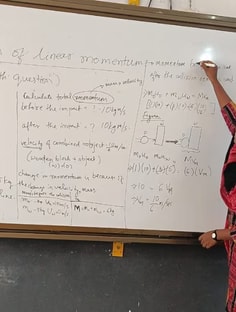
Priyanka taught 9 days ago
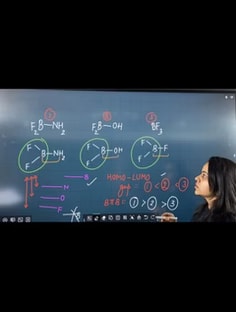
The student and tutor reviewed the mechanisms of SN1, SN2, and elimination reactions, focusing on factors influencing the reaction pathway such as substrate structure, solvent, and nucleophile/base strength. They practiced predicting the outcome of substitution and elimination reactions based on given conditions, and the student identified which substrates would proceed via SN1.
SN1 Reaction Mechanism
SN2 Reaction Mechanism
Elimination Reactions (E1 and E2)
Carbocation Stability and Reaction Rates
Simran taught 16 days ago
The Student and Tutor reviewed alcohol protecting groups, diol cleavage, tosylation, ester reduction, and the Appel reaction. They worked through multi-step synthesis problems, focusing on reaction mechanisms and product prediction. The session concluded with a discussion of protecting ketones and using Grignard reagents.
Alcohol Protecting Groups
Diol Cleavage with NaIO₄
SN2 Reactions & Stereochemistry
Grignard Reagents in Ester Reactions
Protecting Carbonyls as Acetals/Ketals
Apple Reaction
Reactivity Order: Carbonyl Compounds
Priyanka taught 27 days ago
The Student and Tutor worked through practice problems on elimination reactions in organic chemistry, focusing on the E2 mechanism and identifying major alkene products. They practiced calculating alpha-hydrogens to determine product stability and explored how different reagents facilitate these reactions.
Alpha Hydrogens and Zaitsev's Rule
Reagents in Elimination Reactions
E2 Elimination Mechanism
Srishti taught about 1 month ago
The Tutor and Student reviewed the chemistry concepts of redox reactions, including definitions of oxidation and reduction based on oxygen, hydrogen, and electrons. They practiced assigning oxidation numbers to elements in various compounds and identified oxidizing and reducing agents. Future sessions were planned to cover net ionic equations and electronic configuration.
Redox Reactions
Oxidation Numbers
Oxidizing and Reducing Agents
Anjali taught about 1 month ago
The Tutor and Student reviewed concepts in organic chemistry, including NMR and IR spectroscopy, aromaticity, and the Diels-Alder reaction. They practiced identifying spectral signals, determining aromaticity based on Huckel's rule, and understanding Diels-Alder reaction mechanisms and reactivity. Follow-up study was recommended for radical reactions, nucleophilic substitution, elimination, and addition reactions.
1H and ¹³C NMR Spectroscopy
Aromaticity
Diels-Alder Reaction
Radical Reactions (NBS Bromination)
Vaishnavi taught 4 months ago
The Student practiced predicting NMR spectra, including splitting patterns and chemical shifts, for given organic structures. The Tutor explained epoxide preparation reactions and mechanisms, including the use of MCPBA and halo hydrin cyclization. The Student was assigned a homework sheet with mixed NMR problems, and the Tutor will share a roadmap for NMR spectroscopy.
Predicting NMR Spectra
Aldehyde and Ketone Synthesis via Oxidation
Protecting Groups: Acetals and Ketals
Epoxide Reactions: SN1 vs SN2 Mechanisms
Epoxide Synthesis: Halohydrin Cyclization
Epoxide Synthesis: Peracid Oxidation
D₂O Exchange in Alcohols
Homework help through chemistry tutoring in Miami


Top chemistry tutors helping students near Miami
Help with chemistry tests, assignments, and concepts


Miami's Chemistry Lifeline: Driving Coastal Discovery and Shaping Green Futures

At the forefront of Miami's chemical prowess are its leading academic institutions, diligently fostering a new generation of scientists and spearheading crucial research. Florida International University (FIU), a large public research university, exemplifies this with its highly active Department of Chemistry and Biochemistry. FIU's research is deeply integrated with South Florida's environmental realities; their efforts include extensive studies on water quality in Biscayne Bay and the Everglades, understanding microplastics pollution in marine environments, and analyzing the chemical effects of climate change. Recent faculty discoveries at FIU are particularly impactful, such as innovative methods for detecting emerging contaminants like PFAS ("forever chemicals") in local water systems, directly safeguarding community health. Moreover, their work delves into the chemical mechanisms behind coral reef degradation due to ocean acidification, seeking vital solutions for these imperiled ecosystems. Complementing this, the University of Miami (UM), a prestigious private research university, also hosts a robust Department of Chemistry. Connected to its renowned Rosenstiel School of Marine, Atmospheric, and Earth Science, UM's expertise in marine chemistry and atmospheric chemistry is particularly critical, offering unique research avenues into the chemical processes shaping Miami's coastal and climatic future. Together, these universities provide a dynamic environment for hands-on learning and faculty-mentored research, while Miami Dade College (MDC) offers essential foundational chemistry courses, serving as an accessible entry point for students aspiring to these four-year programs.
In a coastal city facing distinct environmental pressures, chemistry stands as an indispensable tool for preservation and sustainability. Given Miami's reliance on groundwater and its extensive waterways, chemistry underpins critical efforts to ensure environmental health. Local and state agencies, such as the South Florida Water Management District, alongside private environmental consulting firms, heavily rely on chemists for sophisticated pollution monitoring, advanced water treatment processes, and vital Everglades restoration projects. The ongoing battle against saltwater intrusion, a severe consequence of rising sea levels impacting drinking water supplies, fundamentally relies on chemical understanding and innovative solutions. The study of persistent pollutants, nutrient loads, and their impact on marine life in Biscayne Bay and beyond further highlights chemistry’s daily, essential role in protecting Miami's unique natural assets and ensuring the well-being of its population.
For students and parents, a chemistry education in Miami serves as a powerful springboard into a variety of high-demand sectors, offering fulfilling careers where scientific insight makes a real difference. For those passionate about the environment, Miami offers direct pathways; research opportunities at FIU or UM focusing on marine or environmental chemistry can lead to roles with organizations dedicated to protecting the Everglades or improving water quality, with local internships providing invaluable real-world experience. Moreover, Miami’s thriving healthcare sector, anchored by institutions like Jackson Memorial Hospital and the University of Miami Health System, creates strong demand for chemists in clinical laboratories, medical diagnostics, and pharmaceutical support. The city’s growing biomedical industry, including startups in regenerative medicine and medical device development, actively seeks chemists for research and development. Miami's unique coastal position also fosters an emerging marine biotechnology sector, where chemists can find roles developing new compounds from marine organisms for pharmaceuticals or cosmetics, or researching solutions for ocean-related challenges. Lastly, given Miami's pivotal role as a gateway to Latin America, chemistry graduates can explore unique opportunities in international collaborations, especially for public health or environmental issues relevant across the Americas.