Chemistry tutor near me in Fort Lauderdale, FL
Learn from the best: Top-rated and verified Chemistry experts
Filters
Level
Topics
Specialities
Price
Education
Tools Used
Special Needs
Curriculum
Level
Topics
Chemistry
Organic Chemistry
Chemical Reactions
Physical Chemistry
Inorganic Chemistry
Analytical Chemistry
Show more
Specialities
Homework help
Test prep strategies
Visual learning
Personalized learning plans
Real world application
Review sessions
Show more
Price
Education
Tools Used
Digital whiteboard
Quizzes
Assessments
Show more
Special Needs
ADHD
ASD
Learning Disabilities
Show more
Curriculum
International Baccalaureate
Common Core State Standards
State-Specific Standards
Show more

Recently completed chemistry lessons in Fort Lauderdale
Downtown, Las Olas, Victoria Park see active chemistry tutoring
Kelechi taught 7 days ago
The student worked with the tutor on a set of organic chemistry practice exam questions. They reviewed concepts such as spectroscopy, stereochemistry, isomerism, and nomenclature, practicing problem-solving techniques for various question types. The session concluded with a plan to continue reviewing challenging topics in future meetings.
Conjugation and UV-Vis Spectroscopy
Bond Strength and Factors Affecting It
Stereoisomers and Stereocenters
NMR Spectroscopy: Distinguishing Compounds
Aarti taught 15 days ago
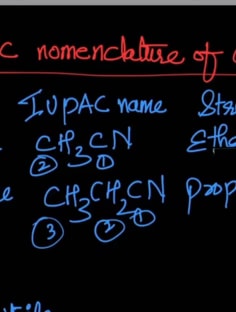
The Tutor and Student worked on organic chemistry concepts, covering IUPAC nomenclature for various functional groups and the principles of resonance structures. They practiced naming organic molecules and drawing resonance diagrams for compounds like ozone and nitrate ion, with plans to continue with more complex examples in the next session.
Organic Nomenclature: Prefixes
Suffixes
and Functional Groups
Substituents in Organic Nomenclature
Resonance Structures and Stability
Prioritization in Nomenclature and Resonance
Kelechi taught 20 days ago
The session covered the formation of ionic compounds, writing their chemical formulas by balancing charges, and understanding factors affecting their melting points and electrical conductivity. The student practiced these concepts through various examples and problems, including balancing ionic equations.
Predicting Chemical Formulas from Ions
Factors Affecting Melting Point of Ionic Compounds
Electrical Conductivity of Ionic Compounds
Predicting Group Number from Valence Electrons
Elbright taught 25 days ago
The Student practiced Diels-Alder reactions, focusing on predicting products and identifying reactants in retro-Diels-Alder reactions. Stereochemistry of the products was also addressed, including endo/exo preferences. The Student was assigned practice problems from the textbook.
Diels-Alder Reaction: Diene Reactivity
Diels-Alder Product Structure
Kinetic vs. Thermodynamic Control
Diels-Alder with Substituted Dienophiles
Retro Diels-Alder
sp² Carbons and Stereocenters
Triple Bonds in Dienophiles
Shaista taught about 1 month ago
The Tutor and Student reviewed the classification of alcohols based on the degree of the carbon atom and began discussing IUPAC nomenclature rules for organic compounds. They planned to continue with nomenclature and reaction mechanisms in the next session, scheduling a two-hour class for the following day.
Classification of Alcohols by Degree
IUPAC Nomenclature Structure
Functional Group Priority and Nomenclature
Parent Chain Selection Rules
Numbering of the Parent Chain
Kelechi taught about 1 month ago
The tutor and student worked through several quantitative chemistry problems, focusing on calculating molarity, mole fraction, mass percentage, and vapor pressure. They practiced applying relevant formulas and converting units to solve these problems, with the tutor providing explanations and step-by-step guidance.
Molarity Calculation
Mole Fraction Calculation
Mass Percentage Calculation
Vapor Pressure and Composition of Solutions
Colligative Properties: Freezing Point Depression
Test prep and tutoring for chemistry in Fort Lauderdale


Professional chemistry tutor in cities near Fort Lauderdale
Improving school performance with chemistry homework support


Charting Future Discoveries and Protecting Fort Lauderdale's Watery Heart

Academic Tides: Building Foundational Chemistry Knowledge in Fort Lauderdale
At the core of Fort Lauderdale's chemical expertise are its academic institutions, diligently fostering the next generation of scientists. Nova Southeastern University (NSU), a key university in the city, offers strong Bachelor of Science degrees in Chemistry and Biochemistry, alongside advanced programs that significantly integrate chemical principles in fields like Pharmaceutical Sciences and Oceanography. NSU strongly emphasises hands-on laboratory experiences and direct undergraduate research opportunities, enabling students to collaborate with faculty on projects often bridging general chemistry with local environmental concerns or health sciences. Supporting this vital academic pipeline, Broward College (BC), with multiple campuses across Broward County, including Fort Lauderdale, provides essential foundational chemistry courses. These accessible programs equip many students with the necessary chemical knowledge to seamlessly transfer to four-year universities like NSU or to pursue direct technical roles in science.
Scientific Explorations: Unveiling Chemical Innovations from Fort Lauderdale's Labs
Beyond fundamental education, Fort Lauderdale's universities are engaged in pioneering chemical research, with discoveries directly impacting the unique challenges of its coastal environment and contributing to the broader scientific community. Researchers within NSU's Chemistry Department and its Halmos College of Arts and Sciences are making significant contributions, particularly in the realm of marine chemistry and environmental health. Recent breakthroughs from NSU's chemistry and marine science departments include impactful studies on the prevalence and chemical impact of microplastics and pharmaceutical residues in marine ecosystems, providing crucial insights for understanding and mitigating coastal pollution. Their work also extends to analysing ocean acidification and coral reef chemistry, directly relevant to the health and sustainability of South Florida's vital marine life. This dedication to local and globally significant chemical research provides students with unparalleled opportunities to be part of real-world scientific advancements.
Propelling Prosperity: Chemistry's Vital Link to Fort Lauderdale's Economy
A robust understanding of chemistry proves vital across several of Fort Lauderdale's key economic sectors, translating into diverse and impactful career opportunities for graduates. In the thriving Marine Industry, beyond its tourism facade, Fort Lauderdale stands as a global centre for yacht manufacturing, repair, and marine services. Here, chemists are essential for advanced materials science (e.g., developing composite materials), formulating specialised protective coatings and antifouling paints, and ensuring the safe management of hazardous marine chemicals. The city’s strong Healthcare and pharmaceutical sectors, supported by major institutions like Broward Health and Holy Cross Health, demand chemists for crucial roles in clinical laboratories (performing intricate chemical diagnostics), pharmaceutical compounding, and supporting regional drug distribution networks. The critical need to manage Fort Lauderdale's unique environment also positions Environmental Services and Water Management as a significant employer of chemists, both within municipal utilities and private consulting firms. Moreover, the regional presence of Cosmetics, Personal Care, and Consumer Goods manufacturers often requires chemists for product development, rigorous quality control, and compliance in formulating new products.
Exciting Chemistry Careers Blooming in Fort Lauderdale
For students and parents, pursuing chemistry in Fort Lauderdale offers a clear compass toward a future filled with innovation and impactful contributions within a dynamic career landscape. Students should actively seek out undergraduate research opportunities at NSU, focusing on areas like marine chemistry, environmental pollution, or medicinal chemistry, to gain invaluable hands-on experience and practical skills. Exploring internships with the City of Fort Lauderdale's water utilities or with local environmental organisations can provide direct exposure to real-world challenges in coastal management. Graduates will find that a strong foundation in chemistry equips them for roles that are not only professionally rewarding but also directly contribute to the city's health and sustainability. Ultimately, chemistry education in Fort Lauderdale prepares individuals for a range of vibrant careers, actively contributing to a resilient future for this unique Florida city.