Chemistry tutor near me in Queens, NY
Accelerate your learning with a top-rated Chemistry expert
Filters
Level
Topics
Specialities
Price
Education
Tools Used
Special Needs
Curriculum
Level
Topics
Chemistry
Organic Chemistry
Chemical Reactions
Physical Chemistry
Inorganic Chemistry
Analytical Chemistry
Show more
Specialities
Homework help
Test prep strategies
Visual learning
Personalized learning plans
Real world application
Review sessions
Show more
Price
Education
Tools Used
Digital whiteboard
Quizzes
Assessments
Show more
Special Needs
ADHD
ASD
Learning Disabilities
Show more
Curriculum
International Baccalaureate
Common Core State Standards
State-Specific Standards
Show more

Queens students practice chemistry with 1-on-1 guidance
Students from Astoria, Flushing, Forest Hills take chemistry classes
Tanya taught 2 days ago
The Tutor and Student reviewed IR spectroscopy, covering characteristic absorption peaks for various functional groups like alcohols, amines, nitriles, and carbonyls. They practiced interpreting spectra to differentiate between primary, secondary, and tertiary amines and identifying the functional group versus fingerprint regions. The Tutor planned to share additional graphs for further observation.
IR Spectroscopy: Wavelength and Wave Number Relationship
Characteristic IR Absorption Bands
IR Spectrum Regions: Functional Group vs. Fingerprint
Distinguishing Primary
Secondary
and Tertiary Amines by IR
Aarti taught 10 days ago
The Tutor and Student worked on organic chemistry nomenclature, focusing on IUPAC naming conventions and the prioritization of functional groups. They then transitioned to understanding resonance structures, covering various patterns and drawing techniques, and briefly touched upon aromatic compound nomenclature and resonance.
Functional Group Priority and Nomenclature
Aromatic Compounds: Benzene and Substituents
Resonance and Electron Delocalization
Vaishnavi taught 17 days ago
The session covered essential functional group conversions in organic chemistry, focusing on transformations involving alkyl halides and alcohols. The tutor explained protecting group strategies and methods for increasing carbon chain length, such as converting alkyl halides to nitriles. The student and tutor scheduled a follow-up session to continue discussing synthesis strategies.
Functional Group Conversions in Organic Synthesis
Reactions of Alkyl Halides
Increasing Carbon Chain Length via Nitriles
Functional Group Protection
Lipika taught 23 days ago
The tutor and student reviewed various types of chemical reactions, including synthesis, decomposition, and combustion. They practiced identifying reaction types, balancing equations, and writing formulas from word equations, with plans to cover ionic equations in the next session before a Thursday test.
Types of Chemical Reactions
Balancing Chemical Equations
Ionic Equations: Total and Net
Predicting Products of Double Replacement Reactions
Lipika taught 29 days ago
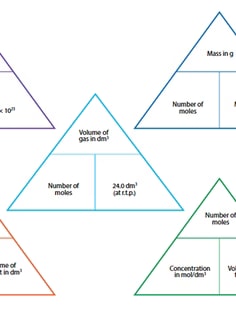
The student and tutor worked through stoichiometry problems, focusing on balancing equations and calculating product masses. They then practiced percentage yield calculations, where the student learned to determine theoretical yield and apply the formula for actual yield divided by theoretical yield multiplied by 100. The next session was scheduled to continue practice on these topics.
Balanced Chemical Equations
Stoichiometry and Mole Ratios
Molar Mass and Conversions
Gas Volume at STP
Percentage Yield
Reshma taught about 1 month ago
The Tutor and Student worked through stoichiometry problems, focusing on calculating theoretical yield and percent yield for various chemical reactions. They practiced balancing equations, using molar ratios, and converting units, with plans to continue preparing for an upcoming test.
Theoretical Yield Calculation
Balancing Chemical Equations
Actual Yield vs. Theoretical Yield
Percent Yield
Chemistry homework and test prep help in Queens


Best chemistry tutors serving students in Queens
Chemistry support for school and college students


Guardians of Queens - Chemistry in Health and Environmental Quality

Chemistry plays a critical, behind-the-scenes role in ensuring the health and safety of Queens' nearly 2.3 million residents. Given its extensive waterfront, diverse industrial zones, and dense population, maintaining environmental quality is paramount. Laboratories across the borough are constantly at work, using chemical analysis to monitor and manage crucial aspects of public well-being.
The New York City Department of Environmental Protection (DEP), for instance, heavily relies on chemical principles and ongoing analysis to ensure the safety and consistent quality of drinking water that serves all five boroughs, including Queens. This includes continuous testing for various chemical parameters and implementing treatment processes. Beyond potable water, chemistry is vital for monitoring water bodies like Flushing Bay and the East River for pollutants, and assessing soil quality in public parks and development sites. Companies like Enviro-Chem Laboratories, based in Queens, specialise in providing chemical testing and analysis services for environmental samples and industrial processes, playing a direct role in maintaining local standards. From ensuring the chemical safety of food processing in local businesses to vital pest control initiatives, the applied knowledge of chemistry directly safeguards the health of Queens' diverse communities.
Igniting Futures: Education and Opportunities in Queens' Chemistry Scene
For students and parents looking towards the future, Queens offers robust academic foundations that directly translate into rewarding careers across various sectors. The borough's universities provide strong programs designed to equip graduates with essential chemical knowledge and practical skills.
Discover Your Scientific Self:
Queens College (CUNY) stands as a leading institution for chemical education, offering comprehensive Bachelor of Arts and Bachelor of Science degrees, alongside advanced doctoral studies through the CUNY Graduate Centre. Its Chemistry and Biochemistry Department is at the forefront of innovation, with faculty and students engaged in pioneering research in areas like nanotechnology, designing new medicines, advanced materials, and solving environmental challenges. Students gain invaluable hands-on experience by participating in real-world research projects. Similarly, St. John's University's Queens Campus provides robust chemistry programs with modern facilities and active research in areas such as medicinal chemistry and analytical techniques. York College (CUNY) in Jamaica, Queens, also offers a strong Bachelor of Science in Chemistry, emphasising core principles and vital laboratory skills, ensuring graduates are well-prepared for the scientific workforce.