Top-rated online Chemistry tutor
Boost Chemistry grades with expert online tutoring
Filters
Level
Topics
Specialities
Price
Education
Tools Used
Special Needs
Curriculum
Level
Topics
Chemistry
Organic Chemistry
Chemical Reactions
Physical Chemistry
Inorganic Chemistry
Analytical Chemistry
Show more
Specialities
Homework help
Test prep strategies
Visual learning
Personalized learning plans
Real world application
Review sessions
Show more
Price
Education
Tools Used
Digital whiteboard
Quizzes
Assessments
Show more
Special Needs
ADHD
ASD
Learning Disabilities
Show more
Curriculum
International Baccalaureate
Common Core State Standards
State-Specific Standards
Show more

Students explore chemistry concepts through online lessons
Online chemistry classes taken by students from LA, NYC, Dallas
Lipika taught 3 days ago
The student and tutor reviewed Graham's Law of Diffusion and Effusion, practicing problems that calculate relative rates of effusion, determine unknown molar masses, and find gas velocities based on molar masses. They planned to continue with similar problems, potentially covering more complex scenarios next time.
Graham's Law of Effusion/Diffusion
Molar Mass and Gas Velocity
Algebraic Manipulation in Gas Law Problems
Tanya taught 20 days ago
The Tutor and Student worked through problems related to IUPAC nomenclature for organic compounds, including naming branched alkanes, cyclic compounds, and understanding substituent types. They also reviewed general formulas for alkanes, alkenes, and alkynes, and discussed conformational analysis and stability of butane derivatives.
IUPAC Naming Convention
Conformational Analysis and Stability
Newman Projection and Stereochemistry Visualization
General Formulas for Hydrocarbons
Shaista taught 26 days ago
The tutor and student reviewed various organic chemistry reactions, including the formation of cyanohydrins, reduction of nitriles and esters with LiAlH4 and DIBAL-H, reactions of Grignard reagents with nitriles, and the reduction of carbonyl compounds to alkanes using Mosingo, Clemmensen, and Wolff-Kishner methods. The next session is planned to cover Bare villager oxidation and Wittig reactions.
Addition of HCN to Carbonyl Compounds (Cyanohydrin Formation)
Reduction of Nitriles with Lithium Aluminum Hydride (LiAlH₄) and DIBAL-H
Reactions of Organometallic Reagents (Grignard & Organolithium) with Nitriles
Reduction of Carbonyl Compounds to Alkanes
Simran taught about 1 month ago
The tutor and student worked through multiple organic chemistry problems, using 1H NMR and 13C NMR spectroscopy, alongside IR data, to deduce the structures of various compounds. They practiced interpreting chemical shifts, splitting patterns, and degrees of unsaturation. The next session will continue with more practice problems.
Interpreting NMR Spectra for Structure Elucidation
Degree of Unsaturation (DoU)
Signal Splitting Patterns in ¹H NMR
Electronegativity and Chemical Shift
Srishti taught about 1 month ago
The Tutor and Student reviewed chemical reaction types, including combination, decomposition, single replacement, and double replacement reactions. They practiced predicting reaction products using the reactivity series and by understanding ionic charges and polyatomic ions. The session concluded with an in-depth explanation and practice of net ionic equations, focusing on identifying precipitates and balancing reactions.
Types of Chemical Reactions
Balancing Chemical Equations and Stoichiometric Coefficients
Predicting Products using Reactivity Series
Ionic Compounds
Charges
and Formulas
Net Ionic Equations
Srishti taught about 1 month ago
The tutor and student reviewed the nomenclature, structure, and functional isomerism of aldehydes and ketones. They practiced naming conventions and discussed the reactions of these compounds with reducing agents like LiAlH4 and NaBH4. The next session is planned to cover Grignard reagents and mechanisms.
Aldehydes: Nomenclature and Structure
Ketones: Nomenclature and Structure
Aldehydes and Ketones as Functional Isomers
Reducing Agents: LiAlH₄ and NaBH₄
Substituents: Formyl and Oxo Groups
Learn chemistry online with tutors who cover all your needs



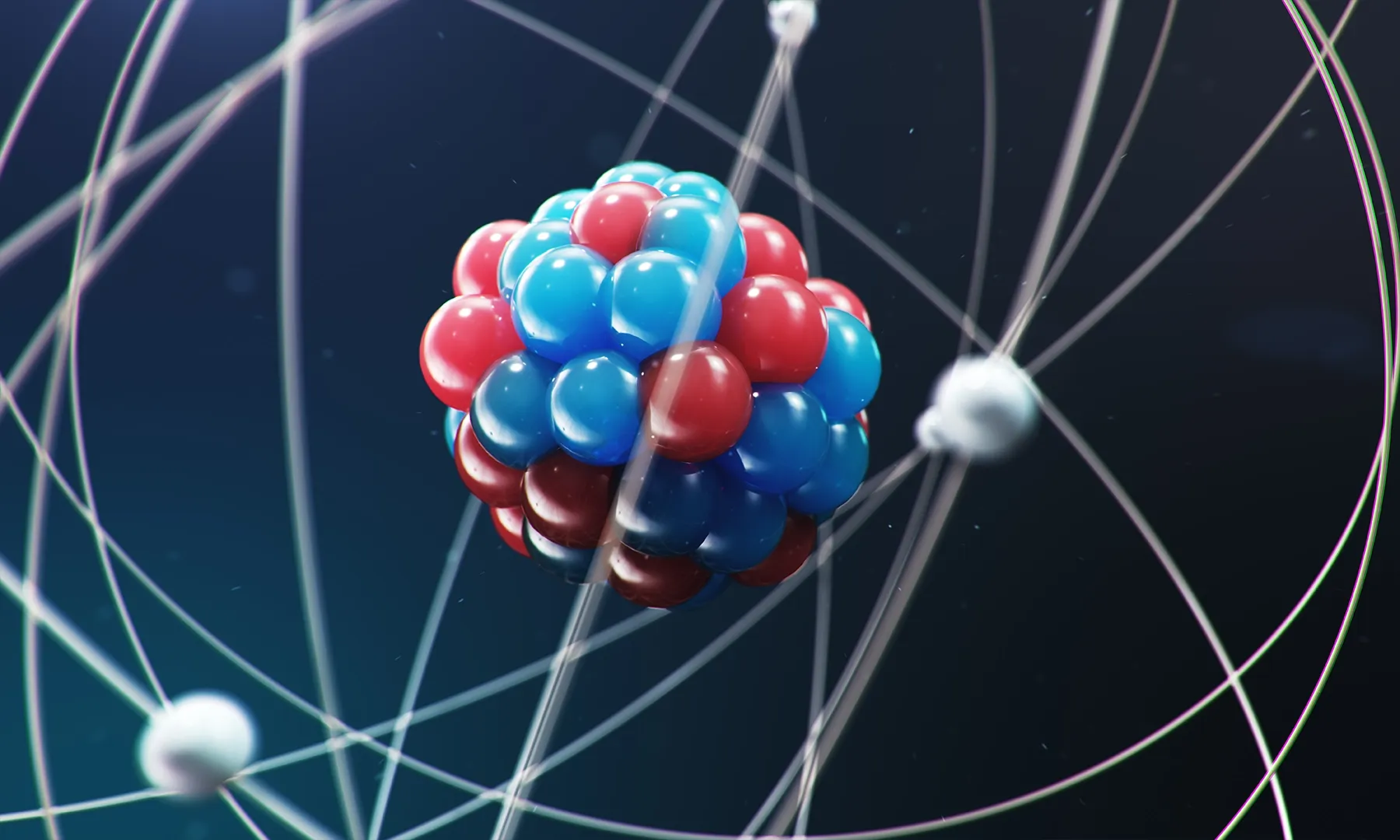

Online chemistry tutoring insights

Total Online Chemistry tutors
858 Chemistry tutors available

Experienced Online Chemistry tutors
Average 6 years of teaching experience

Online Chemistry Tutor Qualifications
80% hold a Master’s or PhD degree
Learning chemistry online, Tips and tools

How can you learn chemistry online?
Chemistry is the study of matter and its transformations, with applications ranging from pharmaceuticals to renewable energy. Learning chemistry equips you with critical problem-solving skills that can drive innovation in various fields.
However, In-person classes can be overwhelming. They often use long lectures and old lab setups. There are few interactive activities. Research shows many educators believe traditional methods cause mental overload. It can be hard for you to picture 3D molecules and atomic structures from flat diagrams. Following complex reaction steps in one lecture may be difficult.
Online resources let you learn at your own pace. They offer clear video lessons, modular content, and interactive simulations. Khan Academy, MIT OpenCourseWare, and LibreTexts provide structured lessons. They include practice exercises and quizzes. Simulation software and virtual labs give immediate feedback. This makes difficult ideas easier to understand.
By supplementing your offline education with these digital resources, you can overcome traditional challenges and build a deeper, more practical understanding of chemistry.
Why take chemistry tutoring online? Exploring the key benefits
Online chemistry tutoring provides you with a customized learning environment that directly addresses the subject’s complexities. You have the flexibility to schedule lessons at convenient times. This allows you to study from any location, eliminating the need to adhere to rigid classroom timetables.
In these personalized sessions, you receive undivided attention focused on key topics such as reaction mechanisms, thermodynamics, and periodic trends. Instant, real-time feedback allows you to clear doubts immediately. This is essential for mastering challenging concepts.
Interactive visual resources such as PhET Interactive Simulations and ChemCollective virtual labs let you see chemical reactions in real time. These tools make abstract concepts like electron movement and molecular interactions easier to understand.
Additionally, online chemistry tutoring resources enable you to work at your own pace, revisiting difficult material until you achieve full clarity. This tailored approach not only improves your grasp of chemistry but also boosts your confidence and academic performance.
With expert guidance from chemistry tutors online and supportive digital tools, you are better prepared for exams and real-world applications, ensuring sustained success in chemistry every day.
Tips to select the right chemistry tutor online
Identify Your chemistry needs
Clarify your specific challenges, whether balancing chemical equations, understanding reaction mechanisms, or difficulty in test prep. Knowing your needs helps you choose a tutor with the right expertise.
Review tutor qualifications
Opt for a tutor holding at least a bachelor's degree in Chemistry—or a related field. They should have extensive teaching experience, excellent ratings, and proven proficiency with online platforms and interactive tools tailored for chemistry.
Experience a free trial lesson
Book a trial session to assess their teaching style, clarity, and engagement. If the lesson meets your expectations, continue with regular sessions. Wiingy offers online chemistry tutoring at an affordable rate of $28.
Leverage Wiingy’s Guarantee
If unsatisfied, Wiingy’s perfect tutor match guarantee ensures you quickly switch to another expert. This process guides you in selecting the ideal online chemistry tutor to meet your needs, ensuring a stress-free learning experience.
Frequently asked questions
What are the best online resources to learn chemistry?
Which fundamental chemistry concepts can be mastered effectively online?
How can online chemistry tutors help me with my test prep?
How can I manage my school schedule with online chemistry tutoring?
How can an online chemistry tutor help me if I am underconfident?
What are the benefits of an online chemistry tutor?
Can I arrange my chemistry tutoring sessions at my convenience?
What factors should you consider while choosing an online chemistry tutor?