Chemistry tutor near me in Irvine, CA
Understand Chemistry faster with a dedicated tutor
Filters
Level
Topics
Specialities
Price
Education
Tools Used
Special Needs
Curriculum
Level
Topics
Chemistry
Organic Chemistry
Chemical Reactions
Physical Chemistry
Inorganic Chemistry
Analytical Chemistry
Show more
Specialities
Homework help
Test prep strategies
Visual learning
Personalized learning plans
Real world application
Review sessions
Show more
Price
Education
Tools Used
Digital whiteboard
Quizzes
Assessments
Show more
Special Needs
ADHD
ASD
Learning Disabilities
Show more
Curriculum
International Baccalaureate
Common Core State Standards
State-Specific Standards
Show more

Chemistry classes with 1-on-1 tutor support in Irvine
Students from Turtle Rock, Woodbridge, University Hills take lessons
Robert taught 3 days ago
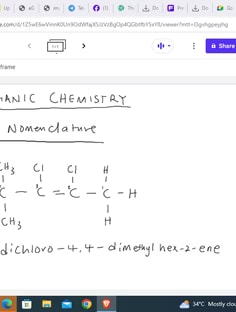
The Student and Tutor reviewed various organic chemistry concepts, including nomenclature, reaction mechanisms (Wittig, Cannizzaro, enamine formation), synthesis reactions, carbohydrate chemistry (chain extension, Fischer projections, ring formation), and stereochemistry. They practiced identifying reactions, predicting products, and drawing mechanisms, with a plan to focus on practice problems for the upcoming exam.
Wittig Reaction Limitations
Enamine Formation Requirements
Canizzaro Reaction Conditions
Acetal Hydrolysis
Fischer Projections and Chirality
Simran taught 19 days ago
The tutor and student reviewed various conformational analyses, including eclipsed and bisected forms of alkenes and chair conformations of cyclic systems like steroids. They practiced drawing these structures and discussed factors affecting their stability. The next session was scheduled to cover remaining questions.
Eclipsed vs. Bisected Conformations
Chair Conformations of Cyclic Alkanes
Fused and Spirocyclic Systems
Srishti taught 23 days ago
The Tutor and Student worked through a review worksheet for an upcoming exam, covering topics such as electrophilicity of carbonyl compounds, inductive and resonance effects, leaving group ability, hybridization changes during reactions, and the Wittig reaction mechanism and stereochemistry. They also practiced an arrow-pushing mechanism for a complex organic reaction.
Electrophilicity of Carbonyl Compounds
Leaving Group Ability
Hybridization and Nucleophilic Attack on Carbonyls
Wittig Reaction Stereochemistry
Tribhuvan taught 30 days ago
The tutor and student reviewed thermochemistry concepts, including exothermic/endothermic reactions, activation energy, specific heat capacity, latent heat, Hess's Law, and bond enthalpy. They practiced solving problems involving heat transfer, phase changes, and calculating enthalpy changes using various formulas and principles. The next steps involved the student continuing to practice these concepts.
Enthalpy Change and Reaction Types
Activation Energy
Heat Transfer and Specific Heat Capacity
Latent Heat and Phase Changes
Hess's Law and Bond Enthalpy
Dr.Trusha taught about 1 month ago
The class reviewed the distinction between tripson and chymotrypsin based on their target amino acids. The core academic content introduced catabolism and anabolism as processes related to breaking down and building molecules, respectively. The session concluded with a brief mention of digestion starting in the mouth and a discussion about rescheduling the next class due to the student's illness.
Enzymatic Cleavage Specificity: Trypsin vs. Chymotrypsin
Metabolic Pathways: Catabolism vs. Anabolism
The Role of Digestion
Srishti taught about 1 month ago
The tutor and student reviewed Infrared (IR) spectroscopy and the concept of Degree of Unsaturation. They practiced calculating DoU and interpreting IR spectrum peaks to identify functional groups and suggest molecular structures. The next session will cover more examples and additional functional group comparisons.
Degree of Unsaturation (DoU)
Infrared (IR) Spectroscopy: Functional Group Identification
Key IR Spectroscopy Wavenumber Ranges
Tutoring for chemistry homework and test prep in Irvine


Irvine's Innovative Chemistry: Nobel-Winning Discoveries to Global Solutions

The Epicentre of Discovery: Academic Excellence in Chemistry
At the very heart of Irvine's scientific prestige is the University of California, Irvine (UCI), which boasts a nationally ranked and highly influential Department of Chemistry. The department's history is steeped in transformative, world-changing research, underscored by its direct connection to multiple Nobel Prize winners:
- Dr. F. Sherwood Rowland (Nobel Prize in Chemistry, 1995): A founding faculty member of the UCI Chemistry Department, Dr. Rowland's groundbreaking research revealed how man-made chlorofluorocarbons (CFCs) were depleting the Earth's vital ozone layer. This discovery fundamentally changed global environmental policy and our understanding of atmospheric chemistry.
- Dr. Irwin "Ernie" Rose (Nobel Prize in Chemistry, 2004): As a researcher at UCI's College of Medicine, Dr. Rose's work uncovered the critical chemical pathway of ubiquitin-mediated protein degradation. This discovery is essential to understanding cellular processes like cell division and DNA repair, with profound implications for cancer research and other diseases.
This legacy of innovation continues today through UCI's comprehensive degree programs, with faculty making significant contributions in fields such as sustainable polymer chemistry (developing new methods for recycling plastics), chemical biology, and materials chemistry. Supporting this academic titan, Irvine Valley College (IVC) offers a robust foundational chemistry program, providing an accessible and highly effective transfer pathway for students aiming to join UCI or other top-tier universities.
Fueling Innovation: Chemistry's Vital Role in Irvine's Industries
The knowledge cultivated in Irvine’s academic institutions directly propels its most influential industries, particularly the world-leading medical device and biotechnology sectors. Irvine and the broader Orange County area are a global nexus for medical technology, home to industry giants like Edwards Lifesciences, a pioneer in artificial heart valves; Masimo, a leader in noninvasive patient monitoring; and Abbott Medical Optics. These companies and numerous smaller biopharma startups rely profoundly on chemists for a wide range of critical functions. Chemists are indispensable in research and development, particularly in polymer chemistry for creating advanced biocompatible materials used in medical implants, and surface chemistry for developing sophisticated diagnostic sensors. They also play vital roles in analytical chemistry for rigorous quality control, ensuring the safety and efficacy of life-saving products. This tight integration between academia and industry makes Irvine a unique ecosystem where chemical innovations rapidly transition from the lab bench to global health solutions.
Securing the Future: Environmental Chemistry and Local Career Pathways
Beyond driving industry, chemistry is essential for managing Irvine's urban environment and provides clear, rewarding career paths for its graduates. The Orange County Water District (OCWD), serving Irvine, is a global leader in water sustainability, operating the world-renowned Groundwater Replenishment System (GWRS). This state-of-the-art facility uses a chemically intensive, multi-stage process involving reverse osmosis and advanced oxidation to purify wastewater to a quality that exceeds drinking water standards, demonstrating the profound real-world impact of applied environmental chemistry. Chemists are also crucial in regional efforts to monitor and improve air quality with agencies like the South Coast Air Quality Management District (SCAQMD).
For students and parents, this local landscape provides a direct compass to success.
- Target Medical Technology: The high concentration of medical device companies provides unparalleled internship and career opportunities. Focusing on analytical or polymer chemistry at UCI or gaining foundational skills at IVC can directly lead to roles at companies like Edwards Lifesciences.
- Contribute to Environmental Solutions: The innovative work at the OCWD offers impactful career paths for chemists passionate about water quality and sustainability.
- Leverage Undergraduate Research: Participating in research at UCI provides invaluable hands-on experience, a critical advantage for both graduate school admissions and high-tech industry jobs.