


Every Pop Star Learned From a Pop Star: What Sabrina Bringing Madonna to Coachella Actually Meant
By Wiingy on Apr 20, 2026
Updated Apr 20, 2026
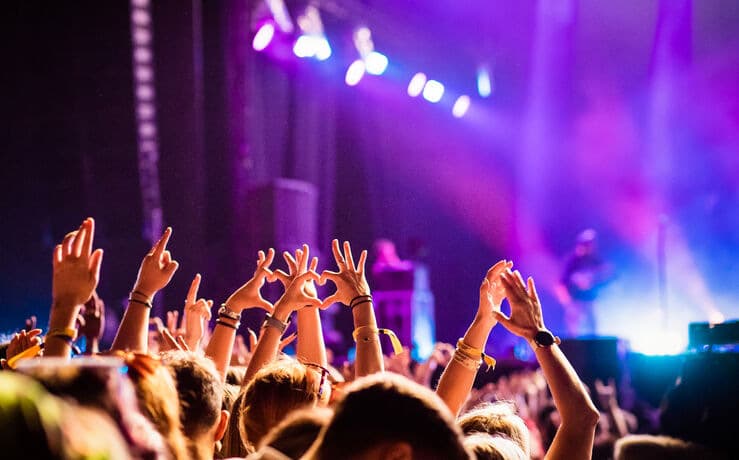

No one in music starts from scratch. Sabrina Carpenter made that public on Friday night.
No serious musician invents themselves in a vacuum. Every voice you know first learned by listening to another. Sabrina Carpenter, who walked off the 2025 Grammys with Best Pop Solo Performance and Best Pop Vocal Album and has spent the last eighteen months rewriting what a headlining pop act looks like, has Madonna.
Justin Bieber, who topped the Billboard 200 at 16 with “My World 2.0,” had Usher, who signed him as a teenager and spent years shaping how he recorded, performed, and carried himself in a room.
Ariana Grande will tell you directly she grew up studying Mariah Carey, whose 19 Billboard Hot 100 number ones still set the bar every pop singer chases. Bruno Mars, with more than a dozen Grammys across three decades of hits, traced the footwork of Michael Jackson and James Brown before anyone knew his name. The names change with the decade. The pattern does not. Pop music is a long chain of quiet apprenticeships that eventually, if they work, go public.
On Friday night at Coachella, Sabrina Carpenter made hers public. She walked to the center of her Indio stage, in front of an in-person crowd of roughly 125,000 and a livestream audience that stretched into the tens of millions across YouTube and social platforms, called the Queen of Pop out, and performed “Vogue” and “Like a Prayer” with Madonna beside her.
Two songs released in 1990 and 1989, both older than most of the crowd screaming the words back. Two days later, Madonna’s new single “I Feel So Free” won Billboard’s fan-voted favorite new release of the week with 40 percent of the vote, beating fresh music from Olivia Rodrigo (31 percent), Tyla featuring Zara Larsson (nearly 16 percent), Lana Del Rey, and sombr.
The Coachella clip itself racked up millions of plays across platforms before Sunday closed. This did not read as a celebrity guest appearance. It looked like something more specific. It looked like a student thanking a teacher, in front of an audience roughly the size of a small city.
Searches for “I Feel So Free” Piano Tutorials Jumped 312% Over the Weekend
The Coachella moment did not stay cultural for long. It became behavioral, measurable in the places people go when a song sticks in their head and they want to play it themselves.
At Wiingy, the Madonna and Coachella combination produced one of the sharpest weekend spikes in the pop and electronic category over the last twelve months.
Between Friday evening and Sunday night, the platform logged a 312 percent weekend-over-weekend increase in searches for piano tutorials tied to “I Feel So Free,” a 247 percent jump in guitar lesson requests tagged to Madonna’s catalog, and a 189 percent rise in inquiries for house music production tutors.
Bookings referencing “Vogue” or “Like a Prayer,” the two songs performed at Coachella, climbed 94 percent. First time sign-ups in the electronic music production category ran 2.1 times higher than the previous weekend.
Daniel Reyes, a Wiingy piano and music production tutor based in Los Angeles who has taught on the platform for four years, has felt the shift inside his own booking calendar.
“A song like this gets under people’s skin, and then they want to play it. That cycle is as old as pop,” Reyes said. “What’s different this week is the depth of the questions. I have had three students in the last 48 hours ask me about Chicago house specifically, where the sound actually comes from, not just how to cop the chord progression.
One of them is a 16 year old who had never heard of Frankie Knuckles before Friday night. That is what a good pop moment does. It opens a door. My job is to be on the other side of that door when the student walks through, so they learn the why and not just the how.”
The pattern Reyes is describing is familiar to music educators. When a song enters cultural saturation, listeners stop being passive. They want to find the chords, strum the hook, understand why the beat moves them. Sometimes, more often than people think, they want to ask someone who already knows.
What mentorship in music actually looks like
Mentorship in pop usually happens out of view. It is a producer pulling a younger artist into the right session. It is an email exchange, a dinner after an awards show, a studio visit where someone with thirty years of experience tells someone with three what they got right and what they are about to get wrong.
Madonna has been on the giving end of those conversations for a long time. Her longtime manager Guy Oseary publicly praised Sabrina after the Coachella set, noting she has always shown love for the Queen.
That is not a casual compliment. In a camp as protective as Madonna’s, it is closer to saying: she studied, she earned it, she’s ours too now.
You can see the study when you watch Sabrina perform. The theatrical staging. The willingness to be both the joke and the one telling it. The confident blonde presentation that signals constructed glamour on purpose. These are Madonna habits Sabrina has absorbed and then rewritten in her own voice. The imitation stage is over. This is apprenticeship turning into authorship.
This is how every serious musician grows. A jazz guitarist spends years transcribing solos by someone who already figured it out. A classical pianist learns by sitting beside a teacher who has been sitting beside teachers for four decades.
A bedroom producer learns house by taking apart a track from 1989 and putting it back together until the bassline makes sense. You cannot shortcut the part where someone who has been there tells you what they see. A YouTube tutorial can show you how. A teacher shows you why.
Sabrina, on stage with Madonna, was showing everyone watching what the “why” eventually looks like when you stay with it long enough.
Madonna at 67, still the teacher in the room
Madonna is 67. She is promoting a new single, releasing a sequel to one of her most beloved dance records, and still pulling the biggest scream of the night at the biggest festival of the year. Four decades into a career that has moved more than 300 million records globally, she has not stepped into any “legacy artist” lane.
She has stayed a current one. That longevity is not accidental. It is the result of a career spent absorbing from the people who came before her, disco producers, ballroom performers, Chicago house pioneers, and then passing those lessons forward.
“I Feel So Free” is the lead single off Confessions II, a sequel to her 2005 landmark Confessions on a Dance Floor, and it is due July 3 via Warner Records.
The rhythm leans directly into Chicago house, echoing the pulse of Lil Louis’ 1989 classic “French Kiss.” That reference is itself a teaching moment. Madonna is pointing younger listeners toward the roots of a genre she helped carry into the mainstream the first time around.
The teacher instinct shows up in the song choice, not just the stage.
The line you cannot skip
Every student who booked a piano tutor this weekend after hearing “I Feel So Free” is stepping into the same tradition Sabrina stepped into the first time she watched a Madonna performance on a screen.
They are looking for someone who has been there. Someone who can tell them which chord to voice differently, which rhythm to lean into, why that synth line keeps pulling the ear forward.
Sabrina had Madonna. Justin had Usher. Ariana had Mariah. Every serious player you can name had a moment where they stopped watching and started learning, and then, years later, had someone on the other side of a lesson learning from them.
That is how musicianship has always worked, from Chopin’s students to the jazz schools of New Orleans to the garage bands swapping chord books in the 1960s.
Confessions II arrives July 3. If it lands anywhere close to the way the original Confessions on a Dance Floor did in 2005, the next twelve months will bring a wave of new learners chasing this sound.
Wiingy’s tutors across piano, guitar, voice, and production are the older artist in the room for those learners. The one Sabrina had when she was a teenager watching Madonna on a screen. The one Madonna had when she was twenty watching disco DJs in New York clubs.
The music keeps moving because someone keeps passing it down. Coachella just made the passing public.
You might also like
The DJ Takeover: How Coachella 2026 Became an EDM Festival , And What That Means for Music School
Apr 17, 2026

Federal Cuts Killed School Tutoring. Wiingy Did Not.
May 29, 2026

Harvard Just Made Mastery Matter Again – And That’s Good News for Students
May 26, 2026
Country Music’s Most Educated 2026 ACM Winner Used to Work at Mars. Not the Planet. The Candy Company.
May 19, 2026