


The DJ Takeover: How Coachella 2026 Became an EDM Festival , And What That Means for Music School
By Wiingy on Apr 17, 2026
Updated Apr 17, 2026
In this article
 EDM Now Makes Up 26% of Coachella 2026’s Lineup
- 3 of Coachella’s Biggest Electronic Acts Are Self-Taught – None Went to a Traditional Music School
- The $4.9 Billion Shift: How Online Music Education Is Replacing the Traditional Classroom
- Music Classes Are Disappearing from Schools – And Students Are Already Finding Alternative
- What Coachella 2026 Is Actually Telling Us
Nearly half the lineup never studied music formally. Bedroom producers are headlining. The conservatory is being replaced by YouTube. So is a music degree still worth it?
Coachella 2026 is the 25th edition of the annual Coachella Valley Music and Arts Festival, held at the Empire Polo Club in Indio, California from April 10 to 19.
This year’s headliners are Sabrina Carpenter, Justin Bieber, Karol G, and Anyma. a bill that speaks volumes about where popular music is headed.
Carpenter arrives as one of pop’s most dominant forces of the past two years, while Bieber’s set marks a high-profile return for an artist who has kept a low profile for years.
He scored his best streaming day of 2026 following his Weekend One performance, proof that the stage still carries an unmatched power to reactivate a career.
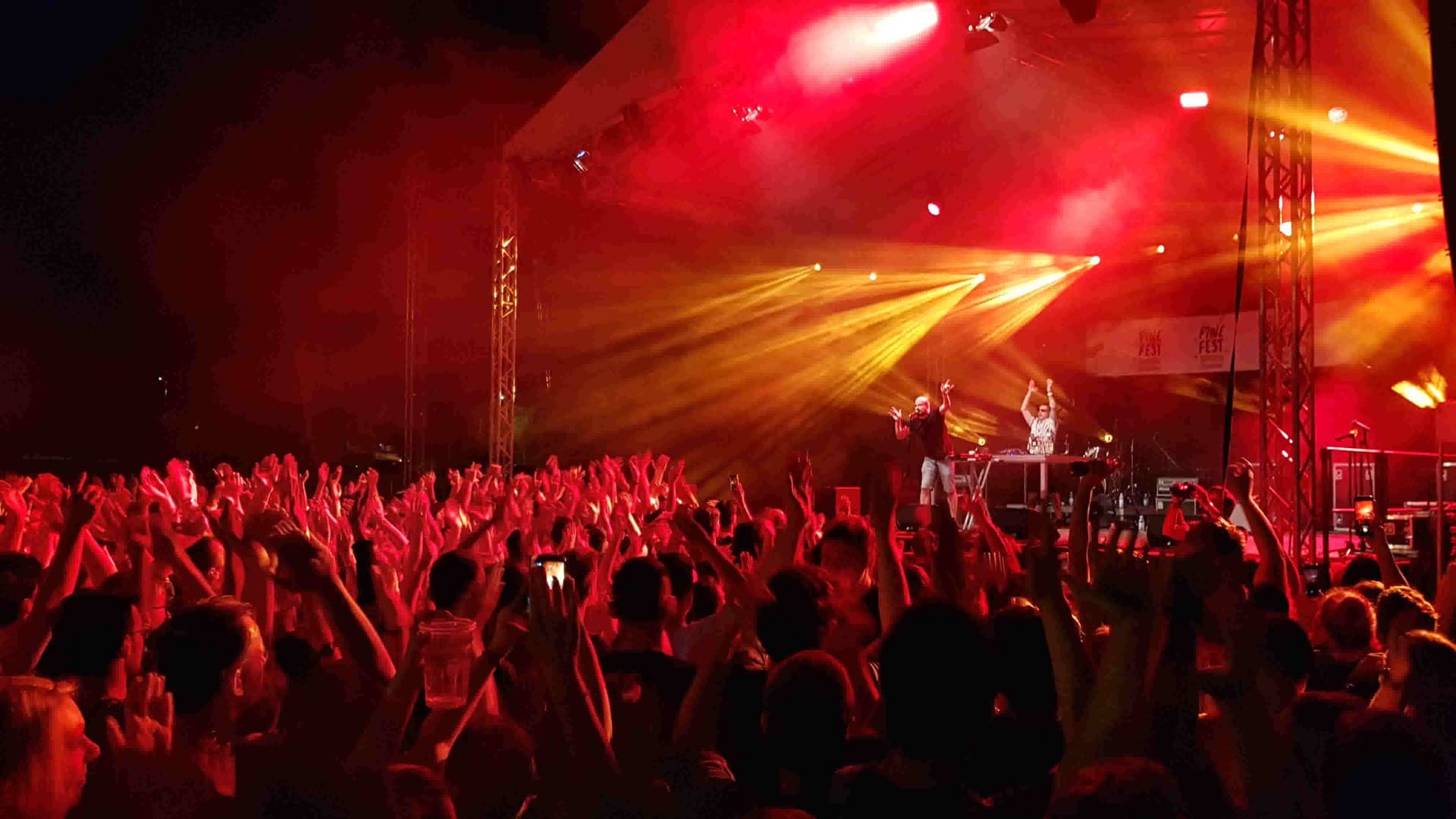
Walk the grounds of the Empire Polo Club this weekend and you’ll notice something that would have been unthinkable at Coachella in 2005: the biggest crowds aren’t gathered in front of guitar players.
They’re in front of laptop setups, modular synth rigs, and LED towers the size of apartment buildings. Electronic music has officially taken over the world’s most-watched festival , and most of the people making it never spent a day in music school.
Of the 99 acts on this year’s bill, 26 are pure electronic or EDM – making it the single largest genre at the festival at 26.3%, ahead of rock (17.2%), pop (14.1%), and hip-hop (12.1%).
When you include production-forward artists who blur the line between genres, the broader electronic ecosystem accounts for closer to 45% of the full lineup, up from 39% just one year ago.
That is not a statistical blip. It is a structural shift in what a music festival is.

EDM Now Makes Up 26% of Coachella 2026’s Lineup
| Genre | % of Lineup | Key Artists |
| Electronic / EDM | 26.3% | Disclosure, Anyma, Solomun, Kaskade, Subtronics |
| Rock | 17.2% | The Strokes, Turnstile, Nine Inch Noize, Iggy Pop, Suicidal Tendencies |
| Pop | 14.1% | Sabrina Carpenter, Justin Bieber, Karol G, Laufey, KATSEYE |
| Hip-Hop | 12.1% | Young Thug, CLIPSE, Sexyy Red, Swae Lee, Central Cee |
| Latin | 9% | Karol G, Morat, Luísa Sonza, Los Hermanos Flores, rusowsky |
| Alternative / Indie | ~10% | The XX, Ethel Cain, FKA Twigs, Wet Leg, Alex G |
The leap signals a defining shift for the iconic festival, which once leaned heavily on rock, pop, and indie sounds but has since reshaped its identity by heavily investing in EDM-focused programming, like the ambitious Quasar stage and longtime staple Do LaB.
For context: rock maintains a presence at 17%, pop delivers some of the festival’s biggest mainstream draws at 14%, while hip-hop – once integral to Coachella’s musical identity – has fallen to just 12%, a sharp dip compared to years past. Latin acts, at 9%, are quietly gaining ground, reflecting a broader shift in the mainstream that mirrors Karol G’s Sunday headlining slot.
The scale of the electronic takeover becomes even starker when you count the acts: attendees can catch sets from Kaskade, Subtronics, David Guetta, REZZ, Fatboy Slim, Major Lazer, and many more. That’s a roster that reads like the front page of Beatport, not Rolling Stone.
Perhaps the most telling signal of the shift is a single booking decision. Among the most notable details is Anyma’s headlining placement at the bottom of the poster, a slot previously reserved for contemporary superstars like Travis Scott and No Doubt, each of whom performed on the mainstage.
A solo electronic producer now sits alongside Sabrina Carpenter, Justin Bieber, and Karol G at the top of one of the planet’s most visible concert posters.
A separate analysis examining major US festivals over the last 10 years found that EDM has overtaken rock as the most-represented genre across lineups.
Coachella didn’t invent this trend. It just made it impossible to ignore.
3 of Coachella’s Biggest Electronic Acts Are Self-Taught – None Went to a Traditional Music School
Here’s the part the music industry doesn’t always want to talk about. The artists driving this takeover overwhelmingly didn’t go through traditional pathways.
Take REZZ, one of the most booked artists in electronic music and a fixture at Coachella.
Isabelle Rezazadeh began DJing at 16, playing music by other artists until she became inspired by a Deadmau5 concert to create her own.
In 2013, she started producing music on her laptop at her home in Niagara Falls, Ontario, and uploaded it to SoundCloud. No conservatory. No degree. Just a laptop and an internet connection.
Deadmau5 himself , who discovered REZZ and signed her to his label , describes what he looks for in new talent as “self-sufficiency.”
A case in point was Skrillex: “This kid came up to me at a show with a USB key with the entire album,” Zimmerman recalled.
The story is telling. What got Skrillex signed wasn’t a diploma , it was a fully realized vision, delivered cold on a thumb drive.
Deadmau5 (Joel Zimmerman) himself was entirely self-taught. His music career began in the late 1990s, heavily influenced by chiptune music and demoscene, producing his early work with the program Impulse Tracker.
He was, in his own words, a programmer who took apart toasters for fun as a kid. Music school was never in the picture.
Anyma , Coachella 2026’s most-hyped electronic headliner, does have some formal background.
Matteo Milleri was initially an economics student but later attended the SAE Institute, where he studied music production.
But the SAE Institute is not Juilliard. It’s a vocational audio engineering school , closer to a trade school than a conservatory , and Milleri’s path there came after years of self-directed musical exploration in Berlin’s underground scene.
The $4.9 Billion Shift: How Online Music Education Is Replacing the Traditional Classroom
The broader numbers back up these individual stories. Online tutorials and masterclasses became primary learning resources for 70% of aspiring DJs and producers in 2024.
Simultaneously, there was a 30% increase in electronic music producers under the age of 25.
Meanwhile, what are traditional music schools producing? Largely, classically trained musicians for an orchestra sector that has been shrinking for decades , and graduates competing for a handful of performing spots that require credentials irrelevant to the tools driving popular music in 2026.
Most music producers are self-taught, taking courses, watching YouTube, reading articles, and working with other producers.
The economics are brutal. One industry observer compares music school to culinary school: if someone told you they wanted to learn how to cook and they were going to spend $100K on culinary school, most people would raise an eyebrow , because there is an excess of resources packed to the brim with helpful information available for free online.
The market has responded accordingly. The online music education market is expected to grow from $2.2 billion in 2025 to $4.9 billion by 2030, at a compound annual growth rate of 17.52%.
The classroom is moving to YouTube, Discord servers, DAW forums, and platforms which connect aspiring musicians with one-on-one tutors.
Music Classes Are Disappearing from Schools – And Students Are Already Finding Alternative
It’s not just that self-taught producers are succeeding , it’s that formal music education may be actively failing to prepare the next generation for where music is going.
Music educators themselves are acknowledging the gap. As they continue to champion students motivated by large ensemble experiences, there are growing calls to also look to students who choose to make music in other ways , those who create using digital means, whose aural skills might outweigh reading skills, who deeply love music of the cultures that nurtured them.
The teacher shortage compounds the problem. Schools across the United States face the most significant educator workforce shortage in history.
The combination of educators leaving the field post-pandemic, increasing political pressures, and a significant decrease in the number of students choosing education as a career has created a perfect storm that has left many schools scrambling for staffing.
It’s a gap that online tutoring platforms are stepping in to fill. Sarah Mitchell, a music production tutor on Wiingy, sees it firsthand: “Most of my students came to me after feeling completely lost in traditional music programs. They wanted to make beats, produce tracks, work with DAWs – and their school just had nothing for them. One-on-one online tutoring meets them exactly where they are.”
And the students themselves are disappearing from traditional programs. The Music Teacher Guild sounded the alarm in 2024 on the alarming decline of music class options in schools across the nation, warning that children are being deprived of educational experiences that foster camaraderie, cognitive development, and community.
What Coachella 2026 Is Actually Telling Us
There is an argument , made quietly in music departments and loudly on producer forums , that the rise of bedroom producers signals the democratization of music-making, not its decline.
When a Boston-born, Berlin-forged techno artist like Sara Landry can go from bedroom productions to headlining major festivals in a compressed timeline, the gates of the industry have clearly swung open.
SoundCloud reported a 50% increase in electronic music uploads in 2024.
Ableton Live, FL Studio, and GarageBand have collectively turned millions of bedrooms into studios. The barrier to entry is now a few hundred dollars in software and the willingness to spend thousands of hours watching tutorials and failing in front of a DAW.
But the question hanging over all of this isn’t whether self-taught producers can make it. Clearly, they can , they’re headlining Coachella.
The real question is whether music institutions will adapt in time to stay relevant, or whether they will continue graduating classically trained musicians into an industry that, increasingly, doesn’t require them.
The Coachella 2026 lineup is not just the most electronic-heavy edition in the festival’s history , it is a statement about where live music is heading. Electronic artists are no longer supporting acts filling gaps between rock and pop headliners.
They are the headliners now. And most of them learned everything they know from a screen.
Data sources: Booking Agent Info (genre breakdown analysis), Product London Electronic Music Statistics 2024, Knowledge Sourcing Intelligence (Online Music Education Market), EDM.com, Wikipedia artist biographies.
You might also like

583,000 Tech Jobs Now Open for Americans: How the $100K H1B Fee Changes Everything
Sep 20, 2025

Federal Cuts Killed School Tutoring. Wiingy Did Not.
May 29, 2026

Harvard Just Made Mastery Matter Again – And That’s Good News for Students
May 26, 2026
Country Music’s Most Educated 2026 ACM Winner Used to Work at Mars. Not the Planet. The Candy Company.
May 19, 2026