Biology tutor near me in Brisbane, QLD
Tutors in Brisbane genuinely care about Biology outcomes for high school and university students. From DNA replication through to ecosystem dynamics, receive support perfect for those aiming toward health sciences, environmental careers or biomedical research. Affordable sessions across greater Brisbane.
Filters
Level
Topics
Specialities
Price
Education
Tools Used
Special Needs
Curriculum
Level
Topics
Biology
Botany
Cell biology
Genetics
Microbiology
Zoology
Show more
Specialities
Homework help
Test prep strategies
Visual learning
Personalized learning plans
Real world application
Review sessions
Show more
Price
Education
Tools Used
Digital whiteboard
Quizzes
Assessments
Show more
Special Needs
ADHD
ASD
Learning Disabilities
Show more
Curriculum
International Baccalaureate
Common Core State Standards
State-Specific Standards
Show more

null
Palak taught 2 days ago
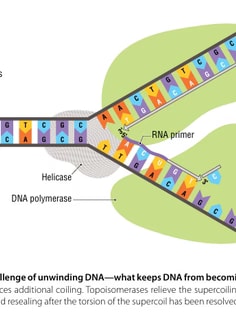
The session focused on reviewing key experiments that demonstrated DNA as the genetic material and introduced the concept of semi-conservative DNA replication. The Student explained the Hershey-Chase, Griffith's, Avery-MacLeod-McCarty, and Meselson-Stahl experiments, with some need for clarification and review. The next session will cover genetics, starting with Mendel's work, and the student was assigned to review the seven traits Mendel studied in pea plants.
Griffith's Experiment
Avery
MacLeod
and McCarty Experiment
Hershey-Chase Experiment
Meselson-Stahl Experiment
Mendelian Genetics: Dominant and Recessive Traits
Centrifugation in Molecular Biology
Palak taught 14 days ago
The Tutor and Student worked through practice questions focused on ecology. They analyzed the impact of nutrient levels on various marine organisms and then practiced calculating fish abundance and mean abundance for different coral reef sites, discussing potential environmental factors influencing these differences.
Biomass and Nutrient Concentration
Species Abundance and Diversity (Simpson's Index)
Ecological Relationships: Inverse Correlation
Factors Affecting Ecosystem Health
Sunitha taught about 1 month ago
The Student and Tutor reviewed Year 12 Biology curriculum from the Nelson textbook, focusing on Modules 5 and 6. They discussed DNA structure, polypeptide synthesis, transcription, and translation, and planned to cover RNA processing in the next session.
DNA Structure and Location
Polypeptide Synthesis: Transcription and Translation
RNA: Types and Functions
Gene Expression and Cell Differentiation
Learners get Biology exam prep, homework help in Brisbane


Biology tutors in Brisbane helping students develop strong scientific thinking

Brisbane’s students study in one of Australia’s most dynamic academic environments. From Brisbane State High School and St Joseph’s College, Gregory Terrace to research hubs at The University of Queensland and Queensland University of Technology, the city nurtures future scientists and healthcare professionals. Yet biology can still feel overwhelming. The volume of information, complex diagrams, and exam expectations often make students lose direction. Local biology tutors in Brisbane guide learners toward consistent progress through better habits and focused study routines.
Do: Start with understanding, not memorisation
Students at All Hallows’ School or Somerville House often rely on repetition instead of comprehension. Tutors in Indooroopilly and Toowong teach how to understand biological systems step by step before recalling them. When learners connect structure to function, such as how enzymes regulate digestion, they build lasting memory rather than short-term recall.
Don’t: Skip the basics of terminology
Many students rush past key definitions, leading to confusion later. Tutors encourage mastering terms like osmosis, mitosis, and homeostasis early. They often recommend rewriting these concepts in plain language, turning long lists into simple, relatable phrases. Clear vocabulary forms the foundation for deeper learning.
Do: Use diagrams to visualise processes
Topics such as cell respiration or photosynthesis become much easier with visuals. Tutors in Carindale and Chermside use colour-coded diagrams and real examples from science exhibits at the Queensland Museum. By redrawing and labelling processes weekly, students improve recall while building spatial understanding.
Don’t: Wait until exam season to practise writing
Biology exams test clarity of expression as much as knowledge. Learners from Clayfield College or Brigidine College often lose marks for unstructured answers. Tutors teach short written responses throughout the term using past QCAA papers, helping students master scientific language early and write confidently under time limits.
Do: Apply concepts to real environments
Connecting biology to Brisbane’s surroundings deepens understanding. Tutors might discuss ecology through examples from Brisbane Botanic Gardens Mount Coot-tha or coral health research at Moreton Bay. Linking textbooks to familiar places reminds students that biology is alive in their own environment.
Don’t: Depend solely on summaries or flashcards
While notes help, they can’t replace active thinking. Tutors encourage students to explain concepts aloud or teach them to peers. Discussing how systems interact like how the circulatory and respiratory systems support each other, solidifies learning far more effectively.
Do: Maintain steady progress each week
Regular review prevents stress. Tutors in Paddington and Woolloongabba design short weekly plans focusing on one concept at a time. Students who stick to small goals stay more consistent and calm before exams.
Don’t: Overlook feedback and small mistakes
Students who ignore corrections often repeat them later. Tutors emphasise reviewing graded quizzes and understanding each error. Fixing small issues early builds accuracy and confidence.
Do: Connect biology with career interests
Whether aiming for medicine, environmental science, or biotechnology, tutors show how core biology skills open diverse paths. Discussions might reference programs at Griffith University that integrate genetics or marine biology research, helping students link classroom work to future goals.
Don’t: Study without reflection
Mindless repetition limits improvement. Tutors ask students to summarise what they’ve learned after each session, noting what felt clear and what needs revisiting. Reflection helps solidify memory and maintain curiosity.
Do: Stay patient through gradual improvement
Tutors remind students that strong biology understanding develops step by step. Steady review, active learning, and curiosity transform the subject from a memorisation task into a discovery process.
Across Brisbane, biology tutors focus on teaching discipline and understanding together. Their guidance helps students see that real learning comes from practice, not pressure. From laboratories at The University of Queensland to quiet study areas at State Library of Queensland, the city offers countless spaces for growth. With consistent support, learners turn complex systems into stories of logic, connection, and curiosity that last far beyond exams.