

AP Statistics tutor with targeted AP help
More about data than heavy calculus, AP Statistics has a style all its own, and an online AP Statistics tutor helps you read it and reason with it. Lessons cover probability, distributions, and inference, plus the wordy free-response the exam is known for. A strong score earns college credit and helps almost any major. You work through real AP problems over video, building toward the May exam.
Free Trial
15-days refund
Free tutor swap
No cancel fee
Summary
Podcast

AP Statistics discussed during recent classes
Tutoring that adapts to student needs
Taruna taught 9 months ago
The Tutor and Student practiced finding z-scores from area, converting between z-scores and x-values, and applying the central limit theorem. The student worked through several word problems, identifying key information and applying appropriate formulas. They planned to continue working on probability problems and to review earlier units in upcoming sessions.
Finding Z-Scores from Cumulative Area
Percentiles and Z-Scores
Converting Z-Scores to X-Values
Central Limit Theorem (CLT) Introduction
Sampling Distribution: Sample Mean and Standard Deviation
Finding Probabilities using Central Limit Theorem
Taruna taught 9 months ago
The session focused on normal and standard normal distributions. The Student practiced finding standard deviations from graphs, converting to Z-scores, and using Z-tables to calculate probabilities and areas under the curve. Homework was assigned from exercises 5.1 and 5.2, with a plan to cover the remaining chapters in the next session.
Normal Distribution Curve Properties
Standard Deviation and Spread
Probability Density Function (PDF)
Standard Normal Distribution and Z-scores
Using the Z-table
Area Under the Standard Normal Curve
Taruna taught 9 months ago
The Tutor and Student reviewed binomial, geometric, and Poisson distributions, focusing on calculations and applications. The Student practiced identifying the correct distribution for various word problems and using formulas to calculate probabilities. Homework includes further practice questions and review of chapter 3.
Using Calculators for Binomial Calculations
Poisson Distribution
Geometric Distribution
Mean
Variance
Standard Deviation (Binomial)
Binomial Distribution Table
At Least/Fewer Than Probabilities
Taruna taught 9 months ago
The session focused on probability distributions, covering discrete and continuous random variables, probability distribution tables, and calculations of mean, variance, and standard deviation. The student practiced identifying variable types, constructing probability distributions, and calculating statistical measures. Homework includes practicing review questions related to these concepts and a plan to cover binomial distribution in the next session.
Discrete vs. Continuous Random Variables
Expected Value Application
Variance and Standard Deviation
Mean (Expected Value) of a Discrete Probability Distribution
Verifying Probability Distributions
Discrete Probability Distribution
Random Variables
Taruna taught 9 months ago
The session reviewed probability with addition rules, including mutually exclusive events. The Student learned about permutations and combinations, working through examples to differentiate when to use each method. The Student was assigned review questions and a chapter test for the next class, along with starting a new chapter.
Addition Rule of Probability
Factorials
Permutations
Combinations
Applying Combinations to Probability
Taruna taught 9 months ago
The session covered probability calculations, including conditional probability, Bayes' theorem, and the addition rule. The student worked through several word problems, focusing on identifying key information and applying the correct formulas. Review exercises were assigned for further practice, with a focus on sections 3.1, 3.2, and 3.3 up to a specific question.
Probability Without Replacement
Addition Rule of Probability
Mutually Exclusive Events
Bayes' Theorem Applications
Unusual Events and Probability Thresholds
Probability of 'Neither' Event
Multiplication Rule for Dependent Events
Where AP Statistics tutors offer help


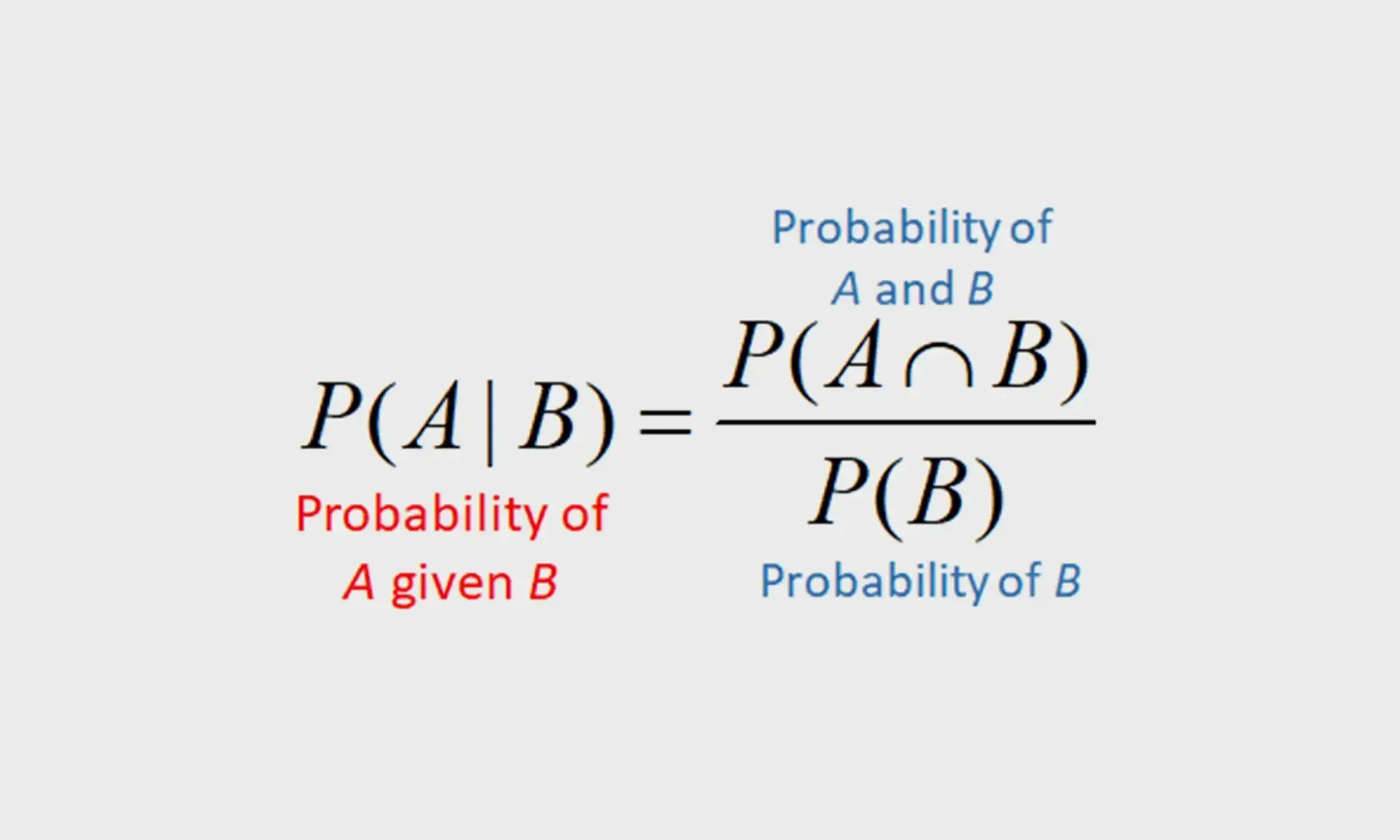


Learning outcomes in AP Statistics explained

How to learn AP Statistics
AP Statistics focuses on data analysis, probability, inference, and statistical reasoning.
Many students struggle with interpreting probability distributions, hypothesis testing, and choosing the correct statistical test. Additionally, understanding confidence intervals, p-values, and standard deviations can be overwhelming.
The course requires strong analytical thinking and familiarity with statistical software or calculators. Research shows that students who consistently practice statistical problem-solving improve their accuracy by 35%.
To succeed, students use textbooks like The Practice of Statistics, online platforms such as Khan Academy, and AP-style practice tests. Graphing calculators and statistical software like Desmos and StatCrunch help visualize data and solve problems. Study groups reinforce learning through discussion, while private AP statistics tutoring provides personalized instruction and targeted problem-solving strategies.
A structured study plan of 8–10 hours per week, combining self-study and expert guidance, strengthens understanding and boosts exam performance. Mastering these concepts ensures success in AP Statistics and future data-driven fields.

Signs you need an AP statistics tutor
Struggling with probability and distributions?
Many students find normal distributions, z-scores, and probability rules difficult to interpret. Topics like binomial and geometric distributions, expected values, and sampling variability can be confusing without structured practice.
An AP statistics tutor provides step-by-step explanations, real-world examples, and targeted problem sets to strengthen understanding.
Confused about hypothesis testing and statistical inference?
AP Statistics requires understanding null and alternative hypotheses, p-values, and statistical significance. Many students struggle with choosing the correct statistical test, interpreting confidence intervals, and analyzing results.
AP statistics tutors help by simplifying statistical decision-making, guiding students through step-by-step test selection, and ensuring clear, accurate conclusions.
Having trouble with data interpretation and AP exam questions?
The AP exam’s free-response questions (FRQs) require data interpretation, justification, and clear communication.
A private AP statistics tutor helps with exam strategies, time management, and structured response writing, ensuring students present logical and well-supported statistical arguments to maximize scores.

How to choose the best AP statistics tutor
Prioritize expertise in statistics and data analysis
An AP Statistics tutor should have a bachelor’s or master’s degree in statistics, mathematics, or a related field. Their expertise in probability, regression analysis, and inferential statistics ensures students receive comprehensive instruction.
A tutor with AP exam experience can also guide students through sampling methods, hypothesis testing, and confidence intervals with clarity.
Find a tutor with strong reviews and a history of success
Choose a tutor with positive student feedback and a proven track record of improving AP scores. Look for an AP statistics tutor who simplifies difficult topics, provides customized problem-solving strategies, and teaches exam-specific techniques to help students approach FRQs and multiple-choice questions with confidence.
Choose an affordable and flexible tutoring option
AP Statistics tutoring rates typically range from $40 to $80 per hour, but affordability matters. Wiingy offers expert AP Statistics tutors for just $28 per session, including a free trial lesson, making high-quality instruction accessible for all students.
Frequently asked questions
What parts are difficult to learn in the AP statistics curriculum?
What are the best ways to prepare for the AP statistics exam?
What are the key concepts to focus on in the AP statistics curriculum?
How can I improve my confidence for AP Statistics?
How frequently should I take AP Statistics mock tests?
How can a tutor help me boost my AP Statistics scores?
What are the benefits of having a private tutor for AP Statistics prep?
Are there affordable tutors available for AP Statistics preparation?


