
Umashankar Tripathi
Creative Mechanical Engineering lessons with engaging focus



Show all photos
Umashankar Tripathi
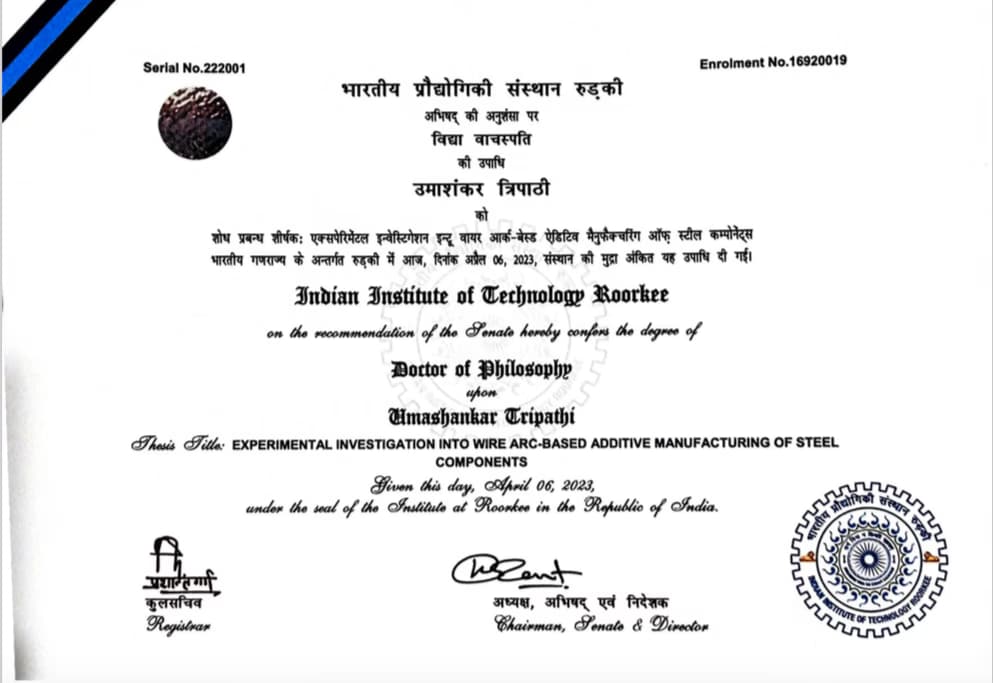
Doctorate degree
/ 55 min
About your engineering tutor
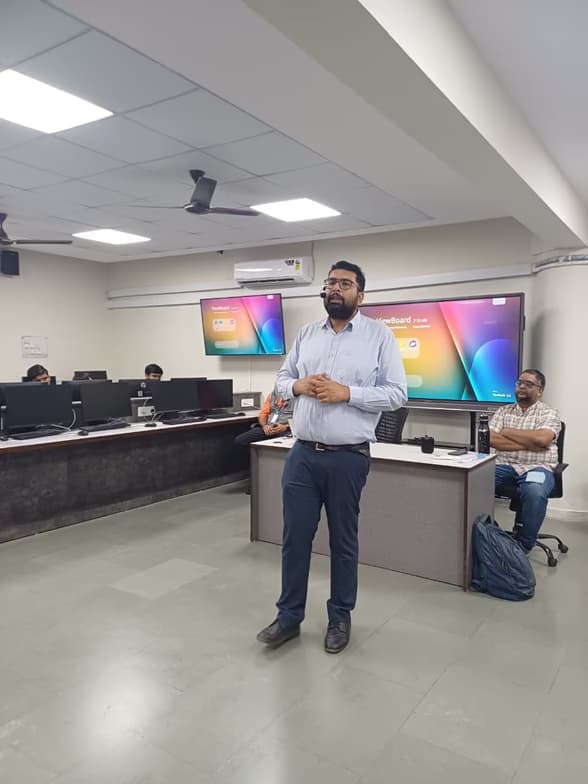
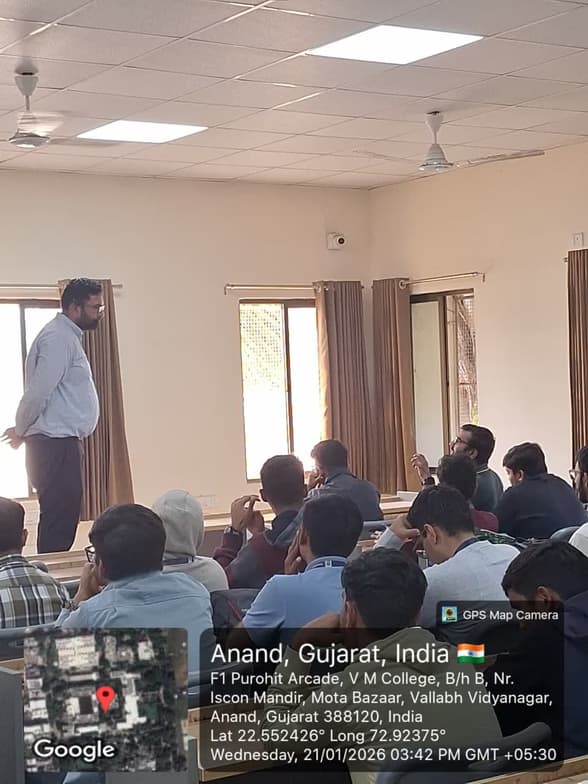
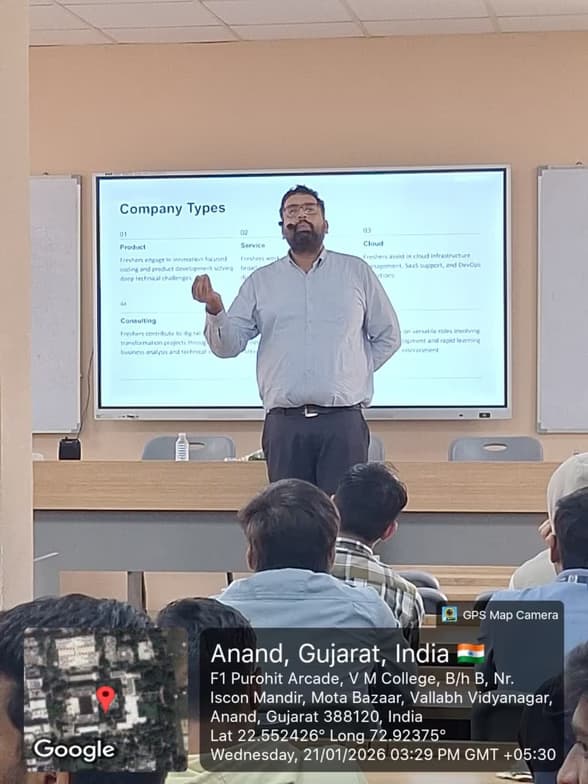
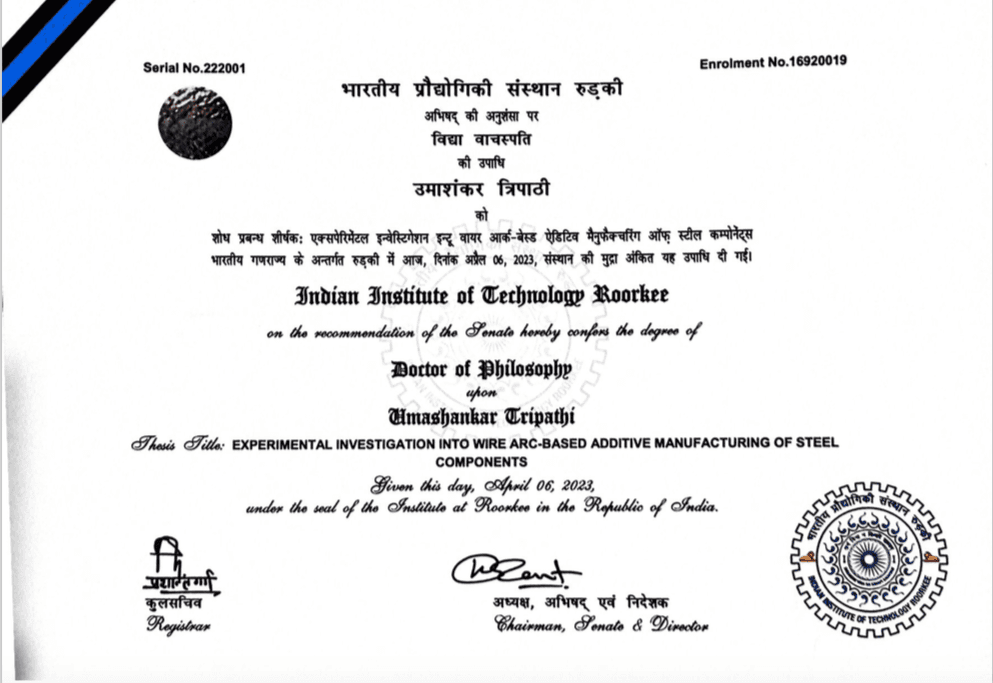
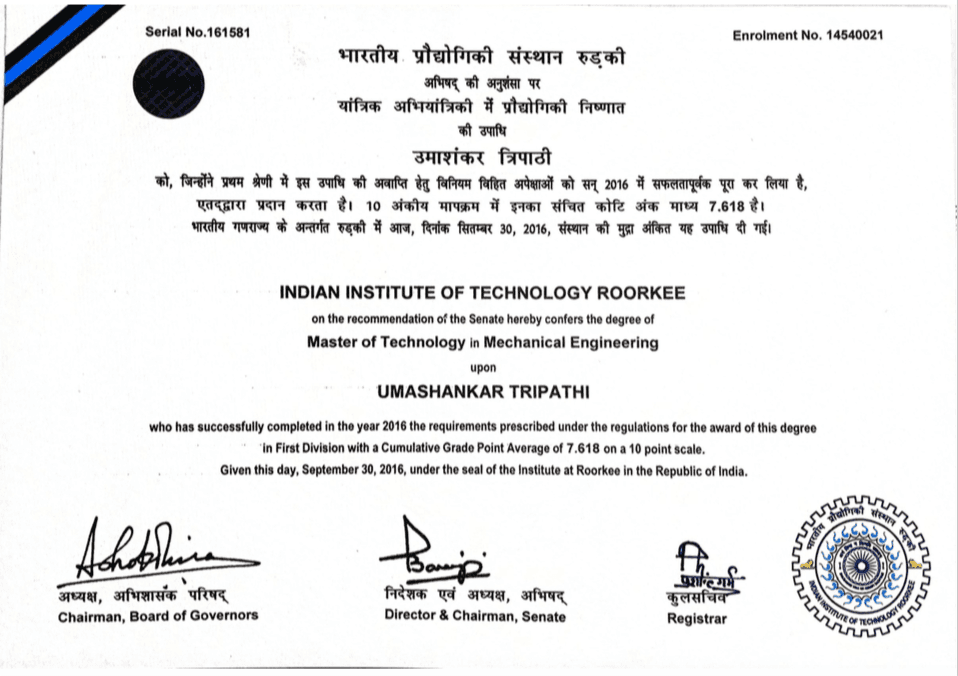
I have completed a Doctor of Philosophy (Ph.D.) and a Master of Technology (M.Tech.) in Mechanical Engineering from the prestigious Indian Institute of Technology Roorkee, Uttarakhand, India. Over the last 12 years, I have taught various subjects in Mechanical Engineering and Physics in different capacities. I have assisted many students throughout their academic careers, helping them achieve their aspirations. Additionally, I am the author of three research papers published in internationally renowned journals. Teaching is a passion for me, and I look forward to educating many more students in the near future.
Umashankar graduated from Indian Institute of Technology
Engineering tutor specialities

Provincial-specific curriculum (CA)

Australian Curriculum (AU)

Advanced Placement (AP) Program (USA)

A-Levels (UK)

Technical presentation

State-Specific Standards (USA)

Project help

New Zealand Curriculum - NZC (NZ)

Test prep

International Baccalaureate (IB)

Research paper

Common Core State Standards - CCSS (USA)
 CoTutor
AI modules
Summary
Podcast
Quiz
Learnings
Flashcard
Spotlight
Zero Risk Guaranteed
15-days refund
Free tutor swap
No cancel fee
1-yr validity
24/7 support
Student types for engineering class

Anxiety or Stress Disorders

ASD

Home schooled

ADHD

Engineering class snapshot
I offer tutoring sessions in various subjects of mechanical engineering and physics. My classes are detail-oriented and start from the very basics. I believe that understanding the fundamentals is crucial for mastering any subject, and I strive to build a strong foundation for my students to enhance their problem-solving abilities. During the classes, I provide practice questions and homework to measure the students' improvement.

Engineering concepts taught by Umashankar
The session focused on advanced thermodynamics cycles, specifically the Reheat Rankine Cycle and the Vapor Compression Refrigeration Cycle (VCRS). Student and Tutor collaboratively solved a practice problem for the Reheat Rankine Cycle, determining state properties and cycle efficiency. They then introduced the VCRS, discussed its components and TS diagram, and began solving an example problem involving superheating and subcooling.
Thermodynamic Property Determination & Table Usage
Superheating and Subcooling in VCRS
Isentropic Efficiency (η_isentropic)
Throttling Process
Vapor Compression Refrigeration Cycle (VCRS)
Rankine Cycle with Reheat
The Student and Tutor reviewed and practiced problems related to the Auto and Diesel thermodynamic cycles, including their processes, PV and TS diagrams, and efficiency calculations using specific heat ratios, compression ratios, and cutoff ratios. The session also covered ideal cycles like Carnot, Stirling, and Ericsson, as well as the reversed Carnot cycle for refrigeration and heat pumps. The Rankine vapor power cycle was introduced, focusing on its components, TS diagram, and enthalpy-based calculations using steam tables. The next session will cover reheat cycles and VCRs.
Otto Cycle (Spark Ignition Engine)
Diesel Cycle (Compression Ignition Engine)
Ideal Cycles: Carnot
Stirling
and Ericsson
Reverse Carnot Cycle (Refrigeration and Heat Pumps)
Rankine Cycle (Vapor Power Systems)
The Tutor guided the Student through analyzing the Brayton cycle, including ideal and actual conditions, and extensively practicing the application of isentropic efficiency to calculate actual temperatures, net work output, and thermal efficiency for turbine and compressor components. The Student was assigned a homework question and will cover Otto and Diesel cycles in the next session, scheduled for tomorrow.
Ideal Brayton Cycle Analysis
Understanding Isentropic Efficiency (η)
Turbine Isentropic Efficiency (η_t)
Compressor Isentropic Efficiency (η_c)
Calculating Actual Brayton Cycle Performance
The Student and Tutor reviewed the Brayton cycle, covering its components, processes, PV and TS diagrams, and the derivation of its ideal efficiency. The discussion included detailed explanations of isentropic compression and expansion, constant pressure heat addition and rejection, and the calculation of net work and thermal efficiency. The Student was asked to share their syllabus for future planning.
Isentropic Compression (Process 1-2)
Constant Pressure Heat Addition (Process 2-3)
Isentropic Expansion (Process 3-4)
PV and TS Diagrams of the Brayton Cycle
Ideal Brayton Cycle Efficiency
Brayton Cycle Fundamentals
Learning tools used by engineering tutor

Quizzes

Digital whiteboard

Practice worksheets

Assessments

Presentations
Hands-on engineering classes

Pets are welcomed

Record lessons

Chat for quick help

Mobile joining

Note taking
Explore tutors in similar subjects


Engineering tutors on Wiingy are vetted for quality
Every tutor is interviewed and selected for subject expertise and teaching skill.
