
Ishu Arora
Expert Science Tutor: Bringing Fundamentals to Life with Interactive Teaching and Visual Models.


Show all photos
Ishu Arora
Bachelors degree
/ 55 min
About your science tutor
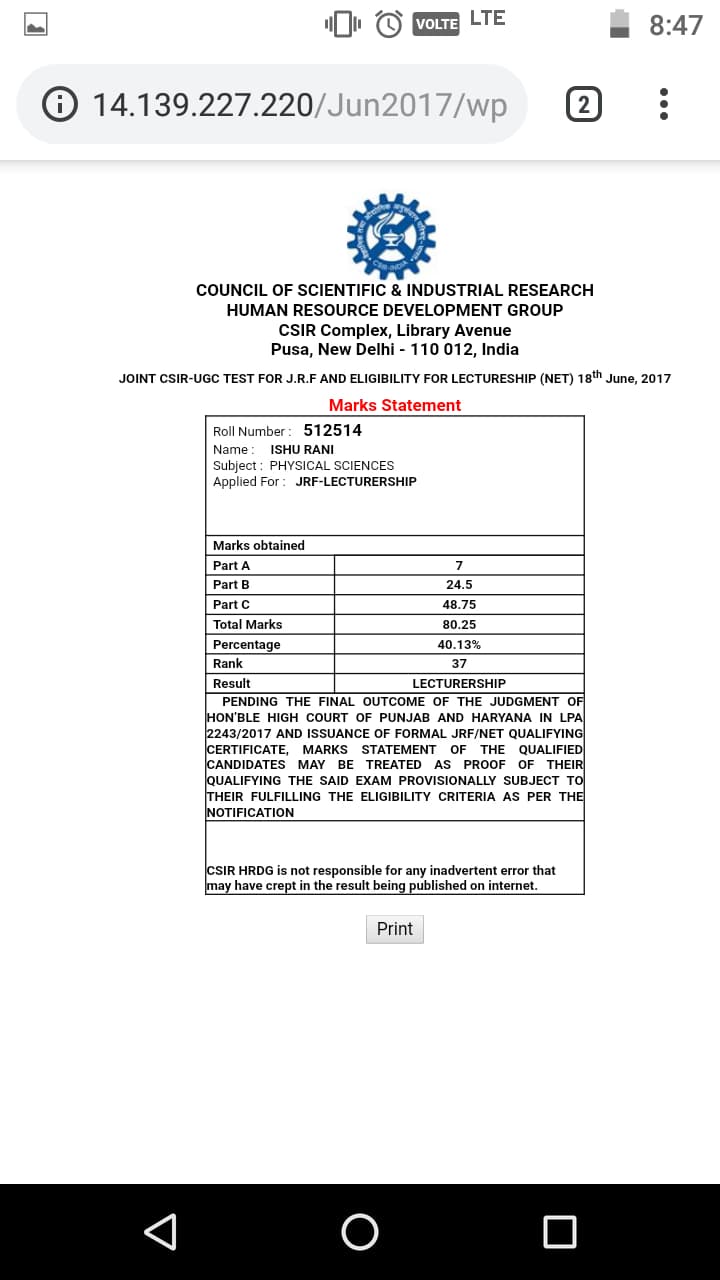
I'm Ishu Arora, Master-educated tutor with a passion for School Science, Maths and more. With years of experience, I excel in personalized learning plans, exam simulations, and grade improvement strategies for college-level students. I make concepts learning fun through gamification, real-world applications, and science experiments. My tailored approach enhances understanding through practice drills, role-playing scenarios, and cultural immersion. Critical thinking is developed among students through problem solving and numerical practice . Let's ace those tests and explore the wonders of science together!
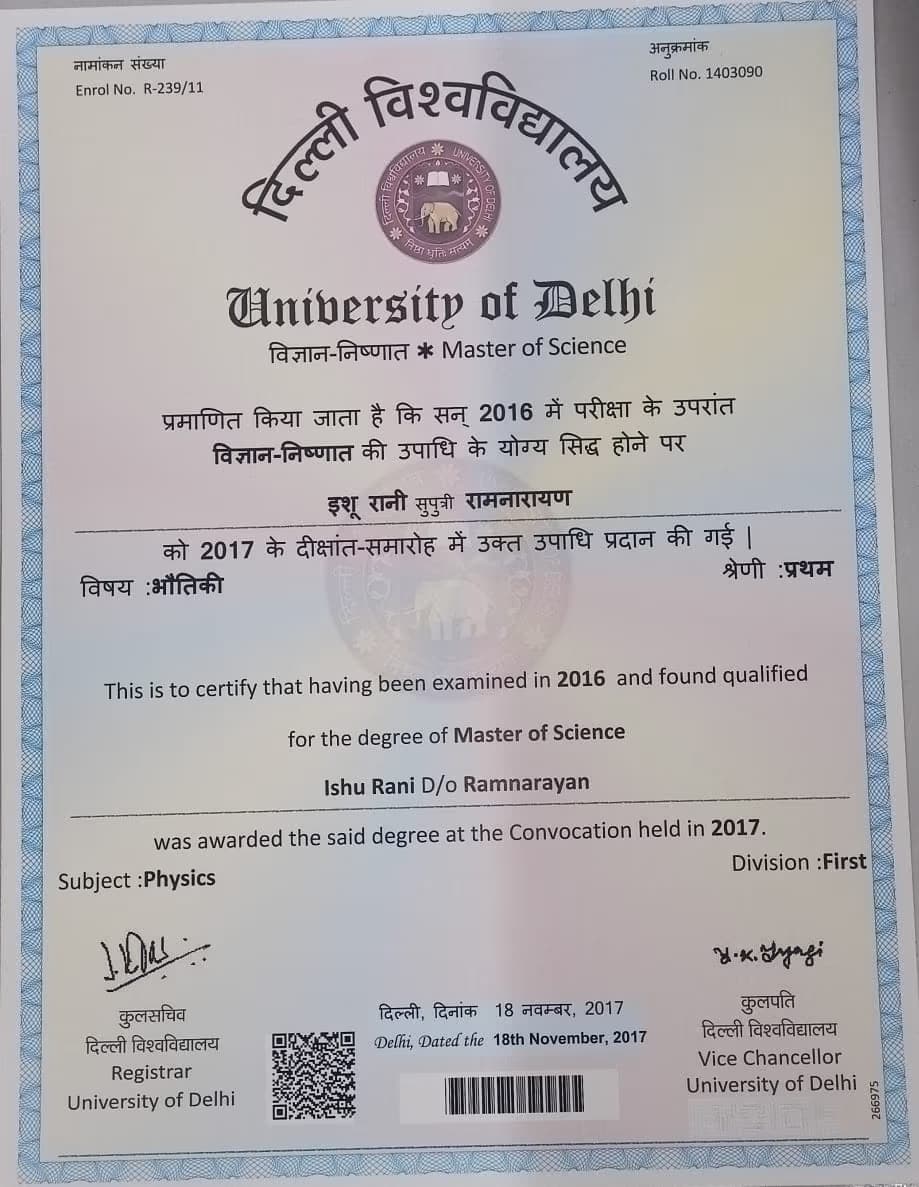
Ishu graduated from UNIVERSITY OF DELHI
Specialities of your science tutor

Visual learning
Test prep strategies
Real world application

A-Levels (UK)

State-Specific Standards (USA)

GCSE (UK)

Science experiments
 CoTutor
AI modules
Summary
Podcast
Quiz
Learnings
Flashcard
Spotlight
Zero Risk Guaranteed
15-days refund
Free tutor swap
No cancel fee
1-yr validity
24/7 support
Student types for science class

College students
None of the above
High School students

Home schooled
Science class overview
My tutoring approach blends the scientific method with a collaborative style, emphasizing visual models and problem-solving. I prioritize laying strong subject fundamentals before diving into complex topics. Specializing in Astronomy, Life Science, Earth Science, and more, I cater to college-level students. To enhance learning, I leverage a variety of tech tools such as digital whiteboards, interactive quizzes, and game-based learning platforms. Following curricula like A-Levels (UK) and Advanced Placement (AP) Program (USA), I ensure students grasp key concepts effectively. My methodology strengths lie in making abstract concepts tangible through interactive lessons, ensuring students develop a deep understanding of the subject matter.
Your science tutor also teaches

Physical Science
Earth Science
Life Science
Environmental Science
Astronomy
School Science

School Science concepts taught by Ishu
The Student and Tutor reviewed questions on projectile motion, centripetal acceleration, and relative velocity in preparation for an exam. The Student worked through problems from a book, and the Tutor provided explanations and guidance on applying relevant formulas and concepts. The Student was advised to practice more problems before the exam.
Projectile Motion: Time of Flight
Projectile Motion: Range
Projectile Motion: Final Velocity
Centripetal Acceleration
Relative Velocity
The Student and Tutor reviewed projectile motion problems, focusing on calculating hang time, maximum height, and range, followed by an introduction to relative velocity in one and two dimensions. The Student practiced applying the concepts and formulas to solve example problems, including the use of trigonometric functions to find velocity components. The Tutor assigned additional practice problems on relative velocity to be completed as homework.
Projectile Motion - Components of Velocity
Projectile Motion - Hang Time
Projectile Motion - Maximum Height
Projectile Motion - Range
Relative Velocity - Same vs. Opposite Directions
Projectile Motion - Velocity at Impact from Height
Relative Velocity - Perpendicular Directions
The session covered projectile motion, including its definition, assumptions (ignoring air resistance), and the role of gravity. The Student learned about trajectory, range, maximum height, and time of flight. The Tutor introduced and explained how to adapt the three equations of motion for both horizontal and vertical components of projectile motion and discussed related formulas.
Key Terms: Range
Maximum Height
and Time of Flight
Equations of Motion in Projectile Motion
Circular Motion: Centripetal Force
Relative Velocities and Pythagorean Theorem
Assumptions in Projectile Motion
Projectile Motion
The student learned about the distance formula and its application in coordinate geometry. The student practiced calculating the distance between two points using the formula and worked through a series of practice problems. Additional practice problems were assigned via email for continued reinforcement.
Applying the Distance Formula with Negative Coordinates
Coordinate Representation
Distance Formula
The Student and Tutor practiced adding and subtracting fractions with differing denominators. The session focused on finding the least common multiple (LCM) and using it to correctly calculate numerators. Additional practice problems were assigned, and the next session was scheduled.
Order of Operations (PEMDAS/BODMAS)
Fractions: Finding the Least Common Multiple (LCM)
Fractions: Adjusting Numerators After Finding LCM
Fractions: Simplifying Fractions
The student practiced solving systems of linear equations using elimination and substitution and worked on word problems related to these concepts. They also reviewed solving quadratic equations using the quadratic formula. The next session will include a review of the student's test paper and further work on matrix algebra and basic geometry.
Fractions in Solving Systems of Equations
Coefficient Manipulation for Variable Elimination
Applying the Quadratic Formula
Substitution Method
Solving Systems of Linear Equations by Elimination
Teaching tools used by science tutor

Note taking

Assessments
Video conferencing
Interactive 3D models

Presentations

Digital whiteboard
Interactive science lessons

Parent feedback

Weekend lessons

Chat for quick help

Open Q&A

Record lessons

Science tutors on Wiingy are vetted for quality
Every tutor is interviewed and selected for subject expertise and teaching skill.