
Naisha J
Expert Chemistry Tutor for GCSE, IB & AP | Strong Foundation in All Chemistry Branches


Show all photos
Naisha J
Bachelors degree
/ 55 min
Naisha Your chemistry tutor
Dedicated and highly accomplished educator with a B.Tech degree in Biotechnology, bringing over 10 years of extensive teaching experience along with 3 years of professional laboratory exposure in scientific research and practical applications. Possesses a strong academic foundation in life sciences and interdisciplinary subjects, with proven expertise in teaching Biology, Chemistry, and Psychology to students across various academic levels and learning abilities. Experienced in mentoring students from diverse cultural and educational backgrounds through international curricula such as GCSE, IB (MYP & DP), and AP programs, with a thorough understanding of curriculum standards, assessment frameworks, and inquiry-based learning methodologies. Skilled at developing customized lesson plans and instructional strategies tailored to individual student needs, ensuring strong conceptual understanding and academic growth. Adept at simplifying complex scientific theories and processes into engaging, easy-to-understand explanations that encourage curiosity, analytical thinking, and active participation in learning. Strong focus on building a positive and motivating classroom environment that promotes confidence, discipline, creativity, and independent thinking among students
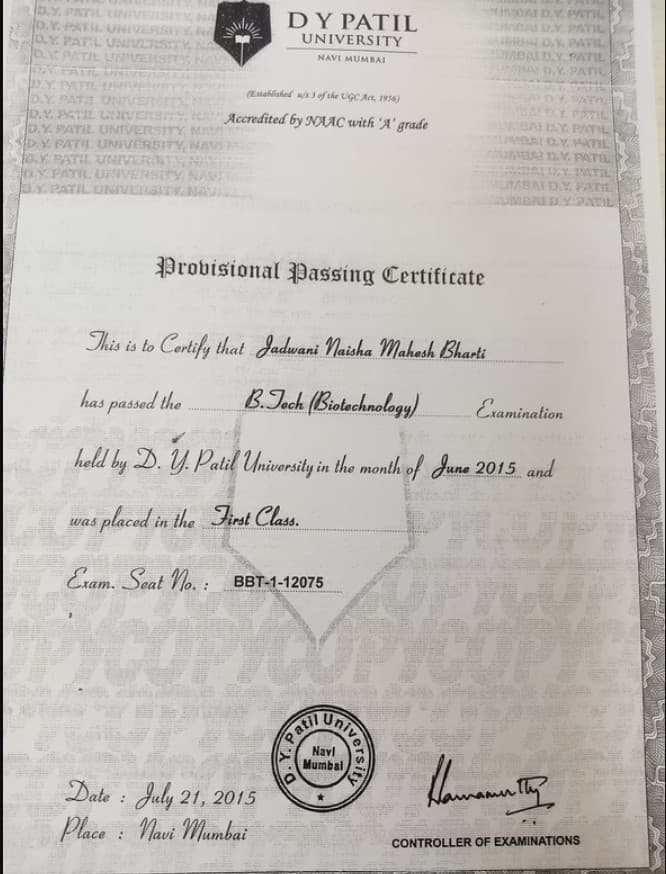
Naisha graduated from D Y Patil University
Specialities of your chemistry tutor

International Baccalaureate (IB)

A-Levels (UK)

Visual learning

Advanced Placement (AP) Program (USA)
Personalized learning plans
 CoTutor
AI modules
Summary
Podcast
Quiz
Learnings
Flashcard
Spotlight
Zero Risk Guaranteed
15-days refund
Free tutor swap
No cancel fee
1-yr validity
24/7 support
Types of learners for chemistry class

Middle School students
College students
High School students
None of the above
Your chemistry tutor also teaches

Chemistry
Organic Chemistry
Chemical Reactions
Physical Chemistry
Inorganic Chemistry
Analytical Chemistry

Chemistry concepts taught by Naisha
Student and Tutor continued their discussion on carbohydrates, focusing on derivatives of monosaccharides, their oxidation and reduction reactions, and the formation of amino sugars and glycosides. They extensively covered oligosaccharides, disaccharides, and polysaccharides, including their structure, classification, and biochemical roles, before concluding with an overview of glycans and glycoproteins. The session provided a comprehensive review of complex carbohydrate chemistry.
Monosaccharide Derivatives: Alditols
Acids
Amines & Phosphates
Glycoproteins: Carbohydrates Attached to Proteins
Disaccharides & Polysaccharides: Structure & Function
Glycosidic Bonds & Anomeric Carbon Configuration
Oxidation & Reduction in Carbohydrate Chemistry
Student and Tutor continued their discussion on cell signaling, focusing on the varying relationships between signals and responses. They covered concepts including response time, sensitivity, signal amplification, dynamic range, persistence, signal processing, integration, and coordination. The session also detailed rapid vs. slow responses, abrupt responses to gradual signals, and the roles of positive and negative feedback mechanisms, concluding with an explanation of adaptation and desensitization.
Variations in Signal-Response Behavior
Signal Amplification
Signal Integration & Coincidence Detectors
Feedback Mechanisms: Positive & Negative
Cellular Adaptation (Desensitization)
Speed & Quantitative Response Profiles
The Tutor and Student continued their discussion on signal transduction, focusing on the types of extracellular signaling, receptor binding mechanisms, and the cellular responses to various signals. They covered the three major classes of cell surface receptors and the role of intracellular signaling molecules, including molecular switches. The session concluded with an explanation of signal specificity and precision, with plans to continue with modular attraction and domains in the next class.
Receptor Types and Signal Molecule Properties
Cellular Fate: Survival
Growth
Differentiation
and Apoptosis
Three Major Classes of Cell Surface Receptors
Extracellular Signaling Mechanisms
Ensuring Signal Specificity
The Student and Tutor engaged in a detailed Chemistry lesson focused on carbohydrates, covering their fundamental structure, classification, and various forms of stereoisomerism. They extensively discussed chiral centers, epimers, anomers, the formation of hemi-acetals/ketals and acetals/ketals, cyclic structures using Haworth projections, mutarotation, and began learning the R/S nomenclature system. The class is set to continue with remaining structural concepts in the next session.
Carbohydrate Fundamentals & Classification
Stereochemistry & Chiral Carbons
Cyclic Hemiacetals & Hemiketals: Pyranoses & Furanoses
Epimers & Anomers: Fine-Tuning Stereochemistry
R/S Configuration (Cahn-Ingold-Prelog Rules)
The session was a detailed lesson on the principles of cell signaling. The Tutor guided the Student through the various types of extracellular and intracellular signaling, the roles of receptor and effector proteins, and the three major classes of cell surface receptors. Key concepts like phosphorylation cascades and GTP-binding proteins as molecular switches were also covered.
Intracellular Signaling & Molecular Switches
Major Classes of Cell Surface Receptors
Modes of Extracellular Communication
Fundamentals of Cell Signaling
The Student and Tutor reviewed key concepts in cell signaling, including its definition, stages, and various types of receptors like intracellular, ligand-gated ion channels, G-protein coupled receptors, and receptor tyrosine kinases. They also discussed the process and biological importance of phosphorylation, types of signaling molecules, and used insulin signaling as a practical example. The session concluded with a plan to continue the discussion in the next class.
Introduction to Cell Signaling
Three Stages of Cell Signaling
Ligands and Receptor Binding Mechanisms
Major Types of Receptors
Phosphorylation: A Key Regulatory Switch
Categories of Cell Signaling Molecules
Insulin Signaling Pathway: A Feedback Example
Tools & techniques used by chemistry tutor
Video conferencing

Practice worksheets

Assessments

Digital whiteboard

Chemistry tutors on Wiingy are vetted for quality
Every tutor is interviewed and selected for subject expertise and teaching skill.
