
Naisha J
Experienced Biotechnology Graduate Teaching Biology for IB, AP & GCSE Boards. Specialized in Genetics, Anatomy, Physiology & Zoology


Show all photos
Naisha J
Bachelors degree
/ 55 min
Your biology tutor - Naisha
Experienced and passionate educator with a B.Tech in Biotechnology, over 10 years of teaching experience, and 3 years of professional laboratory exposure in scientific research and practical applications. Specialized in teaching Biology, Chemistry, and Psychology to students from diverse educational backgrounds and age groups. Highly proficient in international curricula including GCSE, IB (MYP & DP), and AP programs, with a strong understanding of syllabus requirements, assessment patterns, and inquiry-based learning methodologies. Skilled at designing engaging lesson plans, conducting interactive sessions, and simplifying complex scientific concepts into easy-to-understand learning modules. Known for fostering analytical thinking, academic confidence, and strong problem-solving abilities among students. Combines theoretical expertise with practical laboratory knowledge to provide real-world scientific context, helping learners develop deeper conceptual understanding and achieve academic excellence in competitive and international educational environments. Demonstrates excellent communication, interpersonal, and mentoring skills, allowing effective interaction with students, parents, and academic institutions. Known for patience, adaptability, and the ability to work effectively in both one-on-one tutoring and group learning environments. Passionate about nurturing academic excellence and lifelong learning while helping students develop critical thinking, problem-solving abilities, and confidence to excel in competitive and international educational settings.
Meet Naisha
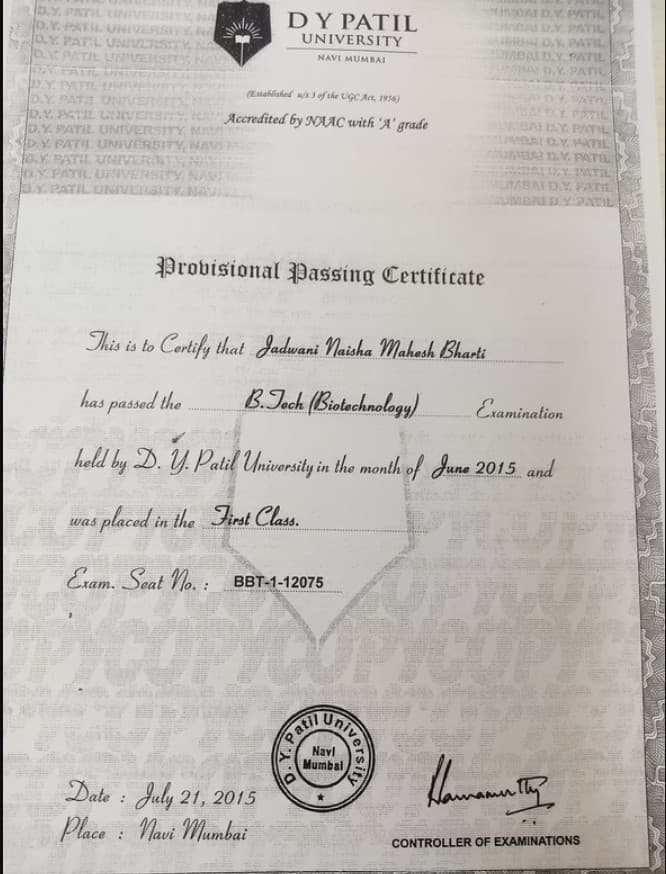
Naisha graduated from D Y Patil University
Academic expertise of your biology tutor

A-Levels (UK)

Test prep strategies

Advanced Placement (AP) Program (USA)
Career guidance
Personalized learning plans
 CoTutor
AI modules
Summary
Podcast
Quiz
Learnings
Flashcard
Spotlight
Zero Risk Guaranteed
15-days refund
Free tutor swap
No cancel fee
1-yr validity
24/7 support
Types of students for biology class

None of the above
College students
High School students
Your biology tutor also teaches

Biology
Botany
Cell biology
Genetics
Microbiology
Zoology

Biology concepts taught by Naisha
The Tutor introduced a new module on cell signaling, covering the fundamental concepts of signals, receptors, and signal transduction. They discussed the specificity, sensitivity, and various mechanisms of signal transduction, including enzyme cascades and gated ion channels, explaining the role of ion movement and electrochemical potential in cellular responses. The Student is expected to revise the material for the next session, where further details on ion movement and repolarization will be covered.
Core Concepts of Cell Signaling
Enhancing Signal Transduction Efficiency
Gated Ion Channels: Direct Signaling Pathways
Electrochemical Basis of Ion Channel Activity
The Student and Tutor initiated their course by exploring the fundamental concepts of amino acids, including their structure, classification into polar and non-polar types, and unique chemical properties like chirality and zwitterionic nature. They also discussed stereoisomers and the biological significance of various amino acids and their residues. The next session is planned to cover oligopeptides and polypeptides.
Amino Acid Fundamental Structure
Chirality and Stereoisomers of Amino Acids
Zwitterions and Amphoteric Nature
Classification of Amino Acids by R-Group Polarity
Uncommon Amino Acids and Functional Residues
The Student and Tutor engaged in an introductory biochemistry session to discuss the student's needs for supplemental tutoring for an online class. The Tutor provided an overview of biomolecules, focusing on the classification and properties of carbohydrates (monosaccharides, oligosaccharides, and polysaccharides), and explained concepts like monomers, polymers, and hydrolysis. They also scheduled a follow-up session to review protein structure for an upcoming quiz and discussed a plan to cover other topics like enzymes and carbohydrates in subsequent weeks.
Hydrolysis: Breaking Down with Water
Monosaccharide Nomenclature by Carbon Count and Functional Group
Carbohydrates: Monosaccharides
Oligosaccharides
Polysaccharides
Polymerization Reactions: Addition vs. Condensation
Introduction to Biomolecules: Monomers & Polymers
The Tutor and Student engaged in a detailed Biology lesson on gene regulation, specifically focusing on the structure, function, and regulation of the lac operon in bacteria. They covered the roles of its various genes, the mechanism of negative control and induction by allolactose, and briefly discussed the impact of certain mutations. The next session will delve into the lac operon's activation and the cAMP-CAP complex.
Lac Operon Regulation: Negative Control (Absence of Lactose)
Lac Operon Regulation: Induction (Presence of Lactose)
Allolactose & Glycosidic Linkages (Structural Detail)
Lac Operon Mutations
Components and Roles of Lac Operon Genes
Operon Basics & Lac Operon Introduction
The Tutor introduced the concept of gene regulation in bacteria, explaining its significance, types of genes involved, and common regulated processes. They delved into transcriptional regulation, describing the roles of regulatory proteins (repressors and activators) and effector molecules (inducers, corepressors, and inhibitors) with visual examples. The session also covered enzyme adaptation and briefly introduced the lactose operon, which will be continued in the subsequent class.
Transcriptional Control Mechanisms
Bacterial Gene Regulation Fundamentals
Enzyme Adaptation and Gene Regulation
Inducible and Repressible Gene Systems in Action
Effector Molecules and Allosteric Regulation
The Tutor and Student discussed DNA recombination mechanisms, focusing on the roles of Rec proteins, Holiday junctions, and site-specific recombination. They also explored the application of site-specific recombination in viral integration and antibody diversity. The next session will cover transposition.
Site-Specific Recombination: Antibody Diversity
Site-Specific Recombination: Viral Integration
D-loop Formation and Resolution
RecBCD and RecA in DNA Recombination Initiation
Holiday Junctions and Processing by RuvABC & RecG
Teaching tools used by biology tutor

Presentations
Digital Note taking

Biology tutors on Wiingy are vetted for quality
Every tutor is interviewed and selected for subject expertise and teaching skill.
