
Naisha J
Advanced Placement (AP) specialist, results-driven academic support designed to demystify college-level curriculum


Show all photos
Naisha J
Bachelors degree
/ 55 min
Naisha - About your AP tutor
I am Naisha Jadwani , an experienced tutor with over 10+ years of experience teaching psychology , biology and chemistry. I hold a bachelor's degree in biotechnology and certificate in Psychology. I specialize in tutoring AP for biology , Psychology and Chemistry. My approach is rooted iin personalized learning , tailor lessons according to srudent's needs. I have an experience working with well known research labs in the country. Have an hands on experience with various lab techniques such as dialysis , chromatographic techniques , etc. I focus on practical skills and application of these skills in real world applications to foster live for science. I foster innovative teaching techniques, methods to cate various learning styles. As a dedicated Advanced Placement (AP) specialist, I provide highly targeted, results-driven academic support designed to demystify complex, college-level curricula and maximize student performance on the national exams. My instructional framework focuses on diagnostic assessment, allowing me to identify individual conceptual gaps and build customized learning paths that align precisely with College Board standards. Beyond teaching advanced content, I equip students with critical test-taking strategies, analytical problem-solving skills, and the specific free-response question (FRQ) formatting necessary to score a 4 or 5. By fostering a supportive and rigorous intellectual environment, I help high schoolers transform academic pressure into confidence, ensuring they master the material while developing the foundational study habits required for long-term university success.
Meet Naisha
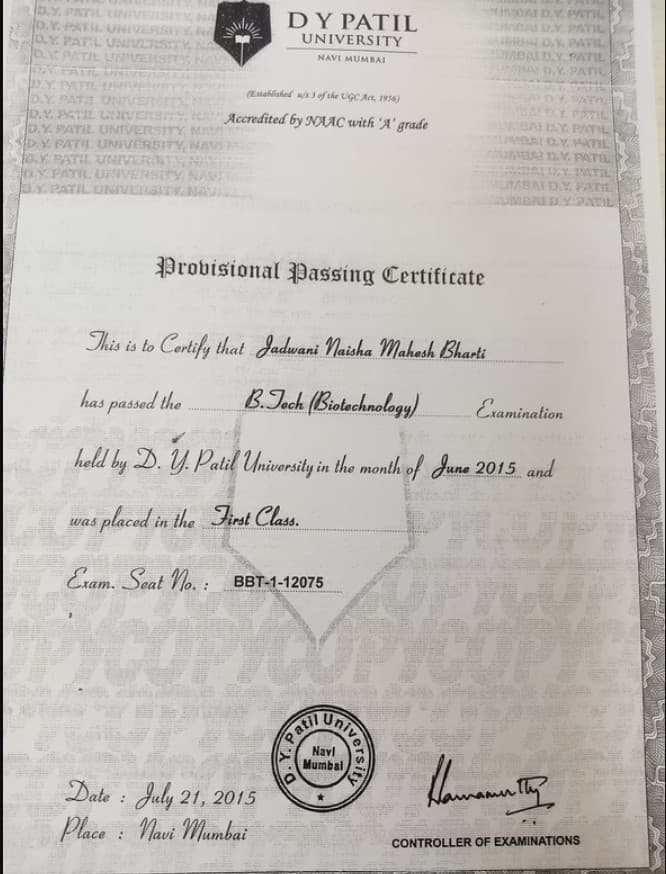
Naisha graduated from D Y Patil University

AP tutor test prep specialities

AP Scoring Insights

Grade improvement

Concepts learning
 CoTutor
AI modules
Summary
Podcast
Quiz
Learnings
Flashcard
Spotlight
Zero Risk Guaranteed
15-days refund
Free tutor swap
No cancel fee
1-yr validity
24/7 support
Naisha - also teaches

AP Biology
AP Chemistry
AP Psychology

AP concepts taught by Naisha
The Student and Tutor reviewed the detailed mechanisms of various esterification reactions, including acid-catalyzed, acid chloride, and Fischer esterification, emphasizing the steps of protonation, nucleophilic addition, and elimination. They also discussed the conditions that favor ester formation and the reasons why acidic conditions are preferred. The Tutor plans to continue the discussion on nucleophilic and aromatic substitutions in a follow-up session.
Esterification Fundamentals
Role of Acid Catalysis (H₂SO₄)
Mechanism of Fischer Esterification
Esterification with Acid Chlorides
Nucleophilic Acyl Substitution (The Core Reaction Type)
The Student and Tutor continued their discussion on metabolism, focusing on the detailed allosteric regulation of glycolysis and gluconeogenesis. They explored the mechanisms of key enzymes—hexokinase, PFK1, and pyruvate kinase—and how their activity is regulated differently across various tissues. The Tutor indicated that the regulation of gluconeogenesis enzymes would be covered in a future session.
Metabolic Regulation & Homeostasis
Coordinated Regulation & Futile Cycles
Hexokinase Isozymes: Tissue-Specific Roles
Phosphofructokinase-1 (PFK1): Glycolytic Gatekeeper
Pyruvate Kinase (PK): Final Glycolytic Control
The Tutor and Student reviewed the genetic code and the comprehensive process of bacterial translation. They covered the roles of mRNA and tRNA, the ribosomal A, P, and E sites, and the three stages of translation: initiation, elongation, and termination. The session concluded with a brief comparison of bacterial and eukaryotic translation mechanisms, with the Student indicating a different topic for the next class.
Genetic Code & Reading Frame
mRNA
tRNA
Anti-codons
and Ribosomal Sites (A
P
E)
Bacterial Translation Stages: Initiation
The class focused on advanced cellular signaling, specifically exploring the role of nitric oxide as a signaling molecule, its synthesis via NOS enzymes, and its mechanism in regulating smooth muscle relaxation through the cGMP pathway. The discussion also delved into G-protein coupled receptor (GPCR) desensitization processes and the activation mechanisms of enzyme-coupled receptors, particularly Receptor Tyrosine Kinases (RTKs), including signal amplification and ligand-induced dimerization. The Tutor and Student plan to continue with docking sites in the next session.
Signal Amplification in GPCR Pathways
RTK Activation through Dimerization
Enzyme-Coupled Receptors (RTKs)
GPCR Desensitization & Regulation
NO-cGMP Signaling Pathway
Nitric Oxide Synthase (NOS) Variants
Nitric Oxide (NO) Gaseous Signaling
The Tutor and Student reviewed chemical reactions, covering combination, decomposition, and displacement types. They practiced writing and balancing ionic equations, identifying spectator ions, and introduced the fundamental concepts of oxidation and reduction. The session also included an initial discussion on using the periodic table to understand valency, with plans to continue with redox balancing in the next class.
Predicting Valency & Ion Charges Using the Periodic Table
Molecular
Ionic
and Net Ionic Equations
Understanding Chemical Reactions and Their Types
Oxidation and Reduction (Redox) Processes
The class focused on advanced cell signaling mechanisms, specifically exploring calcium ion signaling pathways. The Student and Tutor discussed the roles of IP3, calmodulin, and G-proteins in regulating cellular functions, including muscle contraction, gene expression, olfaction, and vision. The session concluded with an introduction to gaseous signaling, which will be covered in the next class.
Regenerative Calcium Waves & Feedback Oscillations
Calcium Ion Signaling & IP₃ Gateways
Calmodulin: The Universal Calcium Sensor
CaM Kinases
Autophosphorylation
and Molecular Memory (CaMKII)
G-Proteins: Direct and Indirect Ion Channel Regulation
Olfaction and Vision: Cyclic Nucleotide Gated Channels
Practical aids used by AP tutor

Presentations

Digital whiteboard

AP tutors on Wiingy are vetted for quality
Every tutor is interviewed and selected for subject expertise and teaching skill.
