
Urvashi Verma
Certified Chemistry Expert (M.Sc., B.Ed.) with 6 Years of Teaching Experience – Making Science Simple and Fun!




Show all photos
Urvashi Verma
Masters degree
/ 55 min
Urvashi Your chemistry tutor
Hello! I am Urvashi, a dedicated Science and Mathematics educator with an M.Sc. in Chemistry and a Bachelor of Education (B.Ed.). I blend deep subject expertise with professional pedagogical training to help students achieve top-tier academic results. With four years of experience teaching in Indian schools and tutoring international students, I specialize in making complex concepts accessible. My expertise ranges from foundational Mathematics to advanced high school Chemistry (Organic, Inorganic, and Physical). I believe that Science and Math should be understood, not just memorized, so I focus heavily on "The Why" behind every formula. My Teaching Approach: • Conceptual Clarity: We break down complex logic into simple, relatable steps. • Interactive Learning: I use real-world examples to make abstract theories feel practical and exciting. • Customized Pace: Every lesson is tailored to your specific learning style and exam goals. • Supportive Environment: I maintain a patient, encouraging space where students feel confident to ask questions and build their self-esteem. Whether you are preparing for competitive exams or looking to strengthen your foundations, I am here to provide a structured and engaging roadmap to success. My goal is to move beyond textbooks and help you develop a genuine interest in the subjects. I look forward to helping you reach your full academic potential!
Meet Urvashi
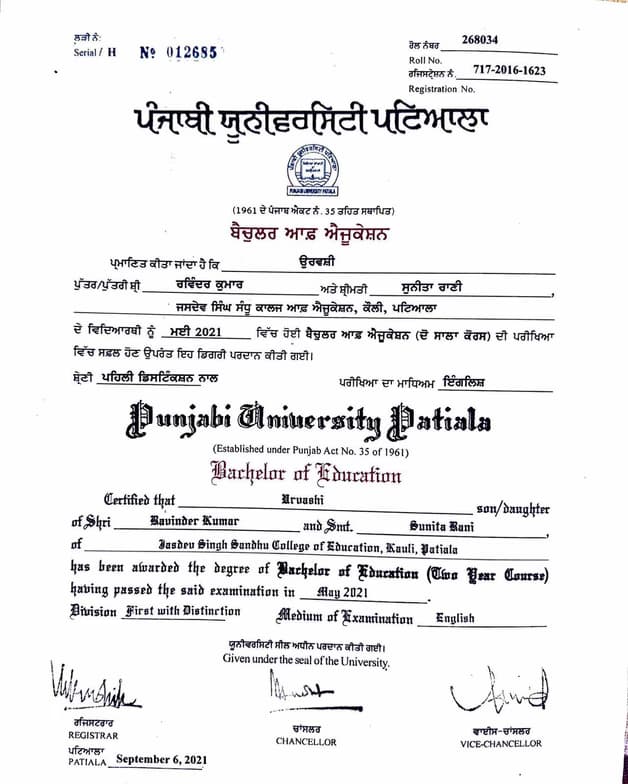
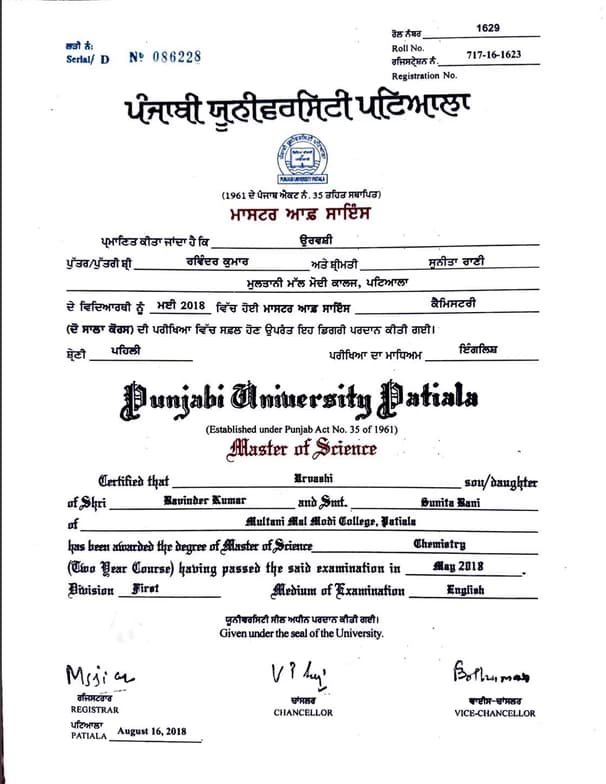
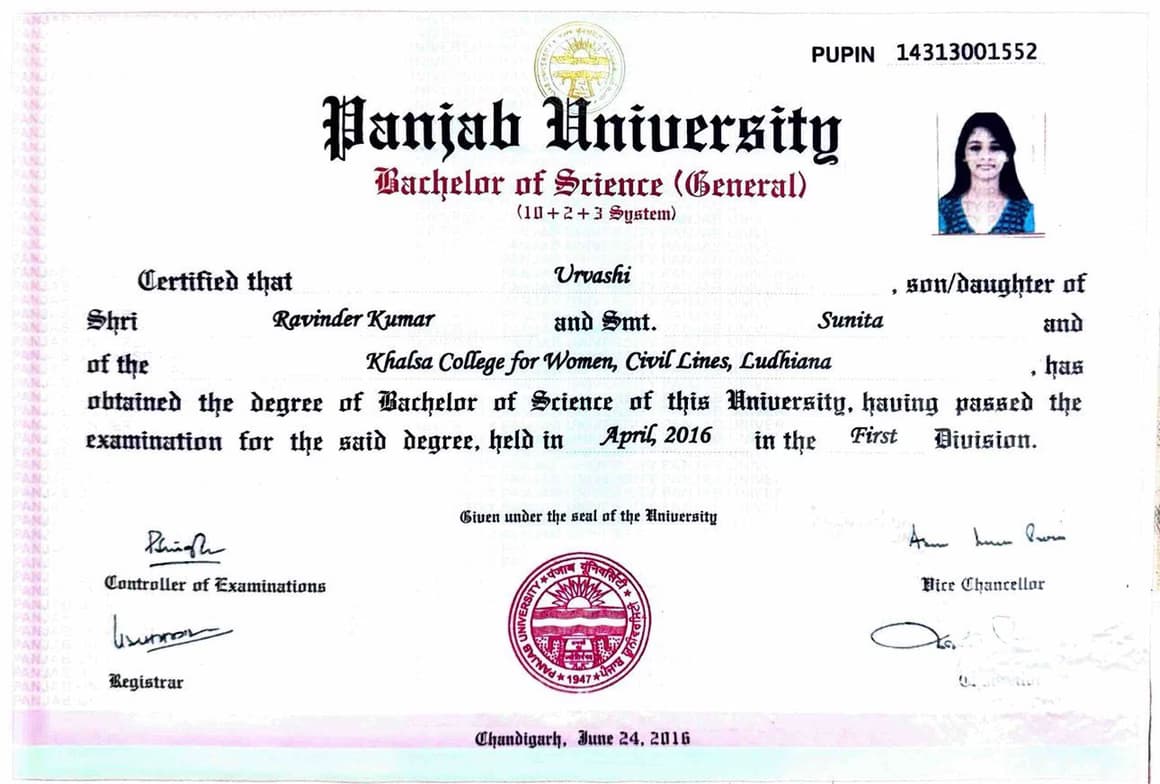
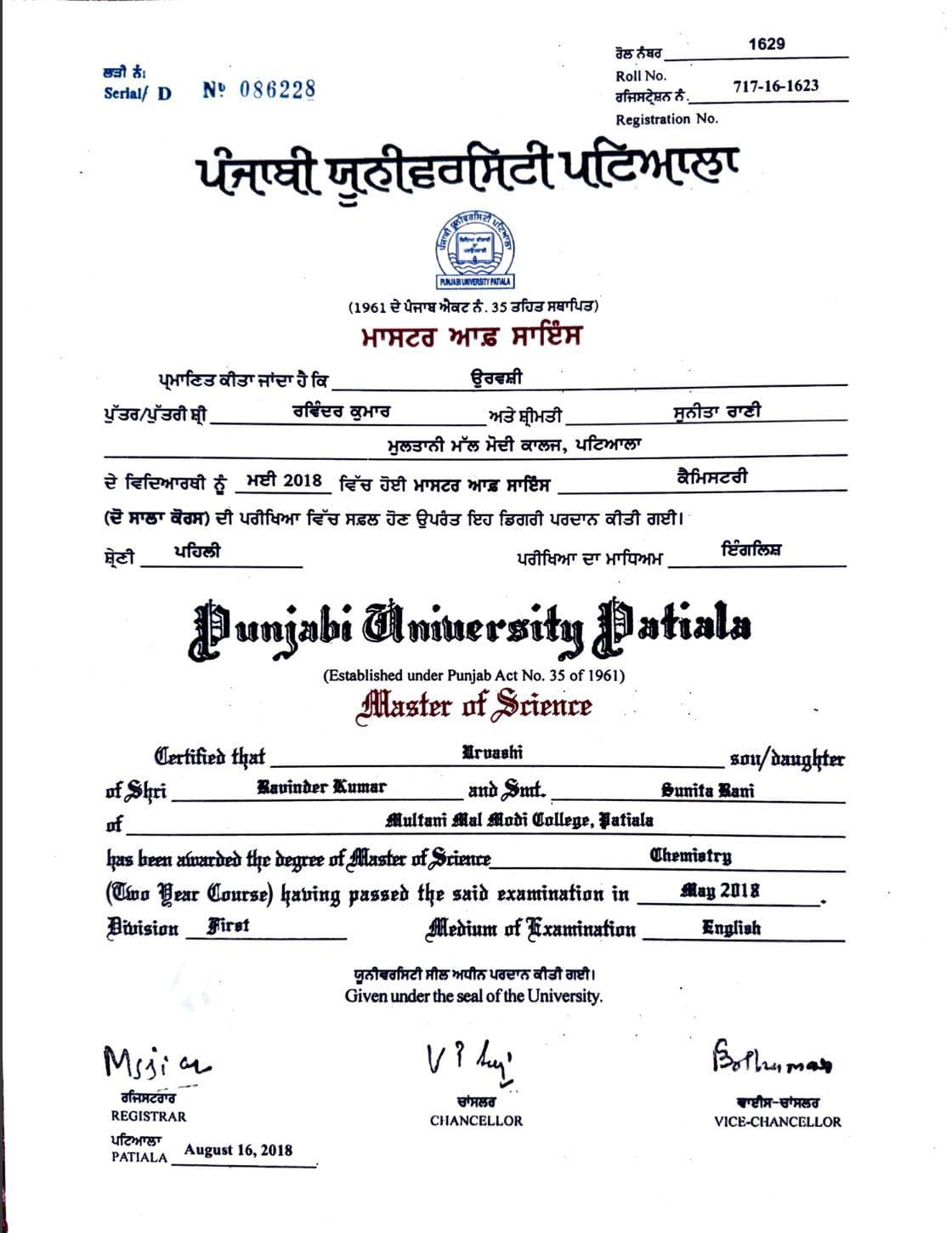
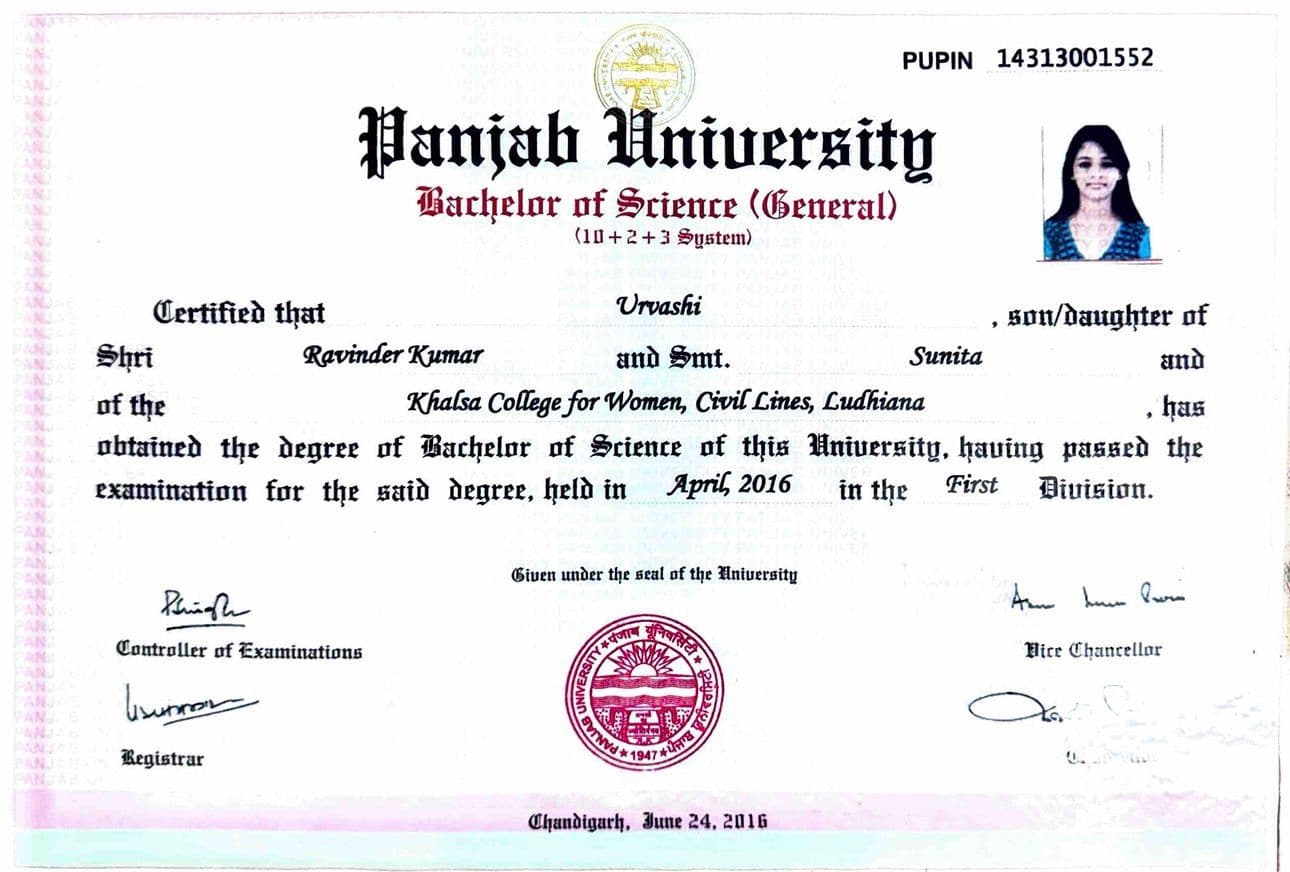
Urvashi graduated from PUNJABI UNIVERSITY PATIALA
Specialities of your chemistry tutor

Advanced Placement (AP) Program (USA)

Chemistry experiments

Personalized learning plans

Chemistry lab skills
Career guidance

State-Specific Standards (USA)
Review sessions
Visual learning

Australian Curriculum (AU)

New Zealand Curriculum - NZC (NZ)
Real world application

Common Core State Standards - CCSS (USA)
 CoTutor
AI modules
Summary
Podcast
Quiz
Learnings
Flashcard
Spotlight
Zero Risk Guaranteed
15-days refund
Free tutor swap
No cancel fee
1-yr validity
24/7 support
Types of learners for chemistry class

Home schooled

Middle School students
Elementary School students

ADHD

Anxiety or Stress Disorders
College students
High School students
Your chemistry tutor also teaches

Chemistry
Organic Chemistry
Chemical Reactions
Physical Chemistry
Inorganic Chemistry
Atomic Structure

Chemistry concepts taught by Urvashi
The Student and Tutor began a new unit on Thermal Physics and Ideal Gases, starting with fundamental concepts like internal energy and the properties of different states of matter. They then systematically covered Boyle's, Charles's, and Gay-Lussac's laws, culminating in the ideal gas equation and its applications. They practiced solving various related problems, with a plan to continue with the kinetic theory of gases in future sessions.
Internal Energy of Matter
Kinetic and Potential Energy in Thermal Physics
Fundamental Gas Laws
The Ideal Gas Equation & Constants
Moles
Avogadro's Number
and Molar Mass
Student and Tutor reviewed concepts of vertical circular motion from the previous session before diving into the mathematical principles and defining conditions of Simple Harmonic Motion (SHM). They explored various real-world examples of SHM, analyzed the relationships between displacement, velocity, and acceleration using equations and graphs, and practiced solving related problems. For the next session, they plan to cover energy conservation in SHM and then work on past paper questions for the unit.
Conditions for Simple Harmonic Motion (SHM)
Defining Equation of SHM: a = -ω²x
Displacement Equation and Phase Constant (ε)
Velocity and Acceleration in SHM (from Displacement)
Graphical Analysis of SHM (x
v
a vs t)
Problem Solving with SHM Equations
The Tutor and Student conducted a detailed review of circular motion, covering essential definitions such as radians, time period, frequency, angular displacement, angular velocity, centripetal acceleration, and centripetal force. They discussed associated formulas, derived key relationships, and clarified common misconceptions about centripetal force and work done. The Student was assigned a homework problem, and they planned for future sessions to include both topic explanations and problem-solving practice.
Centripetal Force (F_c)
Common Misconceptions in Circular Motion
Centripetal Acceleration (a_c)
Time Period (T) & Frequency (f)
Radians & Angular Displacement
Angular Velocity (ω)
The Student and Tutor reviewed key concepts in thermochemistry, including definitions of endothermic and exothermic reactions, enthalpy change calculations, and methods for representing these changes. They discussed the energy involved in bond breaking and formation, as well as examples of each type of reaction. The session aimed to prepare the Student for an upcoming test.
Thermochemistry Fundamentals
Enthalpy (ΔH) & Its Calculation
Exothermic vs. Endothermic Reactions
Bond Energy and Reaction Enthalpy
Representing Enthalpy Changes
Molar Enthalpy Change
Student and Tutor reviewed key concepts of Uniform Circular Motion, including angular displacement, angular velocity, and centripetal force and acceleration. They practiced applying these concepts through various real-world examples, such as a car on a banked road and a car in a vertical loop. The session also covered Newton's Laws in the context of circular motion and the calculation of work done.
Uniform Circular Motion (UCM) Fundamentals
Centripetal Force and Acceleration
Work Done and Energy Conservation in UCM
Identifying Centripetal Force in Real-World Scenarios
The Tutor introduced the Student to Year 2 Physics, focusing on circular motion concepts including centripetal force, angular displacement, and angular speed. They covered definitions, units, and the conversion between radians and degrees, deriving key formulas. The Student is expected to send their formula sheet, and the next session will involve algebra-based problems and vertical circular motion.
Angular Displacement (θ) and Radians
Relating Linear Speed (v) to Angular Speed (ω)
Angular Speed
Time Period (T)
and Frequency (f)
Angular Speed (ω)
Centripetal Force & Circular Motion Fundamentals
Tools & techniques used by chemistry tutor
Interactive diagrams

Flashcards
Video conferencing
Digital Note taking

Presentations
Interactive 3D models

Practice worksheets

Chemistry tutors on Wiingy are vetted for quality
Every tutor is interviewed and selected for subject expertise and teaching skill.
