
Hugo Pissarra
Physics Simplified: Personalized Tutoring to Help You Master the Laws of the Universe





Show all photos
Hugo Pissarra
Masters degree
/ 55 min
Hugo - your physics tutor
I'm Hugo Pissarra, a Physics tutor with a Masters's degree, currently based in Lisbon, Portugal. I'm fluent in Portuguese, Spanish and English. Despite my less than 1 year of experience, I bring a fresh perspective to teaching all Physsics subjects with my specialties being Thermodynamics and Quantum Mechanics. The contente material that I use include personalized learning plans, test prep strategies, and real-world application of physics concepts. I cater to Elementary, Middle, High School, and College students, ensuring each benefits from tailored problem sheets to career guidance. I excel in visual learning, enhancing understanding through physics lab skills and review sessions, as a visual interpretation is as important, if not more to ensure a correct and precise understanding of Physics phenomena. Special needs students are always welcome in my online tutoring sessions for a truly inclusive learning experience. I pride myself on creating a truly inclusive, patient, and supportive online environment where every learner feels empowered to ask questions. Physics can be intimidating, but together, we will break down these barriers. Let's unravel the mysteries of physics together and turn your academic challenges into your greatest strengths!
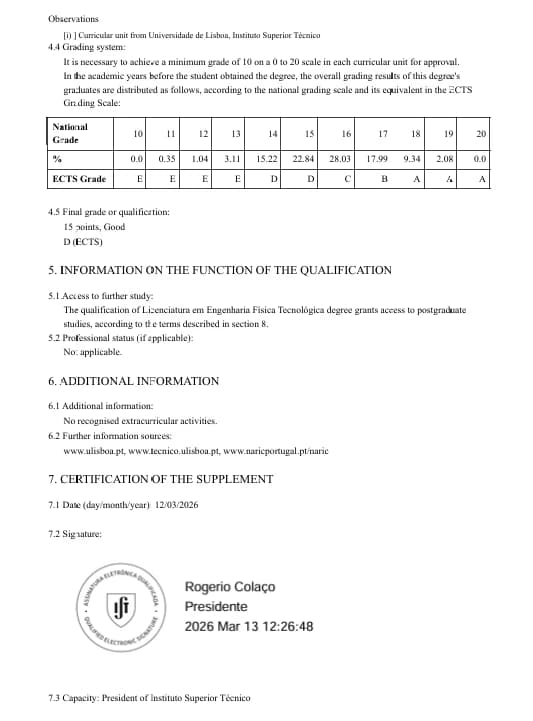
Hugo graduated from Universidade de Lisboa
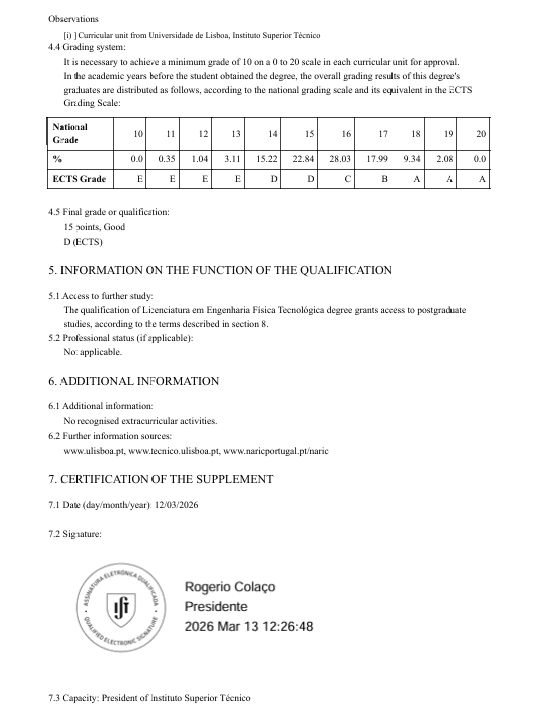
Academic expertise of your physics tutor

Visual learning

Homework help
Physics experiments
 CoTutor
AI modules
Summary
Podcast
Quiz
Learnings
Flashcard
Spotlight
Zero Risk Guaranteed
15-days refund
Free tutor swap
No cancel fee
1-yr validity
24/7 support
Student types for physics class

None of the above
Elementary School students
College students
Middle School students
High School students
Hugo - Physics tutor also teaches

Thermodynamics
Quantum Mechanics

Physics concepts taught by Hugo
The Tutor introduced the basic structure and components of the periodic table, discussing how to interpret information within each element's square. The session then moved on to explain the significance of groups and periods, and how these relate to valence electrons and electron shells. They also explored two major periodic trends—atomic radius and ionization energy—and how they change across periods and down groups, with a plan to cover other trends in future sessions.
Reading the Periodic Table: Essential Information
Periodic Table Structure: Groups and Periods
Elemental Classification: Metals
Metalloids
and Non-metals
Periodic Trends: Atomic Radius
Periodic Trends: Ionization Energy
The Tutor and Student reviewed several physics concepts including celestial mechanics (center of mass, gravitational force, orbital period), kinematics (escape velocity), fluid dynamics (Bernoulli's equation, hydrostatic pressure), and oscillatory motion (simple harmonic motion). The session involved problem-solving and formula derivation, with plans to send practice problems with answer keys.
Centripetal Force and Orbital Period
Simple Harmonic Motion (SHM)
Bernoulli's Principle in Fluid Dynamics
Escape Velocity
Newton's Law of Universal Gravitation
Center of Mass Calculation
The tutor introduced fundamental geometry concepts, including the standard equation of a circle and its components, distance calculations, and vector addition. They then progressed to linear equations, finding intersection points between lines and circles, and calculating the area of a triangle formed by intersecting lines. The student will continue lessons with this tutor.
Standard Equation of a Circle
Distance Formula & Pythagorean Theorem
Vector Addition
Equation of a Line (Slope-Intercept Form)
Solving Systems of Equations (Line & Circle)
The Tutor and Student worked through several physics problems covering pendulums, static equilibrium, angular kinematics, centripetal force, angular momentum conservation, and fluid buoyancy. They calculated observed and ideal pendulum periods, normal forces on a log, angular displacement of a rotating object, centripetal force, and the volume of displaced water for a floating block. The Student expressed a desire to focus more on oscillation problems in future sessions.
Conservation of Angular Momentum
Buoyancy and Archimedes' Principle
Static Equilibrium Principles
Pendulum Period Calculation
Angular Kinematics and Motion
The Tutor and Student reviewed concepts related to mechanical energy, friction, and work-energy theorem, solving problems involving inclined planes and variable forces using graphs. They then began discussing static equilibrium, focusing on the principles of balanced forces and torques, and planning to practice more problems in upcoming sessions.
Friction and Mechanical Energy Loss
Work-Energy Theorem
Static Equilibrium
The Tutor and Student reviewed concepts in physics, including terminal velocity, conservation of mechanical energy with springs, centripetal force in circular motion, conservation of momentum in inelastic collisions, and rotational motion with torque and angular acceleration. They worked through several example problems covering these topics and discussed upcoming session scheduling.
Terminal Velocity
Conservation of Mechanical Energy
Centripetal Force and Circular Motion
Conservation of Momentum
Rotational Kinematics and Torque
Classroom tools used by physics tutor

Practice worksheets

Quizzes

Assessments
Video conferencing
Digital Note taking

Physics tutors on Wiingy are vetted for quality
Every tutor is interviewed and selected for subject expertise and teaching skill.
