
Biada Cuarto
Enhance your GCSE math skills with dynamic tutoring from Department of Education educator.



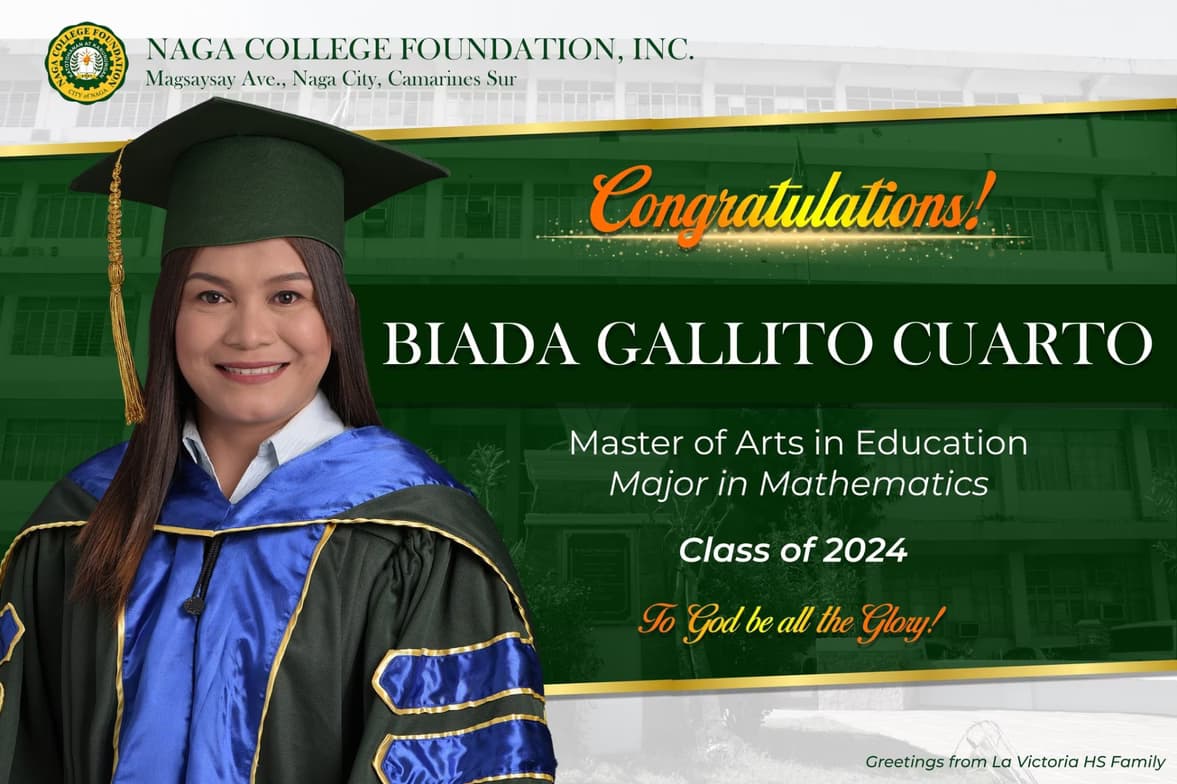

Show all photos
Biada Cuarto
Masters degree
/ 55 min
Biada - Know your tutor
I am Biada Cuarto, a highly committed and experienced online tutor specializing in GCSE Mathematics, with over eight years of dedicated teaching practice and a Master’s degree that strengthens my academic and pedagogical foundation. Throughout my career, I have focused on helping students not only achieve higher grades but also build a deep and lasting understanding of mathematical concepts. My passion for teaching is reflected in my commitment to providing structured, engaging, and student-centered learning experiences that empower learners to confidently approach even the most challenging topics in Mathematics. My expertise lies in a wide range of instructional areas, including concept development, targeted grade improvement strategies, structured mock examinations, extensive practice testing, and fully customized study plans. I also place strong emphasis on effective test preparation and proven test-taking techniques that equip students with the confidence and skills needed to perform well under exam conditions. By integrating these elements into my teaching, I ensure that learners are not only prepared academically but also mentally ready to excel. One of my key strengths as an educator is my ability to deliver highly personalized learning experiences tailored to the unique needs, learning pace, and academic goals of each student. I recognize that every learner is different, and I take pride in adapting my teaching strategies to accommodate diverse learning styles.
Meet Biada
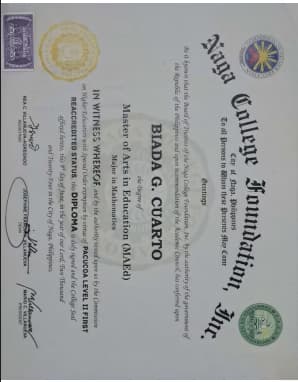
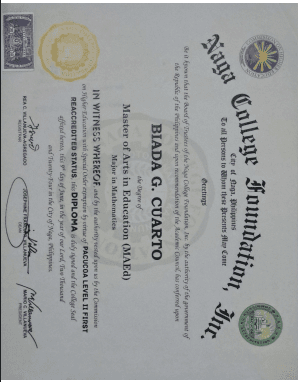
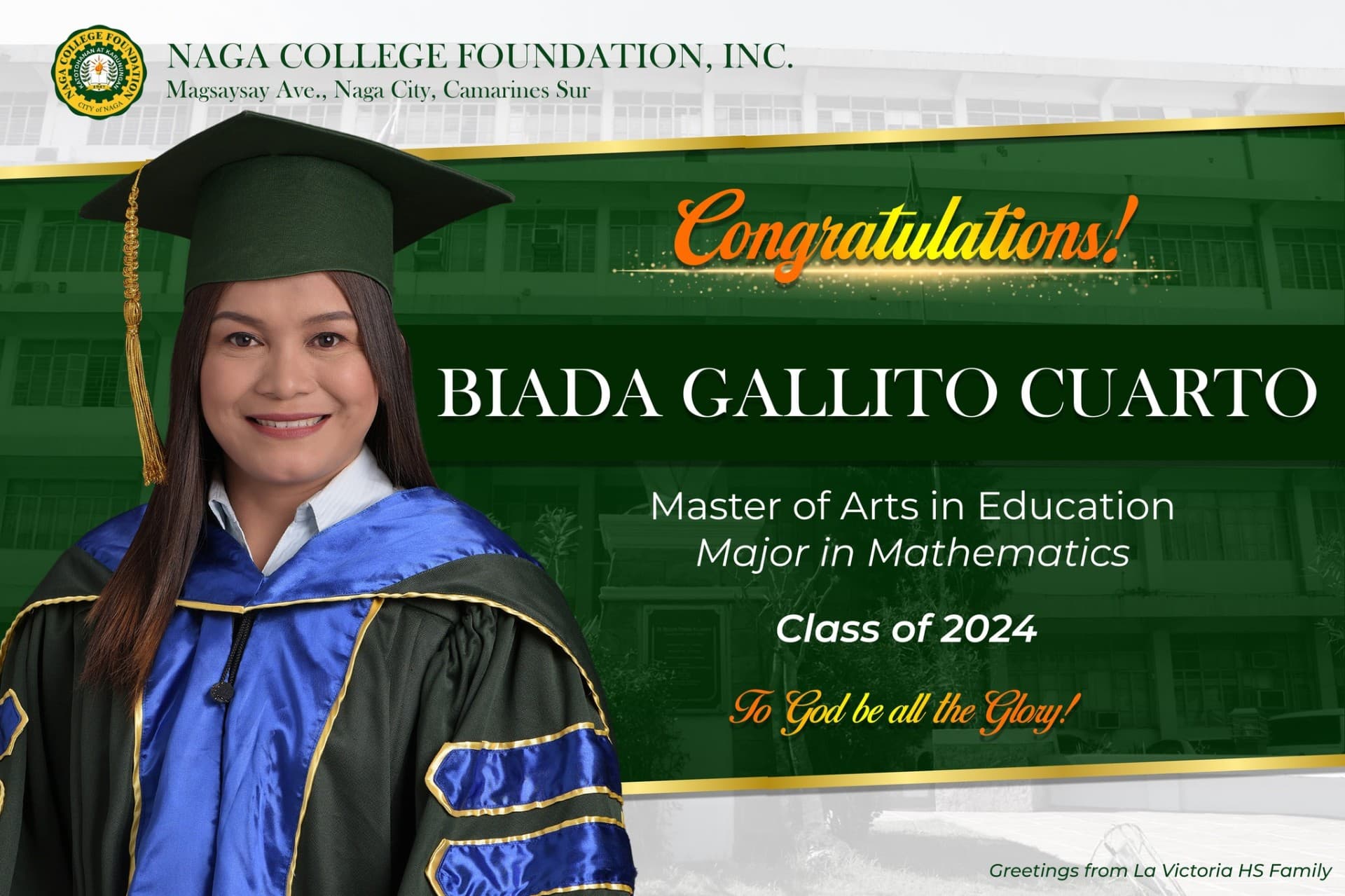
Biada graduated from Naga College Foundation
GCSE tutor skills

Concepts learning

Test prep

Study Plans

Test taking techniques

Grade improvement
 CoTutor
AI modules
Summary
Podcast
Quiz
Learnings
Flashcard
Spotlight
Zero Risk Guaranteed
15-days refund
Free tutor swap
No cancel fee
1-yr validity
24/7 support

GCSE concepts taught by Biada
The Tutor and Student worked through various algebra problems covering simplifying expressions, factoring different types of polynomials (GCF, trinomials, difference of squares), and simplifying rational expressions. A key focus was on identifying restrictions for rational expressions to avoid a zero denominator. The Student practiced these concepts by solving several example problems and correcting common algebraic errors.
Simplifying Algebraic Expressions
Multiplying Binomials: The FOIL Method
Factoring by Greatest Common Factor (GCF)
Factoring Quadratic Trinomials (a=1)
Factoring Difference of Squares
Factoring Quadratic Trinomials (a>1): AC Method
Rational Expressions: Simplifying and Restrictions
The Student and Tutor reviewed advanced calculus techniques, including the epsilon-delta proof, the Squeeze Theorem, and the use of polar coordinates for evaluating limits. They also began a new topic on partial derivatives, practicing how to differentiate multivariable functions with respect to one variable while treating others as constants. The next session is planned to continue with partial derivatives.
Introduction to Partial Derivatives
Evaluating Multivariable Limits with Polar Coordinates
Epsilon-Delta Definition of Limits
The Squeeze Theorem for Limits
The Student and Tutor continued their study of polynomial functions, covering methods for graphing, identifying standard form, degree, and leading coefficients. They also practiced evaluating functions, determining end behavior from equations and graphs, and expanding binomials raised to the third power. The next session will focus on adding and subtracting polynomial functions.
Identifying & Standardizing Polynomials
Cubing Binomials: Expansion & Standard Form
Evaluating Polynomial Functions
Graphing Polynomial Functions: End Behavior & Plotting
The Student and Tutor focused on polynomial functions. They practiced simplifying, adding, subtracting, and evaluating polynomial expressions, including applying these skills to word problems. The session also introduced the basics of graphing polynomials, covering standard form, degree, leading coefficients, and end behavior. They agreed to continue with graphing polynomials in the next session, which will also be at a new time.
Simplifying Polynomials
Adding and Subtracting Polynomials
Identifying Polynomial Functions: Degree
Type
& Standard Form
Evaluating Polynomial Functions
End Behavior of Polynomial Functions
The Student and Tutor dedicated the session to learning and practicing the addition and subtraction of decimals. They reviewed decimal definitions, mastered the "golden rules" for operations, and solved numerous problems. The next session is scheduled to cover multiplying and dividing decimals.
What are Decimals? (and Place Value)
Golden Rule for Adding Decimals
Golden Rule for Subtracting Decimals
Real-World Applications of Decimals
The session focused on evaluating limits and determining the continuity of multivariable functions. The Student and Tutor practiced various methods, including direct substitution, path-dependent limits, and applying the formal delta-epsilon definition. They also identified restrictions for continuity in different types of functions and planned to proceed with chapter 13.3 in the next session.
Methods for Evaluating Multivariable Limits
The Delta-Epsilon Definition of Multivariable Limits
Basic Properties of Multivariable Limits
Continuity of Multivariable Functions
Learning tools used by GCSE tutor

Quizzes

Digital whiteboard

GCSE Practice worksheets

Presentations

Study Planner

GCSE tutors on Wiingy are vetted for quality
Every tutor is interviewed and selected for subject expertise and teaching skill.
