
Maria Reartes
Improve your Spanish for travel, exams, and meaningful connections with friends or your partner




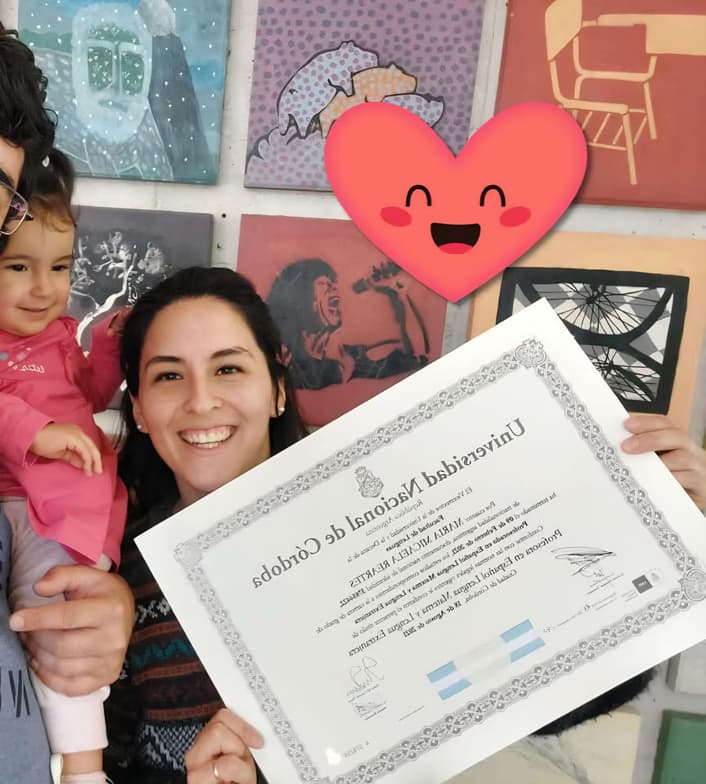

Show all photos
Maria Reartes
Bachelors degree
/ 55 min
About your spanish tutor
I am a passionate Spanish teacher from Argentina with experience helping students from different parts of the world improve their communication skills in a practical and meaningful way. My teaching approach is student-centered, dynamic, and highly personalized. I focus on real-life communication rather than memorization, helping students feel confident speaking Spanish in everyday situations—especially in relationships, social interactions, and cultural contexts. I specialize in working with students who have a Spanish-speaking partner, supporting them in understanding not only the language but also the culture, humor, and way of thinking. My classes are designed to be engaging, relaxed, and relevant, creating a space where students feel comfortable making mistakes and growing. I believe that learning a language is also about building connections, so I aim to make each class a positive and motivating experience. I also adapt materials and topics to each student’s goals, interests, and level, ensuring consistent progress and a truly personalized learning journey. Aáaaaaaáaaáaaaaaaaaaáaaaaaaaaaaaaaaáaaaaaaaaáaaaaaaaaáaaáaaaaaaaaaaaaaaaaaaaa
Meet Maria
Maria graduated from Universidad Nacional de Córdoba
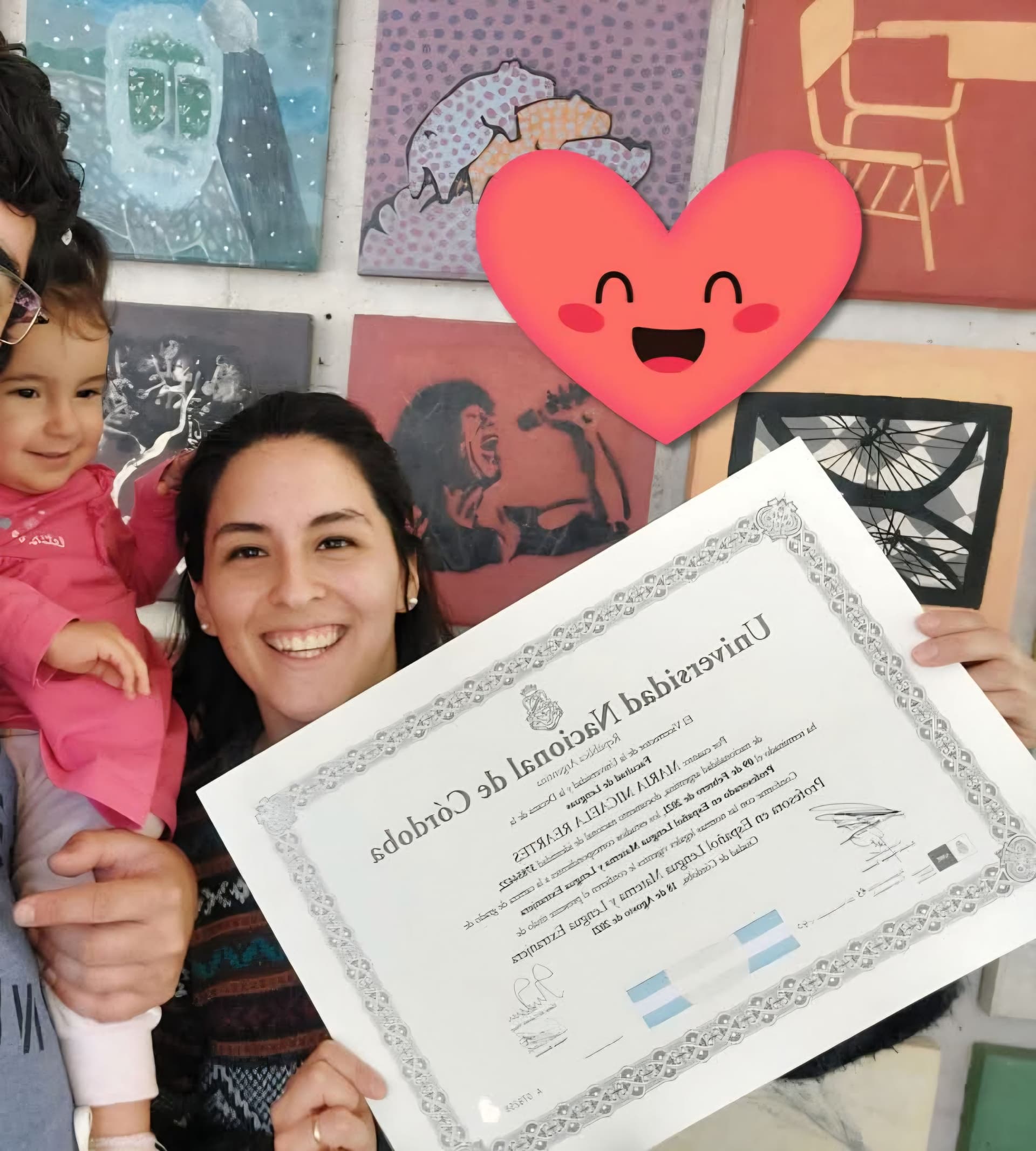
Spanish tutor language skill

Spanish language skill

Test prep strategies

Pronunciation Coaching

Cultural immersion

Homework help

Vocabulary Building
 CoTutor
AI modules
Summary
Podcast
Quiz
Learnings
Flashcard
Spotlight
Zero Risk Guaranteed
15-days refund
Free tutor swap
No cancel fee
1-yr validity
24/7 support
Learner types for spanish classes

Spanish for kids
Spanish for adults

Home schooled
Spanish for advanced
Spanish for intermediate
Spanish for beginners
Spanish tutor also teaches

Spanish
Spanish Listening
Spanish Reading
Spanish Speaking
Spanish Writing
Conversational Spanish

Spanish concepts taught by Maria
Student and Tutor reviewed the Spanish verb 'gustar' and other emotion-based verbs, focusing on their unique inverted sentence structure and two main conjugation forms (singular and plural). They practiced identifying and correcting errors in sentences and discussed the nuances of expressing preferences. Homework was assigned to further explore verbs with similar structures.
Using Other Gustar-like Verbs: Molestar
Full Conjugation (When to Use It)
Optional Clarifiers (A mí
A ti
etc.)
Two Primary Forms: Gusta vs. Gustan
Inverted Structure of Gustar-like Verbs
The Student and Tutor reviewed Spanish present tense verbs, with a particular focus on the special structure of verbs like 'gustar' (to like) and 'molestar' (to bother). They practiced conjugating these verbs, understanding how they differ from English equivalents, and discussed the role of indirect object pronouns. For homework, the Student was assigned exercises to correct sentences and construct new ones using these specific verbs.
Distinction: Gustar/Encantar vs. Amar/Querer
Cultural Perspective on Emotions in Spanish
Optional Clarifiers: 'A + Pronoun' Construction
Indirect Object Pronouns (IOPs)
Verbs of Likes and Dislikes (Gustar-like Verbs)
Inverted Structure & Subject-Verb Agreement
The Student and Tutor continued their lesson on Spanish quasi-reflexive verbs, reviewing the concepts of 'inner life,' 'change of state,' and 'se' as an intensifier. They practiced identifying these verb types through a homework exercise and introduced a new category of verbs related to movement. The Student will receive new practice sentences for the recently introduced verb category.
Reflexive vs. Quasi-Reflexive Verbs
Quasi-Reflexive Verbs: Inner Life
Quasi-Reflexive Verbs: Change of State
Quasi-Reflexive Verbs: Movement
`Se` as an Intensifier (Optional Use)
The Student and Tutor reviewed homework on quasi-reflexive verbs related to inner life and change of state, practicing sentence completion and text analysis. They discussed the nuances between reflexive and quasi-reflexive verbs, identifying external factors versus self-directed actions. The Tutor assigned further homework on inner life and change of state, while planning future lessons on movement verbs and different verbs that express 'change'.
The Intensifier `se` (Se Intensificador)
Distinguishing True Reflexive from Quasi-Reflexive Verbs
Quasi-Reflexive Verbs for Change of State (Verbos Cuasirreflexivos de Cambio de Estado)
Quasi-Reflexive Verbs for Inner Life (Verbos Cuasirreflexivos de Vida Interior)
Student and Tutor reviewed the use of periphrases and irregular verbs, practicing the formation of negative and affirmative obligations for a group using various Spanish verb structures. They also started exploring the special grammatical structure for verbs of feelings and emotions, specifically focusing on "gustar." Homework was assigned to continue practicing this new concept.
Introduction to Spanish Verbs of Feeling and Emotion
Expressing Obligations
Permissions
and Prohibitions
'Gustar' (Feeling) vs. Reflexive 'Gustarse' (Liking Oneself)
The Verb 'Gustar' and Indirect Object Pronouns (IOPs)
'Gustar' Conjugation: Agreement with the 'Producer'
The Student and Tutor engaged in a detailed review of Spanish quasi-reflexive verbs, concentrating on the 'inner life' and 'change of state' categories. They practiced identifying and conjugating these verbs, paying close attention to agreement with the external factors causing the action or feeling. Homework focusing on these concepts was assigned, with a plan to cover the 'movement' category and related direct/indirect objects in a future lesson.
Reflexive vs. Quasi-Reflexive: A Comparative View
Conjugation & Agreement in Quasi-Reflexives
Quasi-Reflexives of Inner Life (Feelings & Emotions)
Quasi-Reflexive Verbs: The Affected Subject
Quasi-Reflexives of Change of State
Learning tools used in spanish classes

Game based learning tools

Grammar practice

Spanish tutors on Wiingy are vetted for quality
Every tutor is interviewed and selected for subject expertise and teaching skill.
