
AMAN SHUKLA
Master different aspects of physics in easy and intuitive way with a comprehensive tutoring approach from a physics expert



Show all photos
AMAN SHUKLA
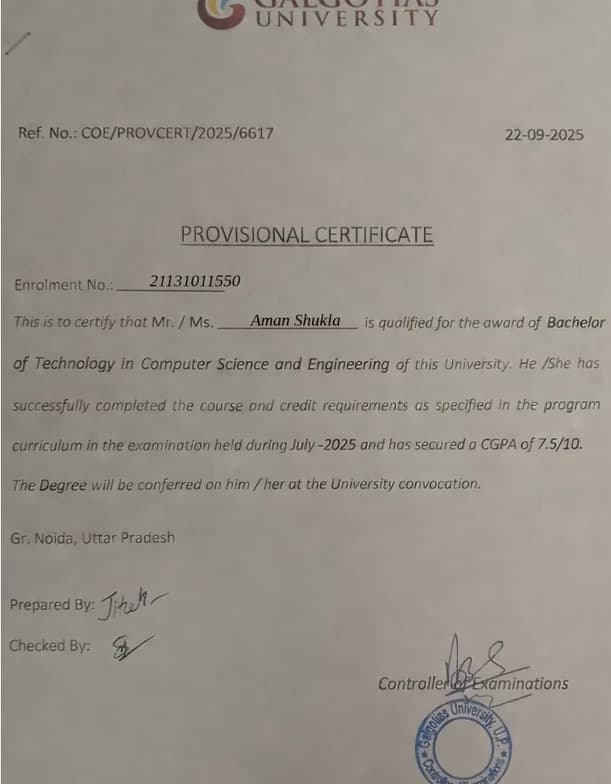
Bachelors degree
/ 55 min
AMAN - your physics tutor
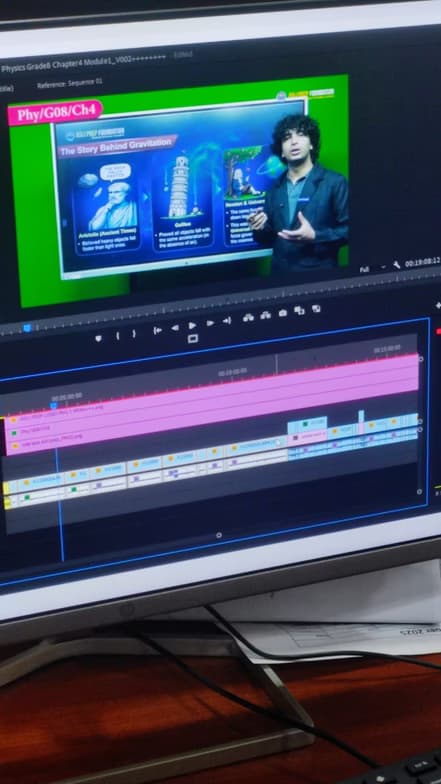
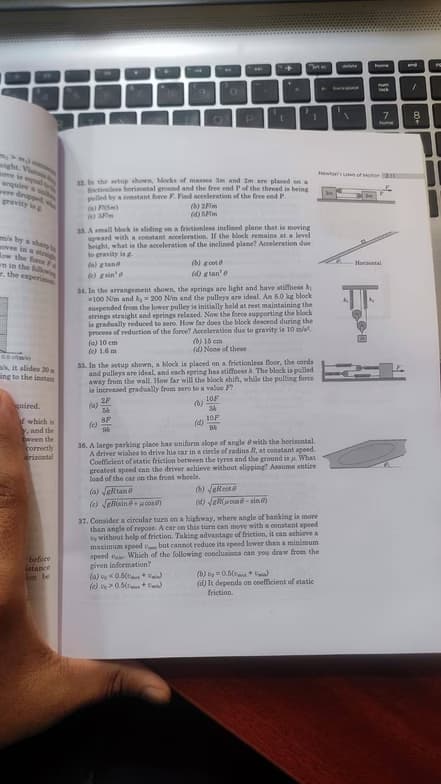
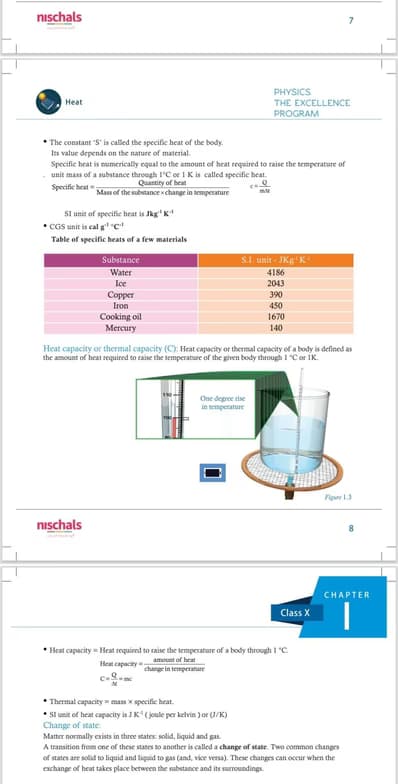
Hi! I'm Aman, a Physics educator with 4+ years of teaching experience across coaching institutes, online platforms, and one-on-one tutoring. I hold a JEE Advanced credential and scored a 94.67 percentile in JEE Mains 2020, giving me a strong problem-solving foundation that I bring into every lesson. I specialize in teaching international curricula including IB Physics (SL & HL), AP Physics, A-Level Physics, IGCSE Physics, and SAT Physics preparation. My goal is not just to help students achieve high scores, but to develop genuine scientific thinking and curiosity. I believe the most important question in physics is "Why?"—and every concept becomes easier when students truly understand the reasoning behind it. My teaching approach focuses on identifying the exact source of confusion, breaking down complex ideas through real-world examples, visualizations, and intuitive explanations, and then guiding students through exam-style problems step by step. Whether you're preparing for AP exams, IB assessments, A-Level papers, IGCSE boards, or standardized tests, every session is tailored to your syllabus, goals, and learning style. Over the years, I've worked with students from middle school through advanced pre-university programs, helping them build both conceptual understanding and exam confidence. Patient, structured, and highly interactive, I strive to make physics engaging rather than intimidating. Subjects: IB Physics (SL/HL) | AP Physics 1, 2 & C | A-Level Physics | IGCSE Physics | SAT Physics | Mathematics
Meet AMAN
AMAN graduated from GALGOTIAS UNIVERSITY

Academic expertise of your physics tutor

Career guidance
Test prep strategies

A-Levels (UK)

Homework help
Personalized learning plans
Real world application
Physics experiments

GCSE (UK)
Physics lab skills
 CoTutor
AI modules
Summary
Podcast
Quiz
Learnings
Flashcard
Spotlight
Zero Risk Guaranteed
15-days refund
Free tutor swap
No cancel fee
1-yr validity
24/7 support
Student types for physics class

Middle School students

Home schooled
High School students
College students
AMAN - Physics tutor also teaches

Physics
Thermodynamics
Electromagnetism
Atomic Physics
Mechanics
Optics

Physics concepts taught by AMAN
The student and Tutor focused on work and kinetic energy. The Tutor initiated the session by having the student solve preparatory questions to ensure a clear understanding of prerequisite concepts before delving deeper into kinetic energy. The student then began working on the provided problems.
Importance of Foundational Knowledge
Problem-Solving as a Foundational Review Tool
Anticipating Work and Kinetic Energy
The Student and Tutor practiced various physics problems related to wave phenomena, including Simple Harmonic Motion, Snell's Law, Young's double-slit experiment, and standing waves in strings and tubes. They also briefly discussed the Doppler effect and reviewed some concepts from the Student's recent exam. The Student plans to continue with sessions next week and the Tutor will send the practice document.
Snell's Law and Refraction
The Superposition Principle
Standing Waves in Pipes (Open and Closed Ends)
Standing Waves on Strings
Young's Double-Slit Experiment & Wave Interference
The Student and Tutor engaged in a review session for an upcoming unit test covering Kinematics and Dynamics. They worked through problem-solving exercises related to position-time equations and discussed how to interpret and sketch corresponding velocity-time and acceleration-time graphs.
Acceleration-Time (a-t) Graphs: Constant Motion
Velocity-Time (v-t) Graphs: Linear Motion
Solving Quadratic Kinematic Equations
Foundations of Kinematics and Dynamics
Position-Time (x-t) Graphs: Parabolic Motion
Derivatives of Exponential Functions (e^ax)
Derivatives of Square Root Functions (using Chain Rule)
Chain Rule in Differentiation
The Tutor and Student began their first session by discussing projectile motion, covering its definition, the role of vector components, and Galileo's statement on independent perpendicular motions. They derived formulas for time of flight, maximum height, and range, then applied these to solve practice problems. The Tutor assigned practice questions on one-dimensional motion for the Student to complete before the next class.
Introduction to Projectile Motion
Velocity Components and Independence of Motion
Formulas for Projectile Motion: Time of Flight
Max Height
and Range
Student and Tutor worked through various physics problems from past papers, including interpreting graphs for linear relationships, analyzing ideal gas behavior, identifying systematic experimental errors, and applying principles of circular motion and energy conservation. They also practiced unit analysis and discussed general strategies for problem-solving, particularly when to apply energy conservation. The Tutor agreed to send a forces document as follow-up.
Linearization of Equations & Graph Analysis
Systematic Errors in Experiments
Circular Motion in a Vertical Plane
Work-Energy Theorem & Conservation of Energy
Centripetal Force & Friction on a Flat Turn
Units Analysis in Physics
Classroom tools used by physics tutor

Digital whiteboard

Assessments
Digital Note taking
Interactive diagrams
Video conferencing

Physics tutors on Wiingy are vetted for quality
Every tutor is interviewed and selected for subject expertise and teaching skill.
