
Sayed Sahil C
Experienced physics tutor | Quantum mechanics | Relativity | Classical mechanics| Electrodynamics | Nuclear physics | Exam preparation |


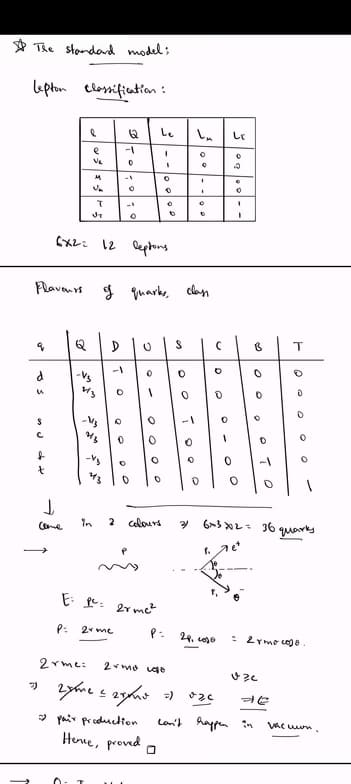


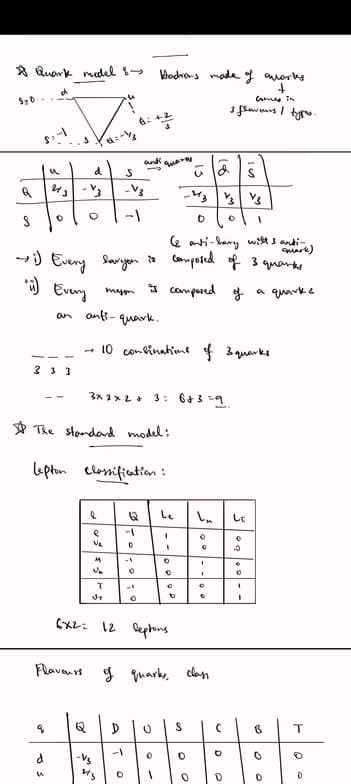
Show all photos
Sayed Sahil C
Bachelors degree
/ 55 min
Sayed Sahil - your physics tutor
I'm Sayed Sahil from IISER Tirupati, a premier research institute in India. I have completed my masters degree. I specialise I'm theoretical physics and mathematics. I have worked on several research grade problems in my field of interest, quantum mechanics and will be publishing my research soon on reputed journals. I'm gold medalist of my institute and have excelled in all my courses and research work. I'll be moving to Switzerland for further studies of PhD in quantum computing. I teach any level of physics and for competitive exams preparation like SAT, GATE, GRE etc. I keep my classes engaging and interactive with my students. I break down complex topics into simple terms and also keep enough focus on applications of the abstract concepts by problem solving and giving exciting problems to solve at the end of the session to keep students curiosity growing. I can teach at any level from elementary to advanced and have prior experience to train students at all levels. I use pen-tablet way to explain by making notes and also sharing it with the students for further reference. I can adapt as per students needs and go fast or slow down the pace for them to completely understand the concepts. So, I would suggest the potential students to book a free demo class with me and consider learning in a fun and interactive way.
Meet Sayed Sahil
Academic expertise of your physics tutor

Homework help

Review sessions
Real world application

GCSE (UK)

A-Levels (UK)

Common Core State Standards - CCSS (USA)
Test prep strategies
Personalized learning plans
Physics lab skills

Advanced Placement (AP) Program (USA)
Visual learning

Provincial-specific curriculum (CA)
 CoTutor
AI modules
Summary
Podcast
Quiz
Learnings
Flashcard
Spotlight
Zero Risk Guaranteed
15-days refund
Free tutor swap
No cancel fee
1-yr validity
24/7 support
Student types for physics class

None of the above
Elementary School students
College students
Middle School students
High School students

Homework help with quick turnaround
Students receive physics assignment support within 24 hours, ensuring a strong grasp of the subject.

Support beyond class hours
Quick help is available even outside scheduled lessons, providing extra assistance with physics assignments and exam prep.

Interactive quizzes for better retention
Students find it easy to learn and retain physics concepts with interactive quizzes that reinforce lessons.
Sayed Sahil - Physics tutor also teaches
Nuclear Physics
Physics
Thermodynamics
Electromagnetism
Quantum Mechanics
Atomic Physics

Physics concepts taught by Sayed Sahil
The Student and Tutor practiced solving differential equations using Euler's numerical method. They implemented the method in Python, comparing the approximate solution to an exact one and observing the impact of step size on accuracy. The Student was assigned a homework problem to apply the method to a different differential equation.
Numerical Solutions to Differential Equations
First and Second-Order Differential Equations
The Essence of Derivatives in Numerical Approximation
Euler's Method: The Basic Algorithm
Implementing Euler's Method in Python
Impact of Step Size (h) on Accuracy
The session began with the Student asking for help with a Python programming problem involving iterating through a data frame to find specific value sequences. The main part of the class focused on advanced physics concepts related to rocket science and fluid dynamics, covering topics such as multi-stage rockets, orbit trajectory, nozzle design principles (subsonic vs. supersonic flow), laminar and turbulent flow, and the various forces affecting a rocket's flight (thrust, gravity, drag, Magnus force). The Tutor also introduced the Navier-Stokes equation and discussed that numerical methods like Euler and Runge-Kutta will be explored in the next class for solving these complex equations.
Iterating DataFrames for Conditional Values
Rocket Nozzle Dynamics: Subsonic
Supersonic
and the Mac Paradox
Fluid Flow Regimes: Laminar vs. Turbulent & Reynolds Number
Navier-Stokes Equation and Drag Force Dependence
Rocket Stability: Gyroscopic Effect and Magnus Force
Total Rocket Forces and Trajectory Prediction
The Tutor and Student discussed core principles of rocket propulsion, including the impact of nozzle design on thrust, fluid dynamics (laminar vs. turbulent flow, Mach paradox, Navier-Stokes equation), and the derivation of the rocket equation. They explored the practical necessity of multi-stage rockets for achieving Earth's escape velocity and briefly reviewed historical and current space exploration missions.
Numerical Simulation Methods for Trajectory
Multi-Stage Rocket Principle and Escape Velocity
Drag: Continuum vs. Molecular & Flow Regimes
Rocket Nozzle Design and Fluid Dynamics
The class focused on modeling energy dissipation in particle systems, explaining how to introduce friction through resistive backgrounds and inelastic collisions. The tutor then derived equations for particle collisions using conservation of energy and momentum, providing formulas for calculating final velocities and discussing their application in simulations and rocket propulsion.
Dissipative Forces: Friction and Inelastic Collisions
The Rocket Equation
Conservation Laws in Collisions
The tutor and student reviewed concepts of kinematics, including calculating velocity and acceleration from positional data over discrete time intervals. They then explored applying kinematic equations to simulate motion, particularly in the context of particle collisions and the effects of gravity, with a plan to introduce friction in future sessions.
Calculating Velocity and Acceleration from Position Data
Equations of Motion and Their Application
Simulating Collisions and Particle Dynamics
The Role of Calculus in Physics
The Tutor and Student delved into the principles of projectile motion and the derivation of kinematic equations using calculus and vector decomposition. They explored simulating trajectories and discussed methods for handling collisions in computational physics, with plans to focus on 2D collision scenarios in the next session.
Equations of Motion (1D)
Vector Decomposition and Independent Motion
Simulation of Trajectory
Collision Detection in Simulations
Classroom tools used by physics tutor

Practice worksheets
Digital Note taking
Video conferencing

Flashcards

Quizzes

Presentations
Interactive diagrams

Physics tutors on Wiingy are vetted for quality
Every tutor is interviewed and selected for subject expertise and teaching skill.