
Rishi Khetan
Level Up Your Chess Game with an International Coach | 2100+ Rated | Fun & Effective.





Show all photos
Rishi Khetan
Bachelors degree
/ 55 min
About your chess coach
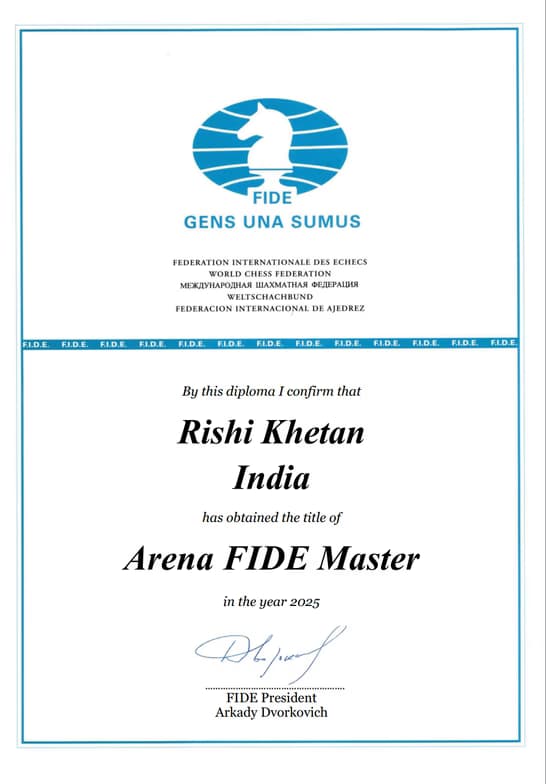
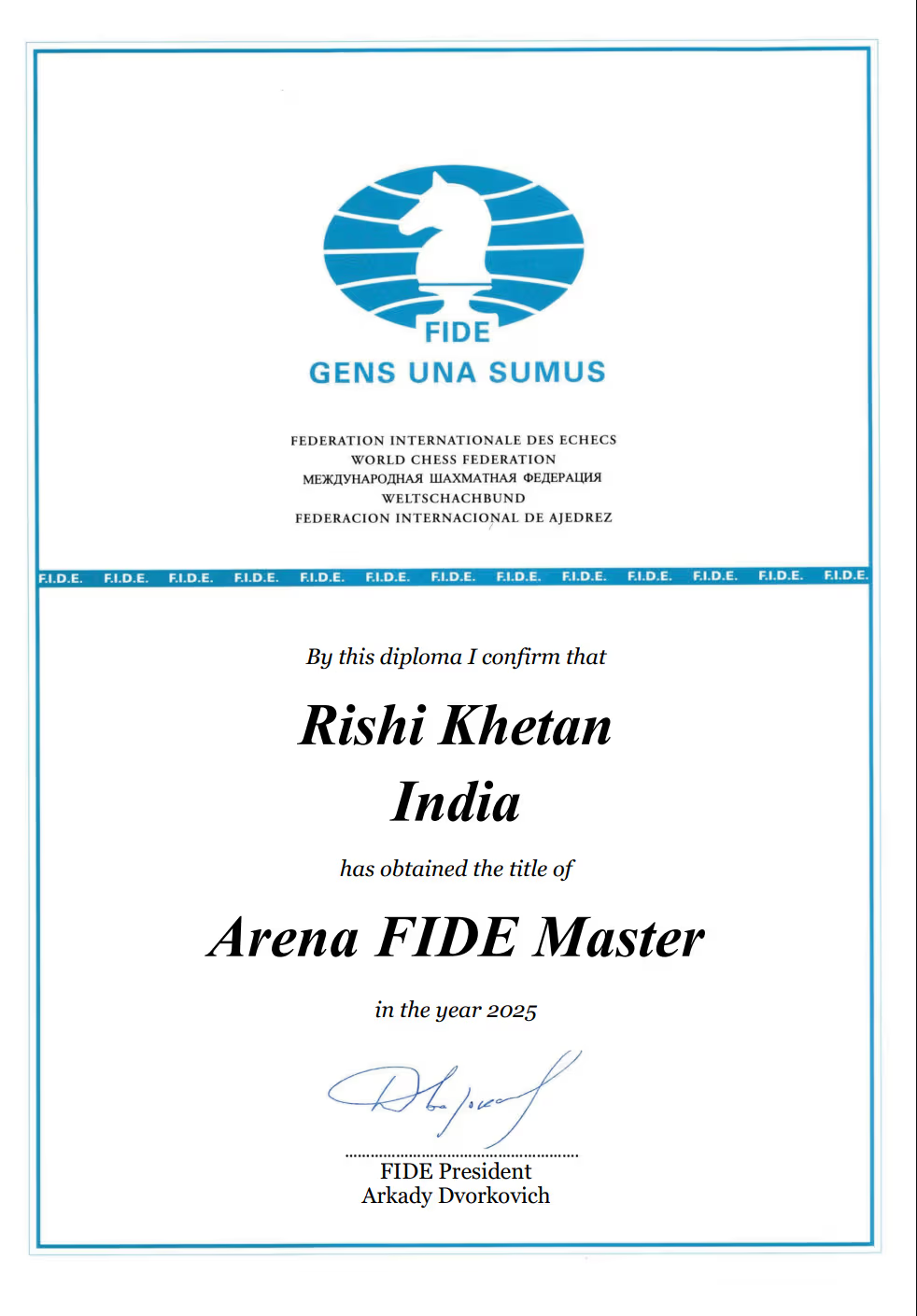
Hi, I am Rishi Khetan, a highly educated tutor with over 4 years of experience in Chess coaching and 14 years of playing chess. I hold an international FIDE Rating and also a Chess.com ,Lichess rating of 2100+ in Rapid format. I also have an official title of Arena Fide Master(AFM). I have taught players from the age of 3 to the players at the age of 40 ranging from beginners to advanced. I have improved players from scratch to national tournament players. My tutoring style focuses on personalized learning, where I blend competitive play, positional understanding and tactical play in a fun way to enhance your chess skills. Through hands on position/puzzle practice and interactive learning, I ensure you grasp the rules, develop essential skills, and think strategically and tactically. Moreover, I emphasize team collaboration, making learning more effective and fun. Whether you're just starting or aiming to master advanced strategies, I tailor my approach to meet your specific needs. Let's embark on this exciting journey of mastering chess together, building confidence, sharpening decision-making, and achieving consistent improvement in your game with proven methods..
Meet Rishi
Rishi graduated from Birla Institute of Technology, Mesra
Chess coach skills

Hands on practice

Team collaboration

Interactive learning

Creative problem solving

Tactical thinking

Competitive play
 CoTutor
AI modules
Summary
Podcast
Quiz
Learnings
Flashcard
Spotlight
Zero Risk Guaranteed
15-days refund
Free tutor swap
No cancel fee
1-yr validity
24/7 support
Types of learners for chess lessons

Games for adults
Games for advanced
Games for kids
Games for intermediate
Games for beginners
Chess coach also teaches

Chess
Rapid Chess
Blitz Chess
Correspondence Chess

Games concepts taught by Rishi
The Student and Tutor reviewed several of the Student's recent chess games to identify recurring blunders and strategic errors. They discussed common mistakes in development, pawn structure, and tactical awareness, reinforcing fundamental chess principles and a systematic approach to evaluating moves. The next session was scheduled for Monday to continue this practice.
Avoiding Basic Blunders
The "Why" Question & CCT Framework
Strategic Piece Development & Passive Pieces
Pawn Structure & Weaknesses
Understanding Outposts
Evaluating Piece Value Beyond Material
The student and tutor extensively reviewed several chess games, focusing on identifying and rectifying strategic errors. Key concepts covered included positional play, pawn structure, defensive principles, aggressive tactics, and the importance of deliberate practice over speed. The student set a goal to improve their chess rating before their next session.
Evaluating Piece Value and Material Advantage
The Impact of Bad Habits and Unlearning
Aggression vs. Defense in Chess
The Importance of Following Chess Principles
The student and tutor reviewed several of the student's chess games, identifying recurring fundamental mistakes and tactical oversights. They practiced and reinforced endgame checkmating techniques, specifically the ladder mate with two rooks. The tutor assigned a target of reaching a rating of 250 by the next class.
Stalemate vs. Checkmate
Ladder Mate with Rooks
Common Chess Blunders and Inaccuracies
Piece Value and Exchanges
The Student and Tutor reviewed several chess games, focusing on opening strategy, middle-game tactics, and endgame play. The Tutor provided detailed analysis of the Student's game choices, emphasizing pawn structure, piece development, and tactical awareness, and recommended consistent game analysis for improvement.
Chess Endgame Fundamentals
Positional Play and Tempo
Game Analysis and Improvement
Chess Opening Principles
Opening Principles in Chess
Evaluating Chess Positions
Strategic Trade-offs in Chess
The Dangers of Rushing in Chess
The tutor and student reviewed the student's chess game performance, focusing on strategic errors and tactical oversights. They analyzed specific blunders, discussed fundamental principles like piece development and king safety, and practiced applying these concepts in a simulated game. The student was advised to focus on longer time formats and consistent application of learned strategies for improvement.
Blunder Check and Safety Moves
Piece Value and Trading Strategy
Importance of Opponent's Intent
Positional Play and Pawn Structures
Teaching tools used by chess coach

Chess Engines

PGN Editors

Game Analysis Tools

Online Chess Boards

Collaboration Tools

Chess coaches on Wiingy are vetted for quality
Every tutor is interviewed and selected for subject expertise and teaching skill.
