
Manjunath Bandi
Engineer turned to educator equipped with strong fundamental and complex problem solving abilities. Let's get the learning started.


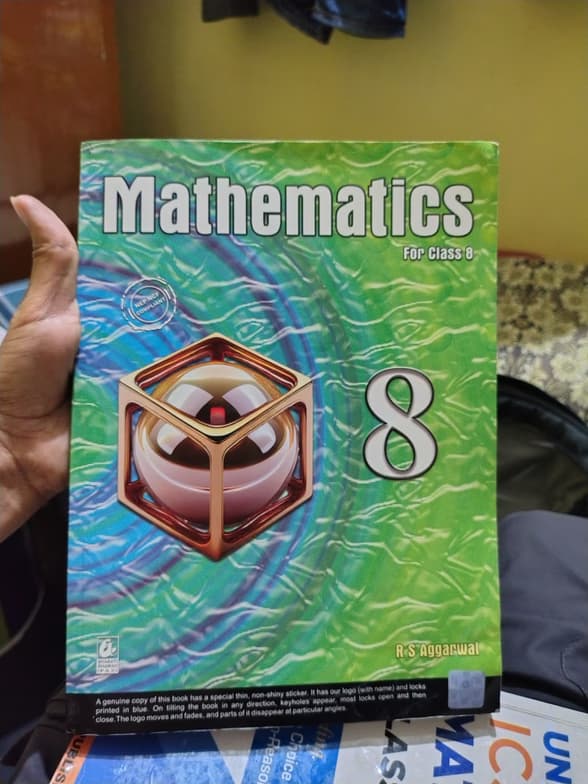


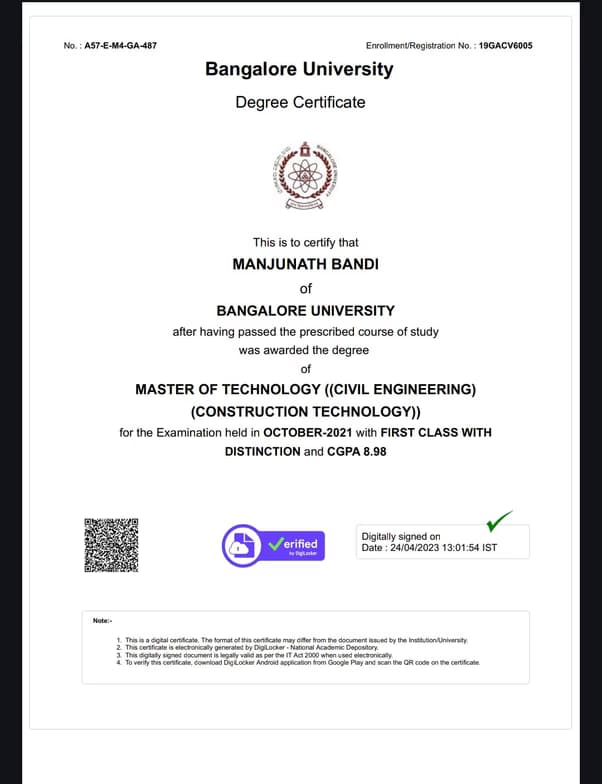
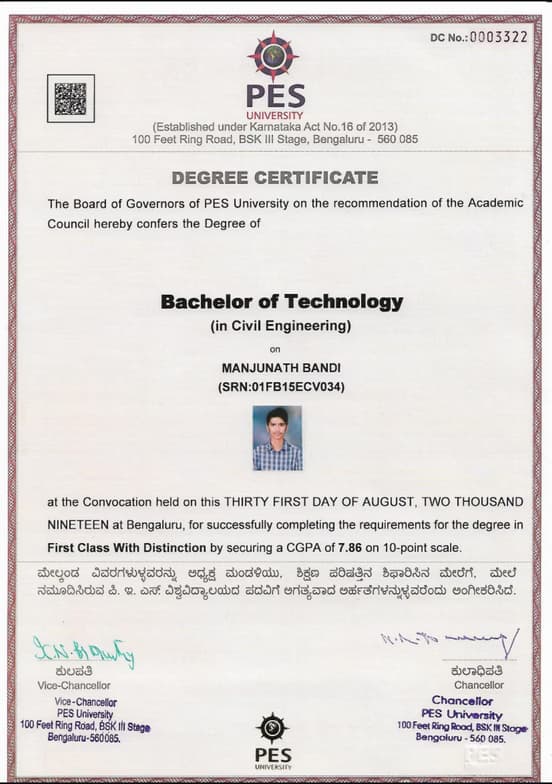
Show all photos
Manjunath Bandi
Bachelors degree
/ 55 min
Manjunath - Know your tutor
I'm a post graduate engineer turned to teacher, with over two years of experience in teaching mathematics to middle school, high school and college students. Most of my engineerings studies have greatly helped me in understanding the fundamental of Mathematics and Physics which made me to take a leap towards teaching. The frequent use of complex calculations in credit courses have made me look at Mathematics as a puzzle more than as a subject. The numerous perspective of undestanding the very same thing is what makes this subject interesting for me. The approach can be different but following the fundamental will get you to the same destination, just like any other puzzle game. I help students identify and realize their weak areas and analyze them in order to give the remedial measures helping them proceed without hurdles. Most often it's not the memory power that will dominate but the logical reasoning and ability to think. That's exactly why Maths should be interesting. Over the years, I have found right examples and right methods that will quickly help the students in understanding and arriving at the solutions. Learning Mathematics should be fun ljust like a puzzle game. Let's get the fun started! Happy learning!
Meet Manjunath
Manjunath graduated from PES University, Bengaluru

Specialities of your tutor

GCSE (UK)

Test Strategy

Learning Plans

Gamification of Math

A-Levels (UK)

Practice Tests

Common Core State Standards - CCSS (USA)

Advanced Placement (AP) Program (USA)

Test prep strategies

State-Specific Standards (USA)

Practice Drills
 CoTutor
AI modules
Summary
Podcast
Quiz
Learnings
Flashcard
Spotlight
Zero Risk Guaranteed
15-days refund
Free tutor swap
No cancel fee
1-yr validity
24/7 support
Student types for classes

ASD

High School students
College students
Middle School students

Home schooled

ADHD
Manjunath also teaches

Algebra
Algebra 2
Arithmetic
Calculus
Calculus 2
Calculus 3

Mathematics concepts taught by Manjunath
The Student and Tutor reviewed key concepts in pre-calculus, including horizontal and vertical asymptotes, domain, and x/y intercepts of rational functions. They also discussed the behavior of graphs at x-intercepts and practiced writing polynomial functions from given information. The Student will continue practicing these problems for the next session.
Constructing Polynomial Functions
Graph Behavior at X-Intercepts
Vertical Asymptotes (VA) & Domain
Horizontal Asymptotes (HA)
Finding Intercepts (x & y)
The Student and Tutor worked on various problems related to polynomial functions. They practiced finding zeros, roots, and multiplicities, constructing polynomial equations from given roots and points, determining the domain of rational functions, and understanding the end behavior of polynomials. They concluded the session, planning to continue in a follow-up class.
Determining End Behavior of Polynomial Functions
Calculating X-Intercepts and Y-Intercepts
Domain Restrictions for Rational Functions
Constructing Polynomial Functions from Roots and Points
Finding Zeros and Multiplicity of Polynomial Functions
The Student and Tutor worked on advanced mathematical concepts, specifically focusing on rational functions. They thoroughly covered identifying and calculating horizontal and vertical asymptotes, determining the domain, and finding x and y-intercepts. The session also included practice in interpreting function behavior from graphs and constructing reciprocal function equations from visual data, with plans to continue in the next class.
Vertical Asymptotes for Rational Functions
Rational Functions: Definition and Degree
Horizontal Asymptotes for Rational Functions
Graphing Reciprocal Functions: Transformations & End Behavior
Domain and Intercepts of Rational Functions
The Student and Tutor practiced finding roots and multiplicities of polynomial functions. They then learned to construct polynomial equations given roots and a point, also discussing how to interpret graph behavior from a polynomial's leading coefficient. The session concluded with a review of domain, range, intercepts, and turning points using graphical examples, with the Student needing to review these concepts.
Finding Polynomial Roots (Zeros)
Multiplicity of Roots
Constructing Polynomial Functions from Given Information
Leading Coefficient Test (End Behavior of Polynomial Graphs)
Domain and Range of Functions
X-intercepts
Y-intercepts
and Turning Points
The Student and Tutor reviewed various mathematics concepts related to polynomials, including finding zeros of functions, understanding multiplicities, calculating y-intercepts, and determining graph end behavior using the leading coefficient test. They practiced these problem-solving techniques with several examples. The Tutor also requested information about the Student's upcoming chemistry syllabus for the spring term to prepare for future lessons.
Finding Zeros of Polynomial Functions
Finding Y-Intercepts
Power Function and End Behavior
Factoring by Grouping
Number of Zeros & Polynomial Degree
Multiplicity of Zeros
The Student and Tutor engaged in a mathematics session focused on solving and interpreting quadratic equations and understanding limits. They practiced problem-solving techniques, corrected errors related to order of operations, and explored methods for determining quadratic equations from given graph intercepts. The session concluded with the Tutor wishing the Student luck for their upcoming exam.
Order of Operations (PEMDAS/BODMAS)
End Behavior of Quadratic Functions
The Quadratic Formula in Action
Simplifying Quadratic Equations
Forming Quadratic Equations from Intercepts
Teaching tools used by tutor

Math Games

Practice worksheets

Quizzes

Assessment

Visualization & Exploration

Math tutors on Wiingy are vetted for quality
Every tutor is interviewed and selected for subject expertise and teaching skill.
