
Tanya Vats
Dedicated Chemistry Tutor Helping Students Understand Concepts and Improve Exam Performance





Show all photos
Tanya Vats
Bachelors degree
/ 55 min
Tanya Your chemistry tutor
Hello! I’m Tanya Vats, a Chemistry tutor with a Master’s degree in Chemistry and a genuine passion for teaching. I enjoy helping students understand chemistry in a way that feels simple, logical, and even fun. Many students find chemistry intimidating at first, but my goal is to break down complex ideas into easy steps so that anyone can understand them with confidence. My teaching style focuses on building strong fundamentals. I believe that once the basics are clear, even the toughest topics become manageable. During lessons, I explain concepts patiently, use diagrams and real-life examples, and guide students through problem-solving step by step. I also encourage students to ask questions freely because I believe that curiosity is one of the best ways to learn. I personalize my teaching based on each student’s needs and learning pace. Some students need more conceptual explanations, while others benefit from extra practice and exam-oriented strategies. I make sure that lessons are interactive, engaging, and focused on helping students truly understand the subject rather than just memorize formulas. I can help students with topics across different areas of chemistry including physical chemistry, inorganic chemistry, and organic chemistry. Whether you are preparing for school exams, building a stronger foundation in chemistry, or looking for help with difficult topics, I aim to support you with clear explanations and consistent practice. My goal is to help students feel more confident in chemistry and develop problem-solving skills that will help them succeed in their academic journey.
Meet Tanya
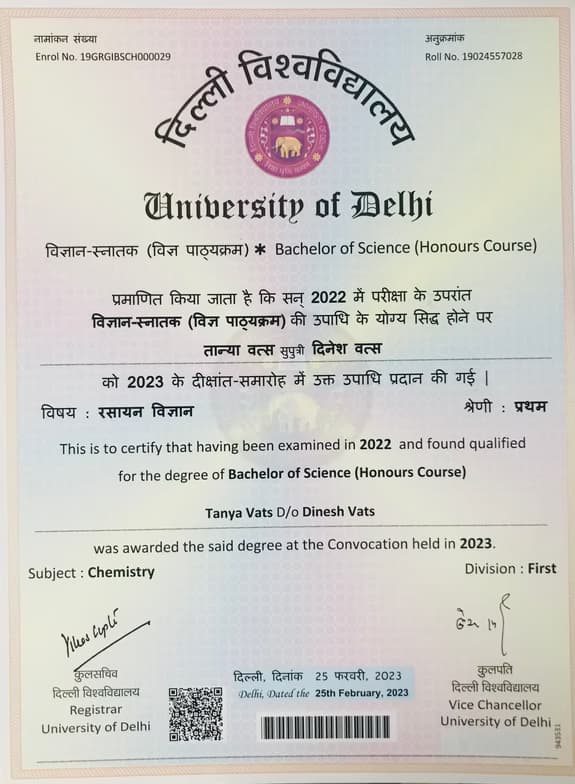
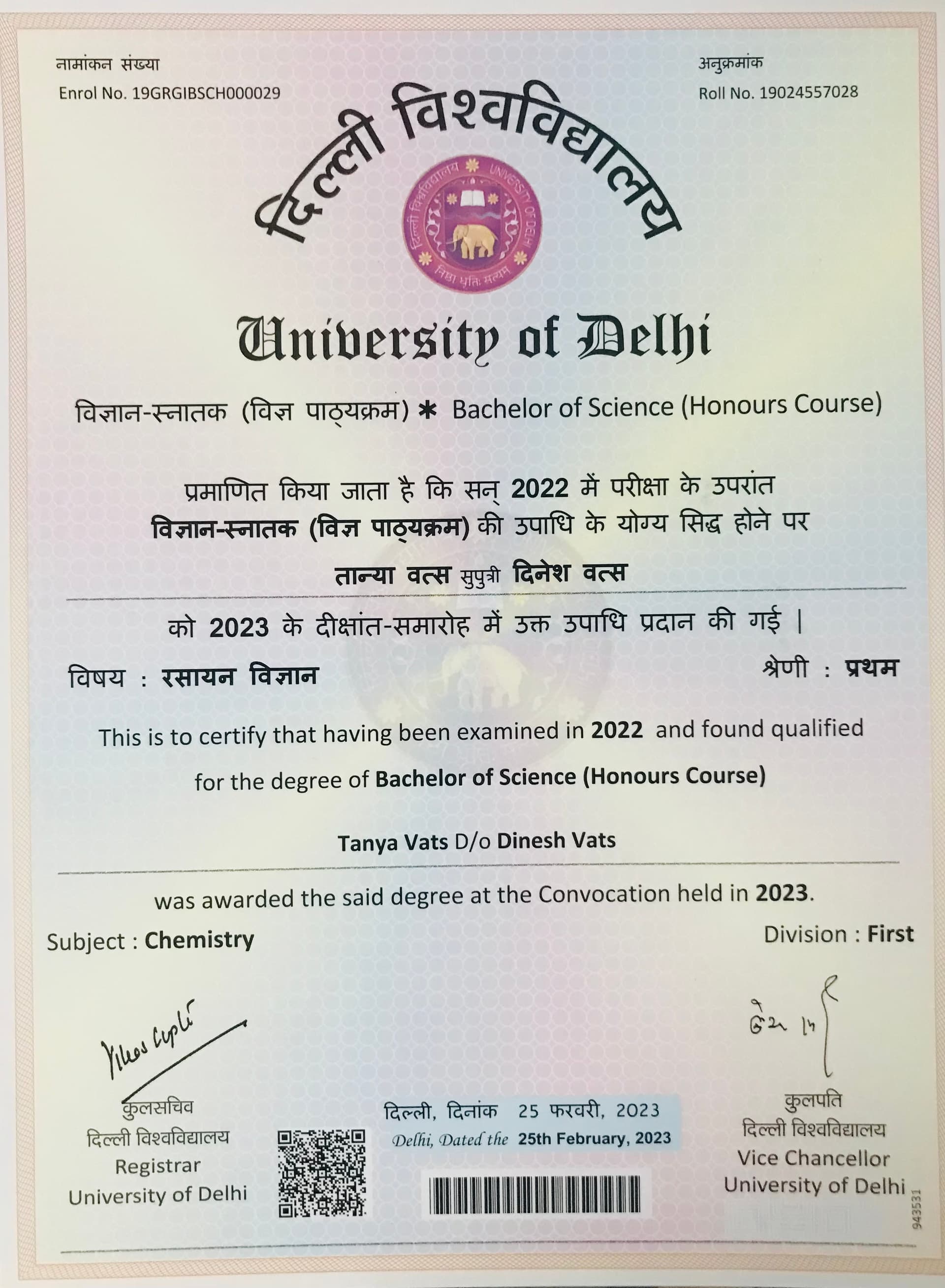
Tanya graduated from University of Delhi
Specialities of your chemistry tutor

Australian Curriculum (AU)

Visual learning

Chemistry experiments
Real world application
Career guidance

GCSE (UK)

Homework help

International Baccalaureate (IB)

New Zealand Curriculum - NZC (NZ)
Review sessions
 CoTutor
AI modules
Summary
Podcast
Quiz
Learnings
Flashcard
Spotlight
Zero Risk Guaranteed
15-days refund
Free tutor swap
No cancel fee
1-yr validity
24/7 support
Types of learners for chemistry class

Middle School students

Home schooled
College students
High School students
Elementary School students

Learning Disabilities

Anxiety or Stress Disorders
Your chemistry tutor also teaches

Chemistry
Organic Chemistry
Chemical Reactions
Physical Chemistry
Inorganic Chemistry
Analytical Chemistry

Chemistry concepts taught by Tanya
The Tutor and Student reviewed various Chemistry topics, including the definition and classification of carbohydrates, their structures and bonding, and different types of polysaccharides. They also practiced a range of questions covering electrolysis, acid-base concepts like amphiprotic species, reaction energetics, Le Chatelier's principle, organic nomenclature, and isomerism. The Student was encouraged to review the carbohydrate topic and identify any remaining gaps, with future sessions planned for extensive past paper practice.
Reaction Energy Diagrams & Le Chatelier's Principle
Amphiprotic Species: Donors and Acceptors
Electrolysis in Aqueous vs. Molten Solutions
Glucose: Structure and Anomeric Forms
Polysaccharide Structures: Amylose
Amylopectin
Glycogen
& Cellulose
The Student and Tutor reviewed polymers, covering their definitions, types of polymerization (addition and condensation), and specific examples like polyethene, nylon, and polyesters. They also delved into the four levels of protein structure and the types of bonding that stabilize each. The Student was assigned homework to draw polymer structures and linkages, and to confirm specific syllabus topics like polypropene tacticity and amino acid identification techniques.
Polymer Fundamentals: Monomers & Polymerization
Addition Polymerization
Condensation Polymerization
Synthetic Condensation Polymers: Nylon & Polyester
Proteins: Natural Polyamides & Peptide Linkage
Levels of Protein Structure
Student and Tutor reviewed key concepts in chemical equilibrium, including the equilibrium constant, reaction quotient, and Le Chatelier's Principle. They practiced calculating equilibrium constants, interpreting reaction shifts based on Qc and Kc values, and analyzing concentration and rate-versus-time graphs. The Student will prepare exam questions on the topic for the next session.
Equilibrium Constant (K_eq or KC)
Manipulating the Equilibrium Constant
Graphical Representation of Equilibrium Shifts
Le Chatelier's Principle: Concentration Changes
Le Chatelier's Principle: Pressure & Volume Changes
Reaction Quotient (QC) and Equilibrium Prediction
The Student and Tutor engaged in a detailed Chemistry session, primarily focusing on organic reactions, including mass spectrometry and IR spectroscopy to identify unknown alcohol structures and their oxidation products. They extensively practiced identifying reagents and products for alcohol oxidation, dehydration, and addition reactions, clarifying the roles of different catalysts and conditions. The session concluded with planning to cover carbohydrates in the next class, for which the Student will provide relevant syllabus points.
Mass Spectrometry for Alcohol Identification
IR Spectroscopy for Functional Group Determination
Oxidation Reactions of Alcohols
Dehydration and Hydration Reactions
The session focused on organic chemistry reaction pathways, where the Student and Tutor worked through several complex flowcharts, identifying reactants, products, and reaction types such as substitution, elimination, addition, oxidation, and esterification. They also discussed interpreting reaction conditions and qualitative tests. The Student was assigned to practice similar reaction pathway questions from past papers and will cover organic polymers and carbohydrates in the next class.
Strategy for Reaction Pathway Analysis
Esterification (Condensation Reaction)
Addition & Elimination Reactions
Oxidation of Alcohols
Hydrocarbons & Substitution Reactions
The Student and Tutor continued their study of electrochemistry, focusing on calculating E-not cell, understanding spontaneous and non-spontaneous reactions, and detailing the characteristics and principles of electrolytic cells. They practiced determining products of electrolysis for both molten and aqueous solutions, considering factors like ion concentration and electrode type. The session concluded with a plan to complete remaining practice questions in the next class.
E°cell Calculation & Reaction Spontaneity
Predicting Products: Aqueous Electrolytes
Predicting Products: Molten Electrolytes
Electrolytic Cells: Principles & Polarity
Faraday's Laws of Electrolysis
Tools & techniques used by chemistry tutor
Interactive diagrams

Quizzes
Digital Note taking

Flashcards

Digital whiteboard

Chemistry tutors on Wiingy are vetted for quality
Every tutor is interviewed and selected for subject expertise and teaching skill.
