
Khushboo .
Transform Physics Fears into Triumphs—Expert Crystal-clear explanations, real experiments, bite-sized lessons, sky-high scores.


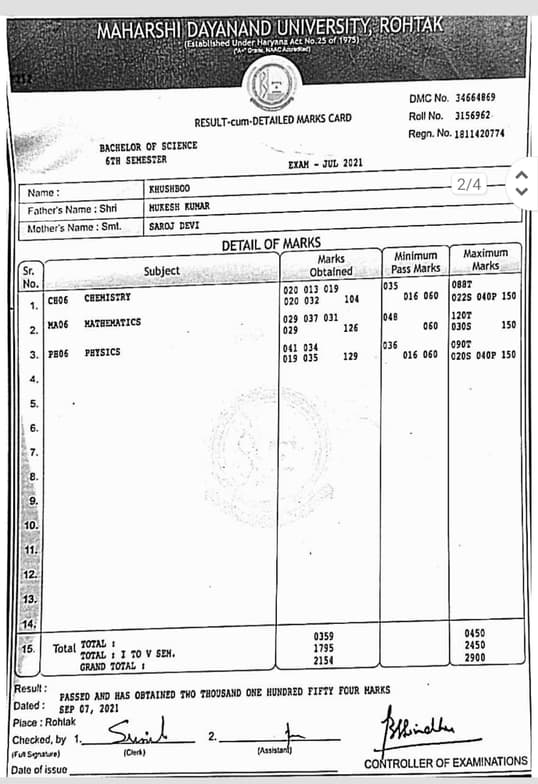



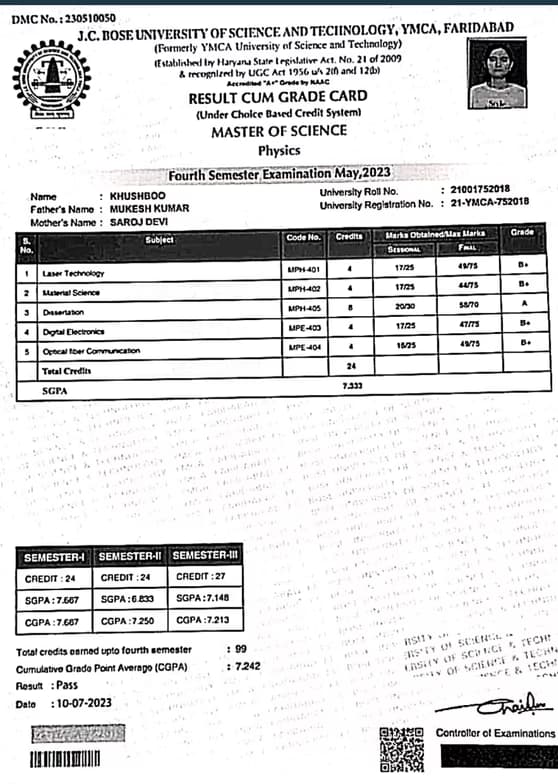
Show all photos
Khushboo .
Masters degree
/ 55 min
Khushboo - your physics tutor
**A Passionate Journey in Physics Education** As a dedicated physics teacher with over a decade of experience, I have devoted my career to igniting curiosity and fostering deep understanding of the universe's fundamental laws. My journey began in the bustling classrooms of India , where I first encountered the elegance of physics as a student. The thrill of Newton's laws transforming abstract ideas into tangible experiments hooked me, leading me to pursue a Master's in Physics from Delhi University and a teaching certification. Today, I teach at Y. K Classes , where I guide students from Class 9th to through undergraduate levels, blending rigorous academics with real-world wonder. Physics, to me, is not a rote subject but a lens for decoding reality. I specialize in classical mechanics, electromagnetism, thermodynamics, and modern physics, drawing connections to everyday phenomena. Imagine explaining quantum entanglement not as esoteric math, but as "spooky action at a distance" that powers quantum computers revolutionizing AI. My classes start with provocative questions: "Why doesn't the Earth fly into the Sun?" This Socratic approach encourages critical thinking, helping students dismantle misconceptions and build conceptual frameworks. Innovation defines my pedagogy. I integrate hands-on experiments using affordable materials—like building electromagnetic catapults from batteries, wires, and cardboard—to demonstrate Faraday's law. During the pandemic, I pivoted to virtual labs via PhET simulations and Python-based modeling, teaching projectile motion through code that predicts trajectories with 99% accuracy. One memorable project had students simulate physics experiments.
Meet Khushboo
Khushboo graduated from J.C bose university of science & technology, YMCA , FARIDABAD
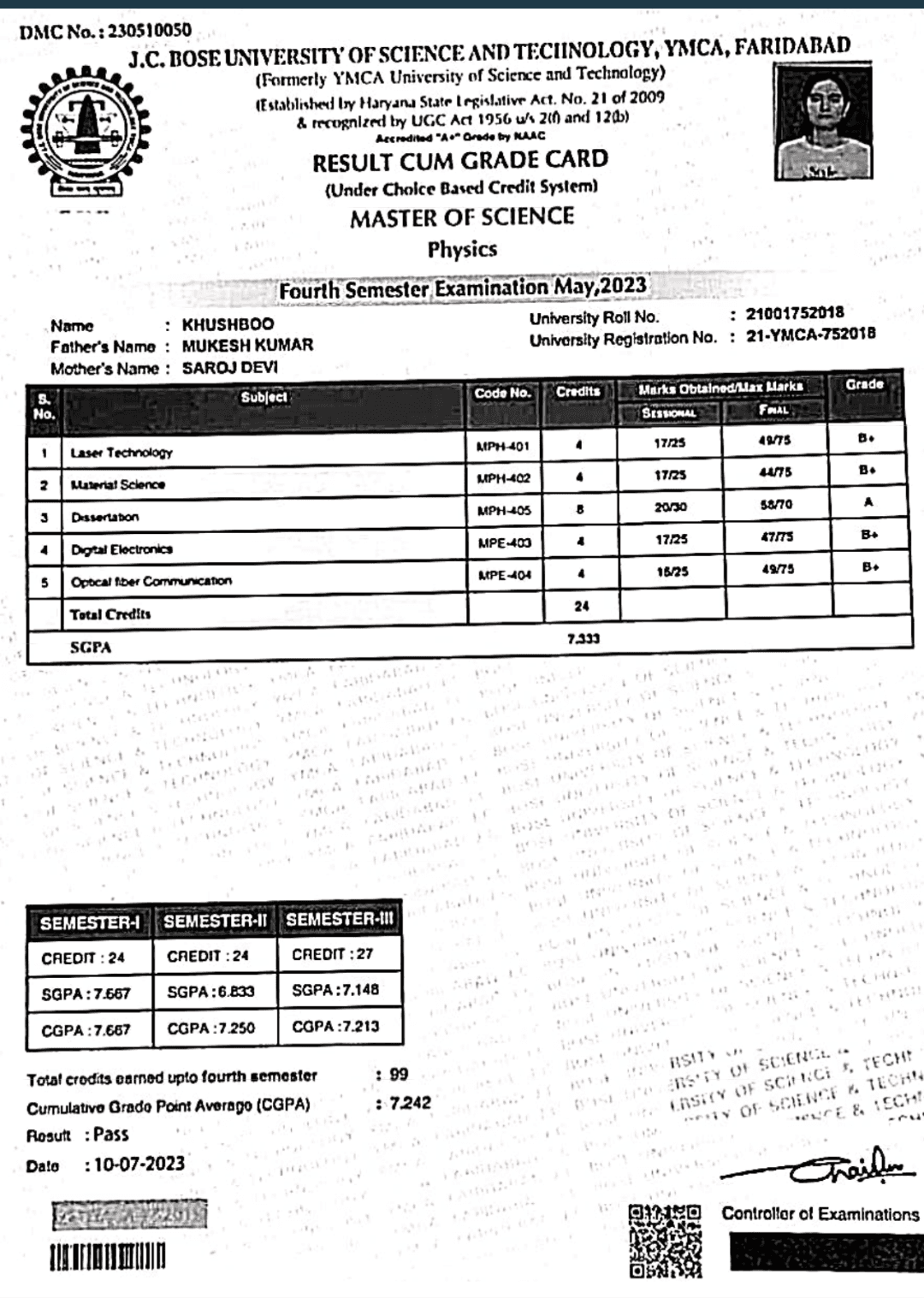
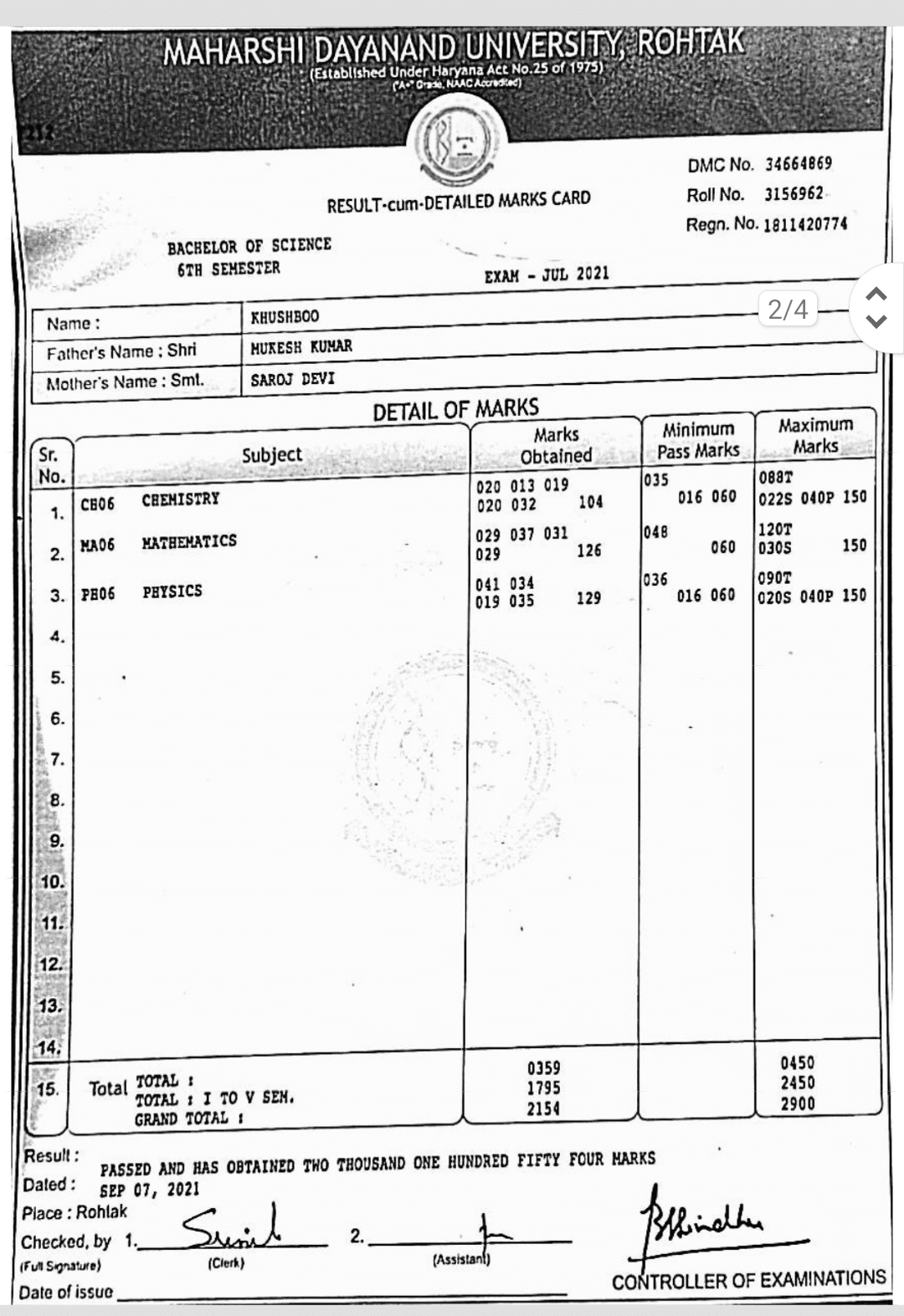
Academic expertise of your physics tutor

Australian Curriculum (AU)

Homework help

Career guidance

Next Generation Science Standards - NGSS (USA)

International Baccalaureate (IB)
Visual learning

A-Levels (UK)
Test prep strategies

Common Core State Standards - CCSS (USA)

GCSE (UK)
Review sessions
 CoTutor
AI modules
Summary
Podcast
Quiz
Learnings
Flashcard
Spotlight
Zero Risk Guaranteed
15-days refund
Free tutor swap
No cancel fee
1-yr validity
24/7 support
Student types for physics class

None of the above
High School students
Middle School students
College students
Physics class snapshot
Beyond the curriculum, I nurture holistic growth. I mentor the school's physics club, where we launch water rockets to explore Bernoulli's principle and construct Tesla coils for high-voltage demos . I emphasize resilience, sharing how Edison's 1,000 failed attempts birthed the light bulb—a metaphor for persevering through failed experiments. Inclusivity is core; I adapt lessons for diverse learners, using visual aids for neurodiverse students and bilingual explanations in Hindi-English for first-generation scholars. My teaching philosophy rests on three pillars: curiosity, clarity, and application. Curiosity sparks through storytelling—relating Schrödinger's cat to decision-making paradoxes. Clarity comes via structured reasoning: breaking down F = ma into vectors with interactive whiteboards, ensuring every student masters free-body diagrams. Application bridges theory to careers; I guest-lecture on renewable energy, showing how Maxwell's equations underpin solar panels, vital for India's green ambitions. Challenges have shaped me. Early on, facing disinterested classes, I redesigned syllabi around student interests. This boosted engagement by 40%, per feedback surveys. Personally, balancing teaching with research—publishing on quantum optics in the Indian Journal of Physics—keeps me sharp. Outside class, What drives me? The "aha!" moment when a student's eyes light up, grasping wave-particle duality. I've impacted over 2,00 students, many now engineers, researchers, and innovators. As Albert Einstein said, "If you can't explain it simply, you don't understand it well enough." That's my mantra. In an era of misinformation, I equip students with scientific literacy to question, experiment, and innovate.
Khushboo - Physics tutor also teaches

Nuclear Physics
Physics
Thermodynamics
Electromagnetism
Quantum Mechanics
Atomic Physics

Physics concepts taught by Khushboo
The Student and Tutor conducted a comprehensive review of kinematics, covering definitions of distance, displacement, speed, velocity, and acceleration. They practiced numerous problems involving constant acceleration, free-fall, and projectile motion, and analyzed position-time graphs. The Student plans to schedule a follow-up session to review a study guide for an upcoming test.
Fundamental Kinematic Quantities
Interpreting Motion Graphs
Understanding Acceleration
Applying Kinematic Equations (Equations of Motion)
Motion Under Gravity (Free Fall)
Projectile Motion Decomposition
The Student and Tutor reviewed Hook's Law, including the formula F = -kx, the meaning of the spring constant, and its application in various scenarios. They worked through multiple practice problems from the Student's homework, calculated spring constants, and discussed basic graphical representations and spring combinations. For the next class, the Student plans to share materials on the center of mass.
Hook's Law Fundamentals
Spring Constant (k) and Stiffness
Spring Combinations: Parallel & Series
Ideal vs. Real Spring Behavior
Applying Hook's Law in Problem Solving
Student and Tutor reviewed fundamental concepts in kinematics, including definitions of motion, rest, reference points, and the distinction between scalar and vector quantities. They covered distance, displacement, speed, velocity, and acceleration, along with the three equations of motion. The session concluded with the student practicing these concepts by solving assignment questions involving average speed and time calculations.
Solving Linear Kinematics Problems
Equations of Motion (Kinematic Equations)
Speed
Velocity
and Acceleration
Distance and Displacement
Scalar and Vector Quantities
Linear Motion Fundamentals
The Student and Tutor dedicated the session to reviewing core physics concepts, including Newton's Laws of Motion and a comprehensive exploration of friction. They covered definitions, formulas, and types of friction, practicing application through multiple-choice questions and labeling forces on free-body diagrams for both flat and inclined surfaces. The Tutor emphasized the importance of preparing specific materials for future sessions for efficient learning.
Newton's Laws of Motion & Momentum
Friction: Definition and Direction
Normal Force and the Coefficient of Friction
Static and Kinetic Friction Formulas
Free Body Diagrams & Force Resolution on Ramps
The Student and Tutor reviewed key concepts in kinematics, including acceleration, scalar and vector quantities, and the analysis of velocity-time graphs. They then covered the derivation and application of the three equations of motion, solving a practice problem. The session concluded with an introduction to vectors, including their representation, component resolution, and addition, illustrated with a swimmer-in-a-river example. Homework questions will be sent to the Student for practice, and the next class is scheduled to cover free-fall motion.
Acceleration: Definition & Directional Effects
Scalar vs. Vector Quantities
Analyzing Velocity-Time (VT) Graphs
Equations of Motion (Kinematics)
Vector Representation & Resolution
Graphical Vector Addition (Head-to-Tail)
The Student and Tutor worked through an assignment focused on various physics problems. They covered calculations for speed and unit conversion, problems involving acceleration and deceleration using kinematic equations, multi-stage motion analysis, projectile motion with gravity, and an introduction to vector resolution for displacement. The Student indicated they would practice similar questions as they had recently covered these topics in class.
Introduction to Vector Components and Resultant
Vertical Motion Under Gravity
Kinematic Equations for Constant Acceleration
Speed
Velocity
and Unit Conversion
Classroom tools used by physics tutor

Quizzes

Practice worksheets
Interactive diagrams

Assessments
Interactive 3D models
Engaging physics lessons

Weekend lessons

Note taking

Parent feedback

Open Q&A

Chat for quick help

Physics tutors on Wiingy are vetted for quality
Every tutor is interviewed and selected for subject expertise and teaching skill.
