
Zachary White
Just starting off or going beyond the basics? Master guitar technique and songwriting now.






Show all photos
Zachary White
Diploma degree
/ 55 min
Zachary - Know your guitar teacher
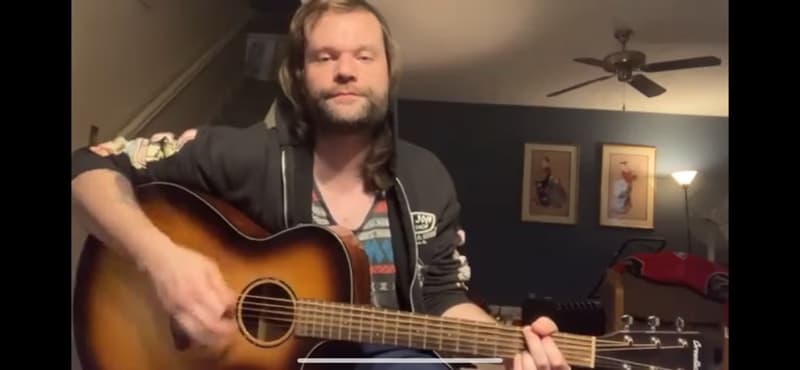
I started teaching lessons after graduationg from the Atlanta Institute of Music and Media in 2007. It was at a family owned shop I taught in called Newnan Music. While teaching I had a band that played weekends which would grow my student base. After Newnan Music closed I got wild with how much I would fill my schedule. I began teaching guitar at Piano Crafters, A Major Music and Attinas Music, all based around the Metro Atlanta area. Many students came with me from Newnan Music, as my students loved my focus on being creative. Generally I try to get students writing their own songs very quickly, some students absplutley do not want this however, they want to be comfortable with the information before writing, or they didnt seek to write music at all, and wish play their faveorite songs. Once we got the song, I might teach them how to improv a solo, so that they can apply any knowledge learned thru the lessons. However, It is the students that were songwriters, that would follow me wherever I went, and would continue learning until they eventually moved away for college.
Your guitar teacher expertise

Chords and Rhythms
Guitar for beginners
Chord Progressions
Guitar Techniques
Strumming and Picking Techniques
Fingerstyle

Ear training
 CoTutor
AI modules
Summary
Podcast
Quiz
Learnings
Flashcard
Spotlight
Zero Risk Guaranteed
15-days refund
Free tutor swap
No cancel fee
1-yr validity
24/7 support
Learner for guitar lessons

Guitar for advanced
Guitar for intermediate
Guitar for beginners
Guitar for kids
Guitar for adults
Guitar lessons quick guide
Strumming is the begining of all guitar playing. I often start with a 5 chord or a “power chord” there will be no progression with this, just set up to practice playing the two strings “root and 5th”, to make sure the notes xome out cleanly, then we move to the “everything” chord progression from there. While workong on the power chords we also work on four of the most used open chords, and this is put into a progression with a couple of methods taught to make the chord changes easier. The chord progressions is A-, C, E-, G, one technique is to have as many fingers where they already meed to be for the next chord, leaving changing as little as possible on your fingers. The other is a technique one I call “letting the guitar breathe”, which is always fun to teach! From thsoe two chord progressions we will learn to improv over them with a minor pentatonic scale. This is the first two weeks to first month of a beginners lessons. It gets them started with, starter chord knowledge, starter lead knowledge, rhythm and ear training. Some guitarist stay at this level of knowleged, you can play many many songs with just the information taught in the first few weeks, and you can write even more with that same information. Once a student learns they can write their own songs, theyre hooked!

Fun and relaxed guitar classes
90% Students enjoy learning without feeling pressured

Highly trusted guitar teacher by parents
87% parents find real musical growth and stronger focus at home

Flexible scheduling for guitar lessons
92% students say guitar classes easily fit into their weekly routines
Types of guitar lessons

Guitar
Acoustic Guitar
Electric Guitar

Guitar concepts taught by Zachary
Chord Progression: A-E-D
Pentatonic Scale for Improvisation
Crazy Train Riff Breakdown
Distinguishing Guitar Effects: Distortion vs. Acoustic
The tutor and student explored guitar improvisation by expanding from the A minor pentatonic scale to major scale applications and three-note-per-string patterns. They practiced improvising over different chord progressions and discussed the theoretical basis of modes. The session concluded with a review of the student's progress and potential future lesson plans.
Understanding Whole and Half Steps on the Fretboard
A Minor Pentatonic Scale and its Major Equivalents
Modes and their Feel
Three Note Per String Major Scale Pattern
The Student and Tutor worked on guitar techniques, including playing song sections from "About a Girl," practicing scales, and learning new chords like A major, E major, and D major. They also began learning the riff from "Crazy Train," focusing on finger dexterity and a specific picking pattern, with the Tutor encouraging practice and perseverance.
Guitar Riff Construction
Chord Voicings: A Major
E Major
D Major
Guitar Tuning and String Issues
Minor Pentatonic Scale Practice
The student and tutor worked on guitar techniques, practicing scales and dissecting the song "About a Girl" by focusing on its rhythmic patterns and chord progressions. They also learned new major chords (A, E, D) and practiced a common chord progression, with an emphasis on steady rhythm and clean playing for future practice.
Major Chord Progressions: A
E
and D
Pentatonic Scale for Solos
Power Chords: Construction and Strumming
The Tutor and Student reviewed guitar chord voicings and explored the Mixolydian and Lydian scales, focusing on correct fingerings and theoretical formulas. They then delved into the concept of musical modes, their derivation from major scales, and their relationship to chord progressions, with the Student planning to practice these concepts during a break.
Modes and Scales: The Foundation
The Mixolydian Mode in Practice
Relative Major and Minor Keys
Chord-Scale Relationships and Harmony
Power Chords and Muting
Rhythm and Timing
Guitar Playing Posture and Focus
Developing Musicality and Creativity
Learning tools used in guitar classes
Guitar Tuner Apps
DAWs
Engaging guitar lessons

Mobile joining

Note taking

Parent feedback

Weekend lessons

Open Q&A

Guitar teachers on Wiingy are vetted for quality
Every tutor is interviewed and selected for subject expertise and teaching skill.
