
Rochelle Linnemeier
Everyone can sing. Singing is a small muscle sport. Together we can train your voice to sound its best.



Show all photos
Rochelle Linnemeier
Bachelors degree
/ 55 min
Rochelle - Get to know your vocal coach
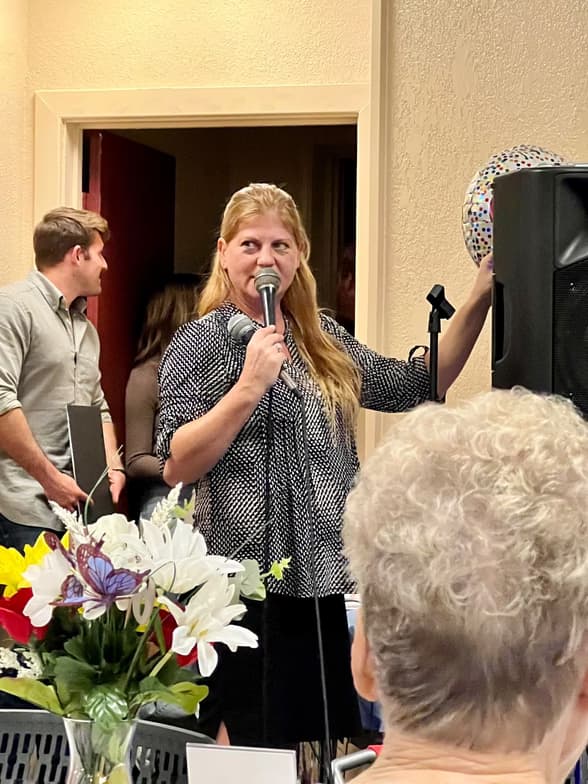
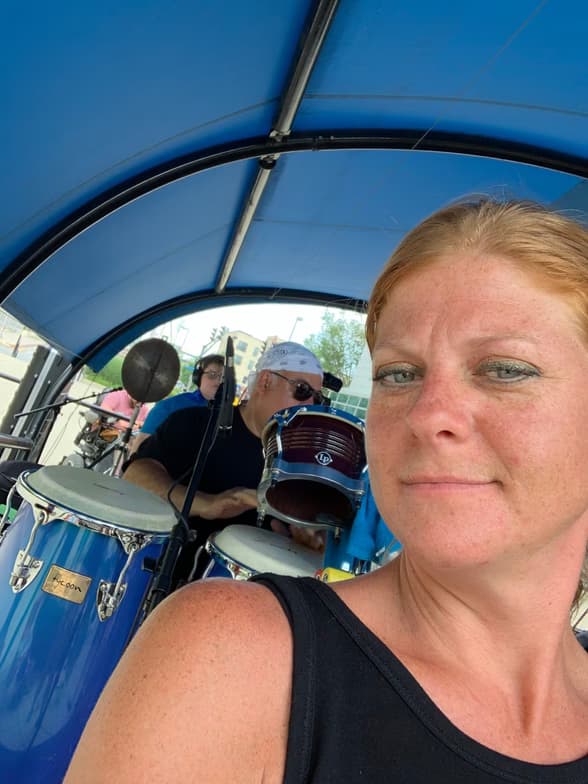
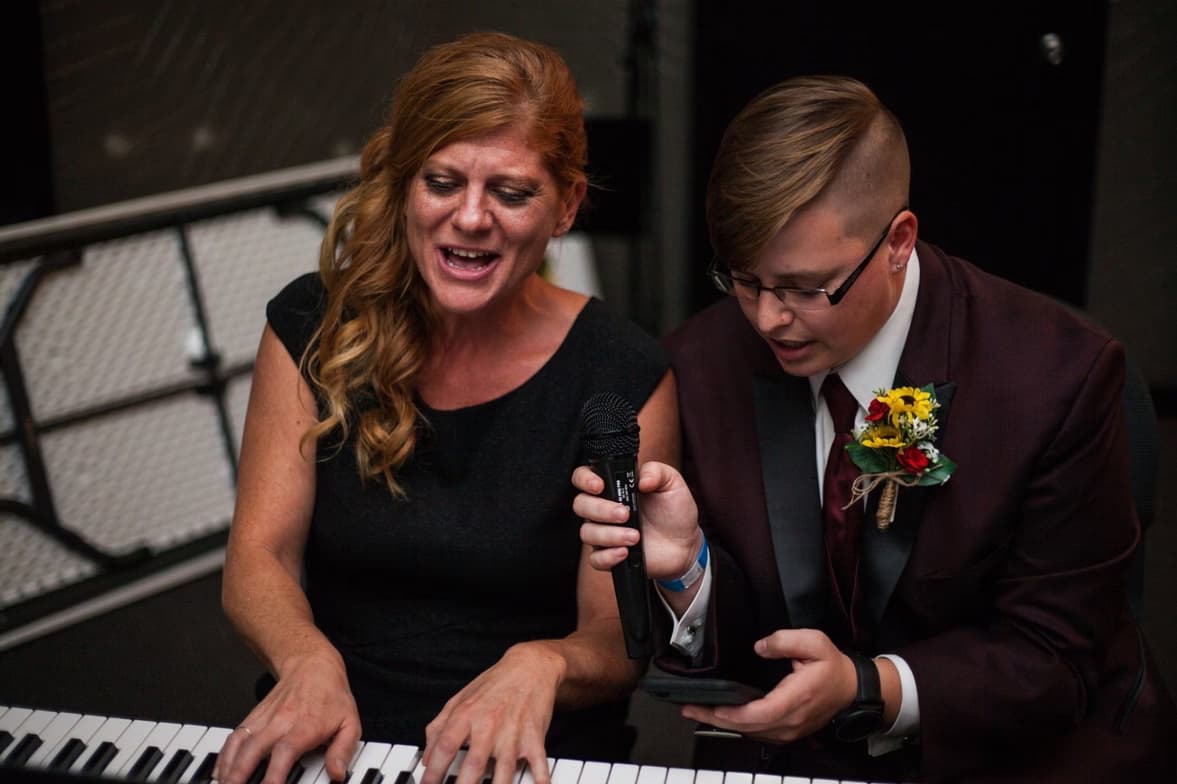
Rochelle has lived in Fort Wayne, IN her whole life. Music has always been a huge part of her life. She attended Indiana Purdue Fort Wayne and earned a Bachelors Degree in Vocal Music Education. While attending college she lead SAI as the Vice President of Membership. She was a section leader in University Singers, participated in Vocal Jazz, Chamber Ensemble and Opera Ensemble. Traveling with the choirs she was able to perform in places like The Rudolfinum in Prague, St.Peter’s Cathedral, Carnegie Hall and the National Cathedral. After she began giving private lessons/classes, she realized she had found her knack. When working one-on-one with a student, much more is learned. She feels blessed to help people learn something that is a life long skill. Being a part of ensembles and performing in general has given her a new confidence. Being one of those kids with stage fright, she understands how to deal with energies that get in our way as performers. Her dream is to help people find their love for music.
Your vocal coach specialities

Music theory
Scales and Modes
Improvisation & Composition
Sight Singing
Melody & Pitch

Singing
Music Performance Techniques

Ear training
 CoTutor
AI modules
Summary
Podcast
Quiz
Learnings
Flashcard
Spotlight
Zero Risk Guaranteed
15-days refund
Free tutor swap
No cancel fee
1-yr validity
24/7 support
Learner types for singing lessons

Singing for kids
Singing for adults
Singing for intermediate
Singing for beginners
Singing lessons highlights
when teaching I like to use a mix of methods. It really all depends on the student. I am Suzuki certified but that doesn’t mean that I wont ever use Kodaly or Orff in our sessions. I like to figure out how the student learns the best and then that’s how I will fashion the information for their session. I believe that the voice is a musical instrument. I also believe that singing is a small muscle sport. There are many muscles and tendons that we use to sing. If a sound is happening for someone I like to find out why. Do we need to find more space? Maybe we need to find an inner smile and lift the face. Maybe the soft pallet needs lifted, maybe their posture needs fixed so the note has better support. These are all things that could causing a bad sound. All of the things I’m mentioned have to deal with muscles. If the singer can train their small muscles the sound will have the correct space to resonate and project.

Noticeable vocal improvement in months
90%+ of students report clearer tone & stronger range quickly

Trusted for recital and audition prep
Parents say the singing lessons led to great performances

Real-time feedback in singing lessons
Students get immediate, clear corrections to improve faster
Types of singing lessons

Singing
Classical Singing
Pop Singing
Movie Singing
Country Singing

Singing concepts taught by Rochelle
The Student and Tutor engaged in a Singing and Acting session, focusing on vocal warm-ups, practicing two specific songs ('I'd Rather Be Me' and 'Speechless'), and rehearsing lines from a play script. The Student practiced vocal techniques such as head voice mixing and dramatic delivery, and demonstrated strong memorization of their acting lines. They also discussed plans for continued practice.
Vocal Warm-ups & Agility Drills
Interval Recognition & Application
Script Memorization & Characterization
Performance Stamina & Dramatic Intent
Song Delivery & Vocal Blending
The Student and Tutor had an introductory singing lesson, discussing the Student's beginner status and goals for improving vocal ability and confidence. They practiced vocal warm-ups, focused on diaphragm engagement, breathing techniques, and explored pitch matching and vocal range. The Student was given homework to select 10-15 diverse songs to prepare for future lessons.
Essential Vocal Warm-ups for Flexibility
Strategies for Releasing Vocal Tension
Optimizing Mouth Shape for Sound Quality
Diaphragmatic Support: Your Vocal Powerhouse
Reframing Nerves as Performance Energy
The Student and Tutor worked on vocal warm-ups, focusing on developing vocal depth and control for both high and low notes. They then applied these techniques to analyze and practice the song "(Sittin' On) The Dock of the Bay," breaking down specific phrases and stylistic pronunciations. The Student was encouraged to continue practicing the song and to explore "What a Wonderful World" or a Bob Dylan song for their next piece.
Creating Vocal Resonance (The "Cave" Technique)
The "All" Vowel for Open Throat (Yawn Sensation)
Smooth Note Transitions (Legato Singing)
Deconstructing Vocal Style and Nuances in Songs
Avoiding Chin Rise for Effortless High Notes
Optimal Facial Posture for Singing
Student and Tutor engaged in a singing lesson focused on vocal warm-ups and exploring the Student's vocal range. They practiced exercises to develop pitch accuracy, note targeting, and relaxation, then applied these skills by singing selected songs in various genres. The session concluded with a plan to further develop breath control and continue exploring diverse musical styles.
Vocal Warm-ups: Scale Exercises
Vocal Range Exploration (Low & High)
Strategic Song Selection & Stylistic Expression
Breath Control & Diaphragm Development
Voice Classification & Versatility
Vocal Resonance & Tone Quality
The Student and Tutor engaged in a singing lesson focused on vocal warm-ups and song practice. They worked on range, articulation, and various vocal exercises before practicing multiple songs, including historical and folk tunes, and addressing challenges with song keys. No specific follow-up or homework was discussed.
Vocal Warm-up Exercises
Navigating Vocal Range and Octaves
Strategies for Learning New Songs
Pronunciation in Foreign Language Songs
Repertoire Curation and Contextual Awareness
The Student and Tutor engaged in a singing lesson focusing on vocal warm-ups and practicing various songs. They specifically worked on breath control techniques within pop songs and explored the challenges of singing Disney musical numbers. They also scheduled their next session for the following week.
Vocal Warm-ups for Range and Stability
Strategic Breathing for Sustained Phrases
Genre-Specific Vocal Interpretation (Pop vs. Disney)
Managing Vocal Challenges from Background Vocals
Environmental and Physical Factors Affecting Voice
Tools & techniques used in voice lessons
Karaoke & backing track apps
Metronome Apps
Vocal tuner apps
Digital sheet music & lyric databases
Lyric & sheet music notation software
Interactive voice lessons

Open Q&A

Parent feedback

Record lessons

Note taking

Mobile joining

Vocal coaches on Wiingy are vetted for quality
Every tutor is interviewed and selected for subject expertise and teaching skill.
