
Anshul Singh
Passionate online educator with innovative methodology for algebra, calculus & more.



Show all photos
Anshul Singh
Bachelors degree
/ 55 min
Anshul - Know your tutor
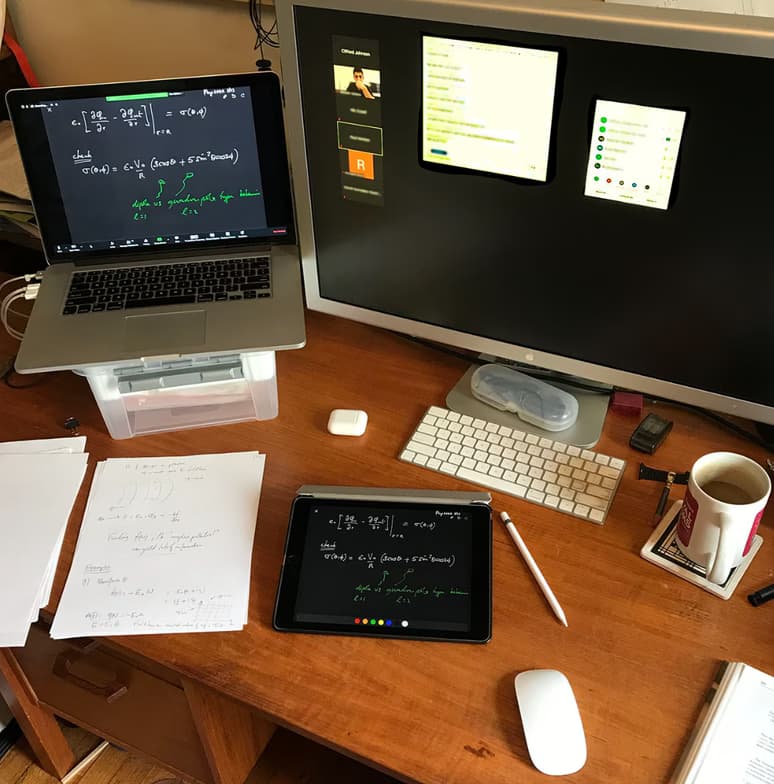
I am Anshul Singh , an online math tutor with over 5 years of experience. Specializing in personalized learning for elementary, middle and high school students. I offer expert tutoring in a wide range of math subject. From arithmetic to calculus, I make math engaging through exam simulations, gamifications and tailored learning plans. My way of teaching is something different from others , I explain a topic from basic to a advanced level which is followed by practice sheets and tests. When students say that they are scare of maths so I only say change the style of learning things , every subject is easy , there is only a need of transformation in learning. As I graduated from Mathematics subject so I can teach this subject with deep clarification and understanding. I have a good experience of teaching Mathematics as I have been teaching this subject for years . Just belive on your teacher and rest will be handled by me only .
Meet Anshul
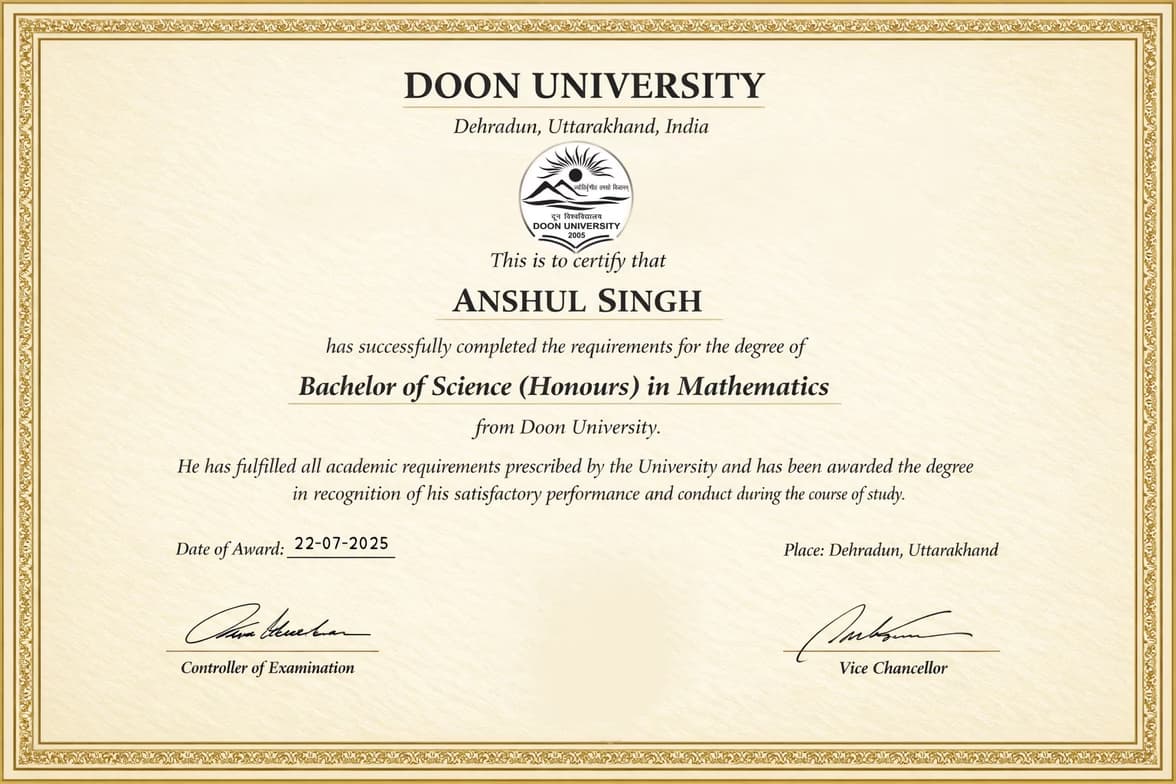
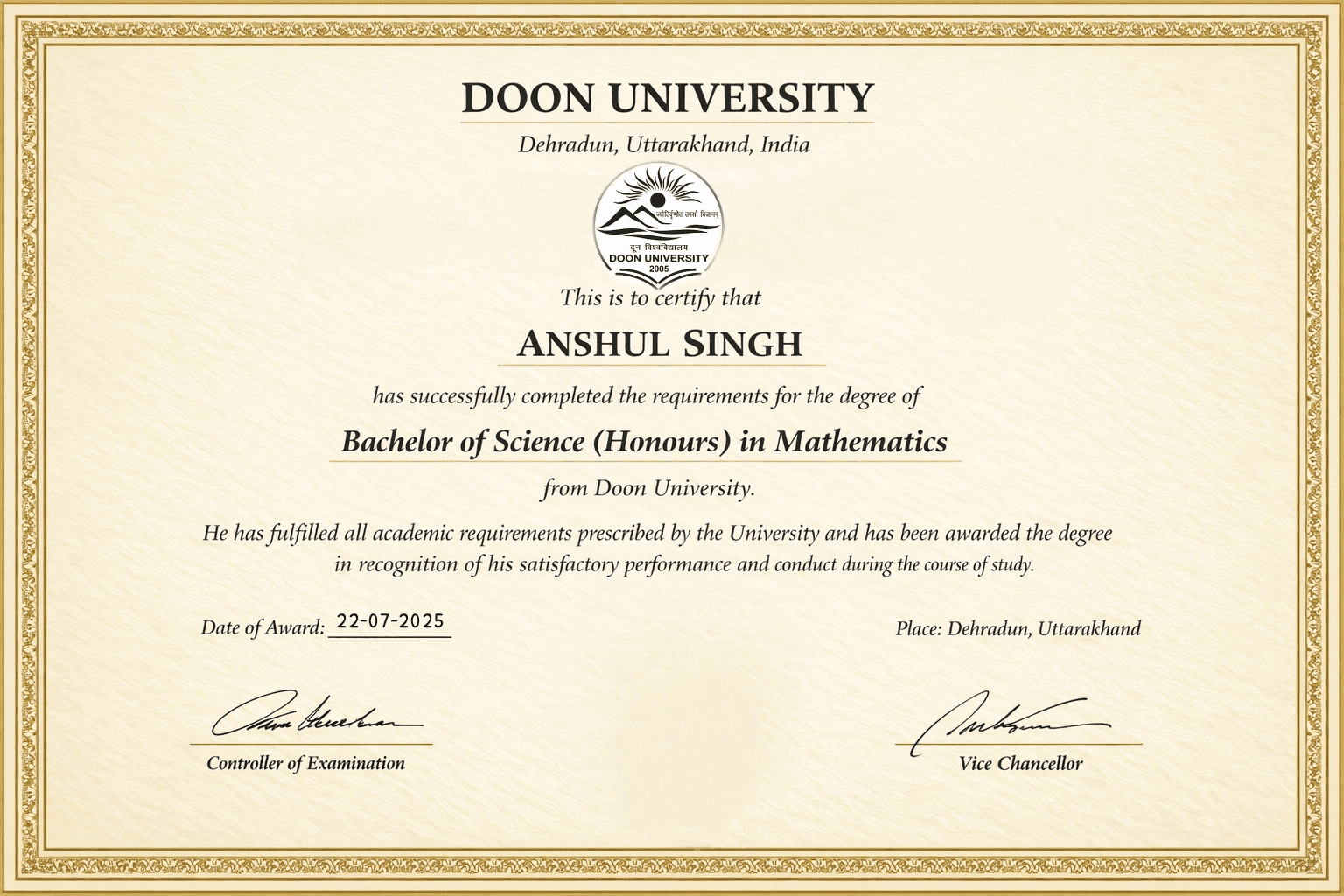
Anshul graduated from Doon University
Specialities of your tutor

Next Generation Science Standards - NGSS (USA)

Test Strategy

State-Specific Standards (USA)

Australian Curriculum (AU)

Practice Drills

Math Tricks and Hacks

Provincial-specific curriculum (CA)

Gamification of Math

GCSE (UK)

Common Core State Standards - CCSS (USA)

Mental Math

Advanced Placement (AP) Program (USA)
 CoTutor
AI modules
Summary
Podcast
Quiz
Learnings
Flashcard
Spotlight
Zero Risk Guaranteed
15-days refund
Free tutor swap
No cancel fee
1-yr validity
24/7 support
Student types for classes

Learning Disabilities

Anxiety or Stress Disorders

Middle School students
Elementary School students

ADHD
High School students

ASD

Home schooled
Class overview
As a mathematics teacher , I've always believed that effective teaching goes beyond rote memorization—it's about igniting curiosity, building logical thinking, and equipping students with skills for real-world applications. In higher secondary math, where concepts escalate from quadratic equations to differential calculus and probability distributions, the right methodology transforms abstract ideas into accessible tools. This note outlines a comprehensive approach, blending traditional and modern techniques to foster deep understanding, retention, and enthusiasm.At the heart of my methodology is student-centered learning. I start every lesson with a diagnostic hook: a quick 2-minute puzzle or real-life question, like "How does compound interest model population growth?" This activates prior knowledge and reveals misconceptions early. Drawing from constructivist theory (inspired by Piaget and Vygotsky), I view students as active builders of knowledge, not passive recipients.
Anshul also teaches
Arithmetic
Discrete Math
Geometry
Linear Algebra
Probability
Statistics

Mathematics concepts taught by Anshul
Student and Tutor reviewed core 2D geometry concepts, including distance, midpoint, and slope formulas, before exploring different forms of linear equations. They covered the slope-intercept, point-slope, and general forms, along with the derivation and application of the circle equation. The class focused on applying these concepts through various practice problems.
Distance and Midpoint Formulas
Understanding Slope
Linear Equations: Slope-Intercept Form
Linear Equations: Point-Slope
General Forms
and Intercepts
Equation of a Circle Centered at Origin
Student and Tutor reviewed fundamental 2D geometry concepts, including the coordinate plane, the distance formula (with its derivation from Pythagoras), and the midpoint formula. The session then moved to a detailed discussion of slope, covering its definition, calculation, and the four types of slopes. They practiced various problems applying these new formulas and concepts, and the next session is planned to cover the equation of a line.
Distance Formula
Coordinate Plane & Quadrants
Slope of a Line (m)
Midpoint Formula
Student and Tutor continued their study of quadratic equations, focusing on the key features of parabolas. They practiced identifying and calculating the vertex, axis of symmetry, y-intercept, zeros, and maximum/minimum values of quadratic graphs. The tutor also demonstrated visualizing these features using a digital graphing tool, and they planned for one more class on this topic.
Axis of Symmetry & Y-Intercept
Graphing Quadratic Equations & Variable Types
Maximum and Minimum Values
Zeros of a Quadratic Equation (X-intercepts)
Parabola Orientation and Vertex
The Student and Tutor reviewed quadratic equations, focusing on identifying linear versus quadratic equations using the concept of degree and a new method involving constant first or second differences. They also covered the general form of quadratic equations and how to graph them, observing their parabolic shape. The Tutor plans to tailor future sessions to the Student's upcoming test in February, which covers both 10th and 11th-grade syllabus material.
Defining Quadratic Equations by Degree
General Form and Coefficient Rules
Identifying Linear vs. Quadratic Equations using Differences
Graphs of Quadratic Equations: The Parabola
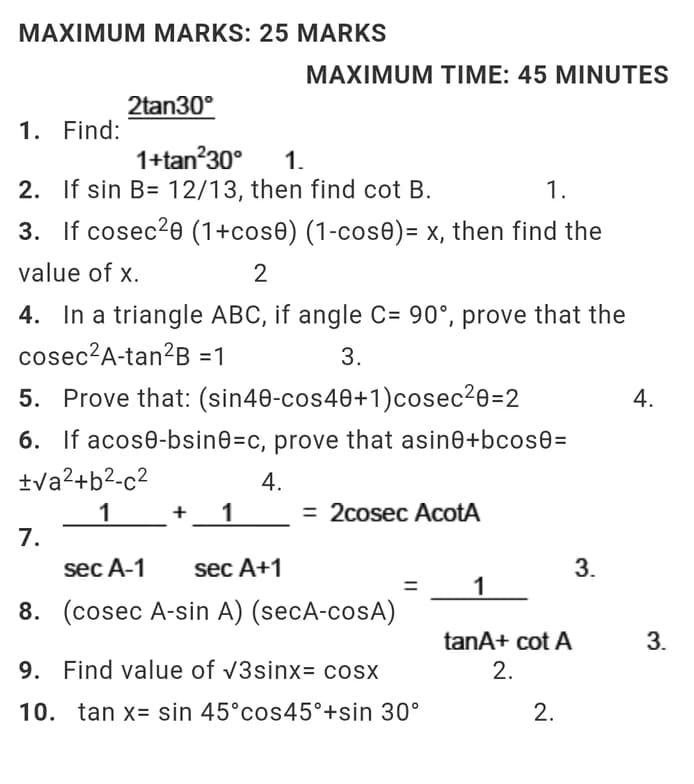
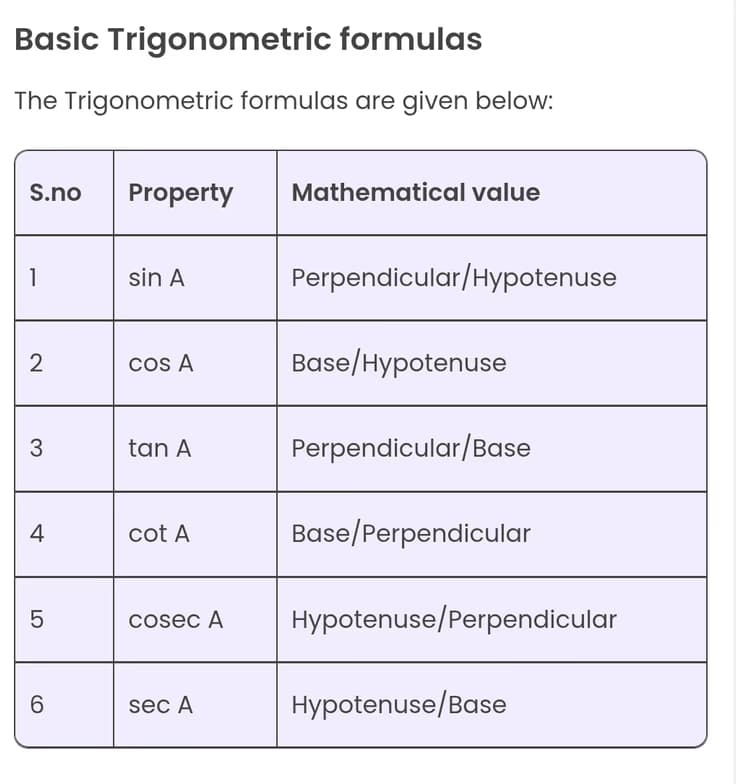
Student and Tutor revised core trigonometry concepts, including definitions, trigonometric ratios, Pythagoras theorem, fundamental identities, and complementary angles. They extensively practiced various problem-solving techniques for trigonometric equations and expressions, using a value chart. The Student was assigned additional practice questions, and the Tutor agreed to share a PDF of the class content and important formulas.
Trigonometric Ratios in Right Triangles
Pythagoras Theorem
Fundamental Trigonometric Identities
Double Angle & Complementary Angle Formulas
Trigonometric Values for Standard Angles
Advanced Problem Solving Techniques: Component-Dividend Rule
The tutor and student reviewed arithmetic progressions, covering definitions, formulas for the nth term and sum, and various problem-solving strategies. They practiced solving problems involving finding missing terms, sums, and unknowns in APs, including those leading to quadratic equations and real-world applications. The session concluded with a review of the material covered.
Interpreting Word Problems into AP
Quadratic Equations in AP Problems
Finding the nth Term and Sum of AP
Arithmetic Progression (AP) Definition and Formulae
Teaching tools used by tutor

Presentations

Practice worksheets

Solvers & Calculators

Lesson Planning Tools

Digital whiteboard

Math Games

Quizzes
Interactive lessons

Pets are welcomed

Mobile joining

Note taking

Chat for quick help

Record lessons

Math tutors on Wiingy are vetted for quality
Every tutor is interviewed and selected for subject expertise and teaching skill.
