
Veena Hegde
Chemistry Tutor and Scientist | PhD in Structural Chemistry| Chemistry lessons with an innovative approach !!




Show all photos
Veena Hegde
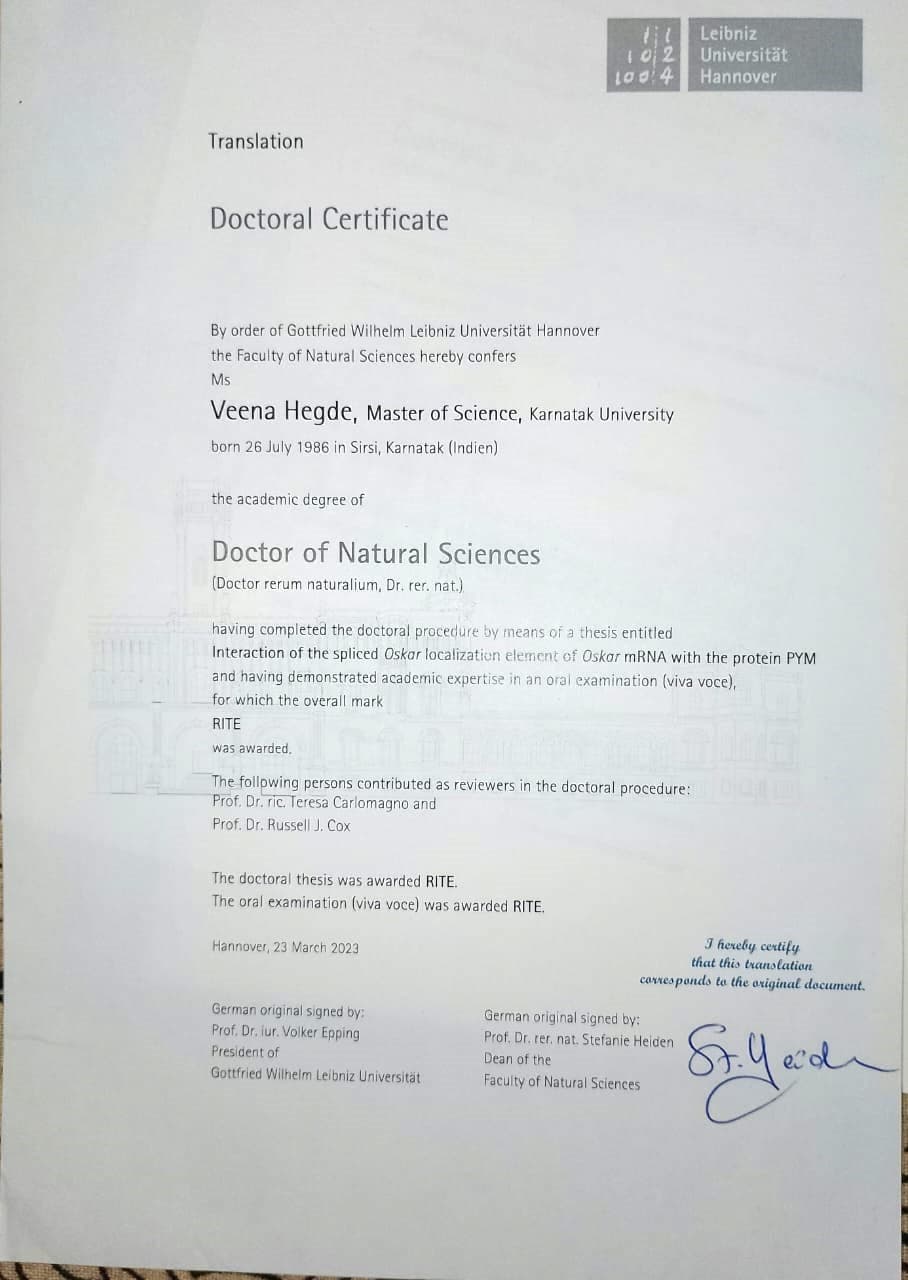
Doctorate degree
/ 55 min
Veena Your chemistry tutor
Hi, I’m Veena, an experienced Chemistry tutor on Wiingy with over 5 years of experience helping students build strong foundations and excel academically. I provide personalized tutoring in Biochemistry, Chemical Reactions, and core Chemistry subjects for elementary through college students. My teaching emphasizes concept clarity, practical lab skills, and effective test-prep strategies. I simplify complex topics using real-world applications and engaging visual explanations, making learning interactive and easy to grasp. My goal is to create a supportive environment where students gain confidence, improve performance, and develop a lasting understanding of Chemistry. I adapt my lessons to each student’s learning style, pace, and goals, ensuring steady progress, stronger problem-solving skills, and long-term academic success.
Meet Veena
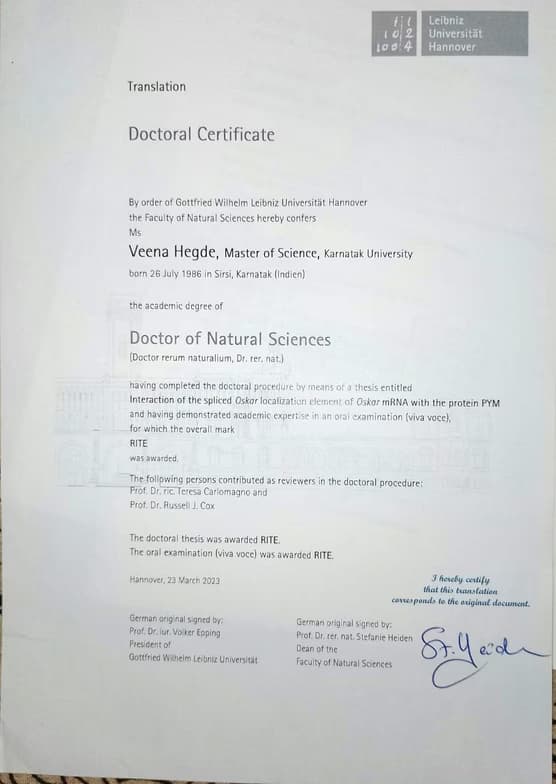
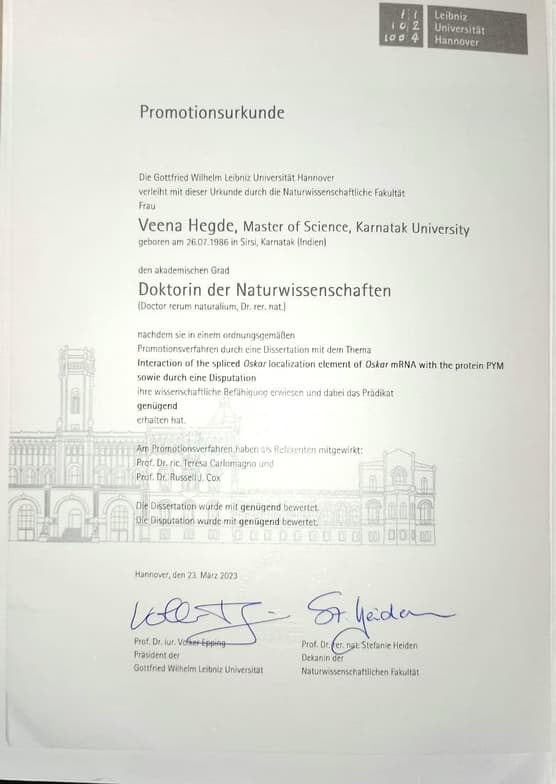
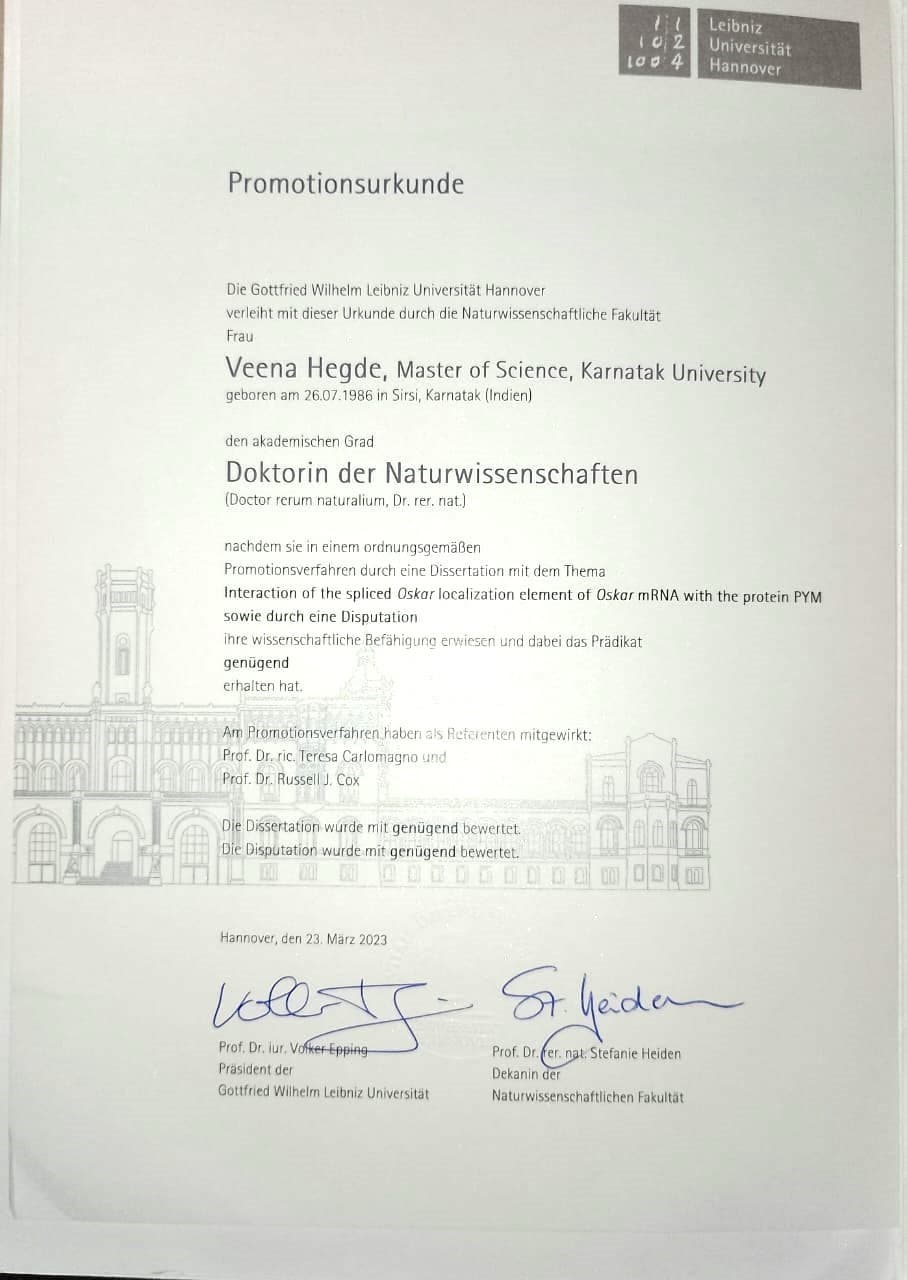
Veena graduated from Leibniz Universität Hannover
Specialities of your chemistry tutor

Advanced Placement (AP) Program (USA)

GCSE (UK)

Common Core State Standards - CCSS (USA)

A-Levels (UK)

Real world application
Test prep strategies
Review sessions

Chemistry experiments
Visual learning

Homework help

State-Specific Standards (USA)
 CoTutor
AI modules
Summary
Podcast
Quiz
Learnings
Flashcard
Spotlight
Zero Risk Guaranteed
15-days refund
Free tutor swap
No cancel fee
1-yr validity
24/7 support
Types of learners for chemistry class

College students
High School students
None of the above
Elementary School students
Middle School students
Chemistry class overview
My tutoring methodology integrates deep conceptual understanding with targeted exam strategies, delivered through visual and interactive learning techniques. I specialize in teaching a broad range of Chemistry subjects, including Inorganic Chemistry, Organic Chemistry, and Chemical Reactions, and have supported over 200 students from elementary to college levels. I incorporate modern technology such as interactive whiteboards, virtual simulations, and educational apps to design engaging, personalized sessions. Following a structured and goal-oriented curriculum, I ensure students clearly understand complex concepts, strengthen problem-solving skills, and perform confidently in exams. Through hands-on activities and real-world applications, I foster curiosity, critical thinking, and a lasting interest in Chemistry.
Your chemistry tutor also teaches

Chemistry
Organic Chemistry
Chemical Reactions
Inorganic Chemistry
Analytical Chemistry
Atomic Structure

Chemistry concepts taught by Veena
The student and tutor reviewed amide hydrolysis, including acid- and base-catalyzed mechanisms, and the reduction of amides to amines. They also covered nitrile formation and hydrolysis, discussing reaction pathways and intermediates, and planned to continue with carbonyl chemistry in future sessions.
Amide Hydrolysis
Nitriles: Structure and Synthesis
Nitrile Hydrolysis
Reduction of Amides and Nitriles
Carboxylic Acid Reactivity and Conversion to Derivatives
The Tutor and Student reviewed various reactions and mechanisms related to carboxylic acid derivatives, including hydrolysis, esterification, amidation, and the synthesis and hydrolysis of nitriles. They discussed reduction reactions and the use of isotopic labeling to understand reaction pathways. The session concluded with a review of the student's notes and preparation for an upcoming exam.
Reduction Reactions
Nitrile Formation and Hydrolysis
Isotopic Labeling in Ester Synthesis
Hydrolysis of Esters and Amides
Esterification and Amidation
The Tutor and Student reviewed reactions of aldehydes and ketones, focusing on hydration and acetal formation. They then explored methods for synthesizing and naming carboxylic acids and their derivatives, including discussions on acidity, reactivity, and nomenclature conventions for acid halides, anhydrides, esters, and amides. The session concluded with plans to continue the topic and practice nomenclature.
Acetal and Ketal Formation
Carboxylic Acid Derivatives and Nomenclature
Hydrogen Bonding and Acidity of Carboxylic Acids
The student and tutor reviewed concepts in aromatic substitution, including directing groups and steric hindrance. They then delved into carbonyl chemistry, discussing nucleophilic addition reactions, Grignard reagents, and the Wittig reaction for alkene synthesis. The session concluded with an examination of factors influencing the stereochemistry of Wittig reactions.
Directing Groups and Product Formation
Steric Hindrance in Aromatic Reactions
Nucleophilic Addition to Carbonyls and Stereochemistry
The Wittig Reaction: Alkene Synthesis
The tutor and student reviewed an organic chemistry case study assignment, focusing on chemical reactions, regioselectivity, and multi-step synthesis problems. They discussed Grignard reagents, organometallic compounds, amines and amides, and various reduction reactions, with plans to continue working together to prepare for an upcoming exam.
Grignard Reagents and Protection Groups
Amines vs. Amides
Selective Reducing Agents
Electrophilic Aromatic Substitution and Directing Groups
The tutor instructed the student on the principles of NMR spectroscopy, covering nuclear spin, magnetic fields, shielding/deshielding, chemical shift, and signal splitting (multiplicity). They discussed how to interpret NMR spectra to determine molecular structure and the differences between proton and carbon NMR, including practical considerations like deuterated solvents and Fourier transforms. The session also touched upon exceptions like aromatic anisotropy and introduced concepts like J coupling.
Shielding and Deshielding in NMR
Chemical Shift and Reference Standards
Signal Splitting and the n+1 Rule
Anisotropy and Aromatic Rings
NMR Spectroscopy: The Basics
Tools & techniques used by chemistry tutor
Digital Note taking

Presentations
Video conferencing

Quizzes
Interactive 3D models
Interactive chemistry lessons

Chat for quick help

Parent feedback

Open Q&A

Weekend lessons

Mobile joining

Chemistry tutors on Wiingy are vetted for quality
Every tutor is interviewed and selected for subject expertise and teaching skill.
