
Saniya Shaikh
Physics Decoded! Ace Your Tests, Actually Understand Concepts! Clear Explanations for Every Topic with Interactive Teaching.
Loading...



Show all photos
Saniya Shaikh
Bachelors degree
/ 55 min
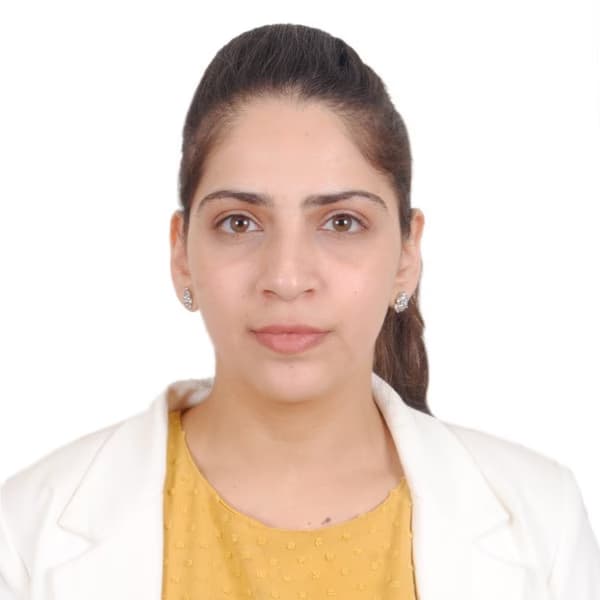
Saniya - your physics tutor
Being born in a family where both my parents were teachers and educators were always highly respected , I had a passion for teaching since a young age. I have taught students right from middle school to college level and enjoyed every single stage equally. The feeling of fulfilment at the end of each day and the joy and tears that the final results bring along are some of the happiest memories. I have always been fond of all my students and having worked in Dubai taught me to value every child equally and understand the emotions behind each type of behaviour. My students have always been respectful and have achieved high results, staying in touch with me long after leaving school. I have currently embarked on a journey to pursue a PhD in education as I feel, with further research a lot of the gaps, that keep students from reaching their full potential can be filled. I have find memories of my high school teaching days and miss teaching Physics. Hence I look forward to this opportunity of getting back into tutoring.
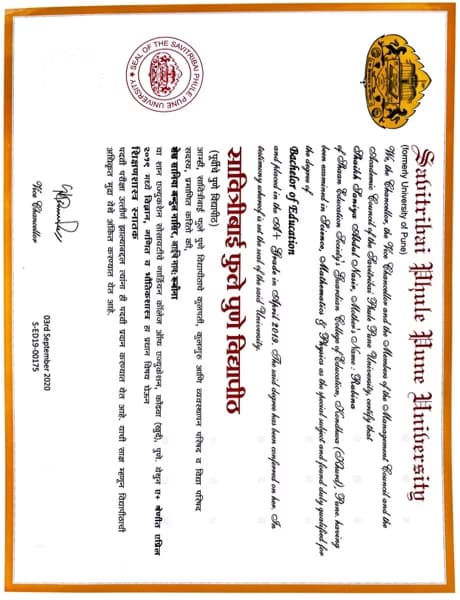
Saniya graduated from University of Pune
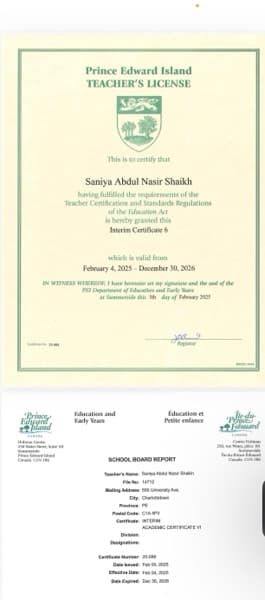
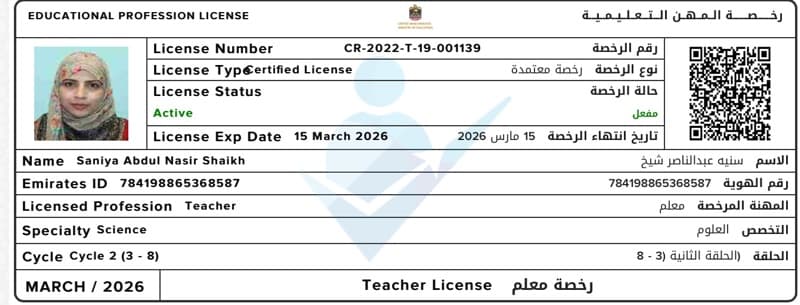
Academic expertise of your physics tutor

Visual learning
Physics experiments
Real world application
Physics lab skills

Homework help
Review sessions
Student types for physics class

High School students
College students
None of the above
Physics class snapshot
My teaching methodology is grounded in experiential learning and student-centered practice. I like to relate what I teach with real-world examples and applications to ensure better understanding. For classroom and in-person teaching I firmly believe in hands-on activities. While during my online teaching days (of COVID), I made up for this element using simulations in Physics such as PhetColorado, and Physics.io. I like scaffolding my lessons, to ensure concepts are well arranged. For assessments, I rely heavily on formative assessments using concept checking questions as well as instruction checking ones. Platforms such as Nearpod, KhanAcademy, and quizziz are excellent for in-between assessments and collaborative learning. I have used multiple educational platforms and found Nearpod to be the most effective for online teaching. I prefer that students even when learning online should have a collaborative space to work with their tutor.
Saniya - Physics tutor also teaches

Physics
Thermodynamics
Atomic Physics
Astrophysics
Mechanics
Optics

.svg)
15 days Refund
.svg)
Free Tutor Swap

Physics concepts taught by Saniya
The Student and Tutor reviewed position-time graphs, focusing on interpreting slopes to determine motion (forward, backward, stopped) and calculating average and instantaneous velocities. They also touched upon curved graphs related to acceleration and practiced using kinematic equations for free-fall problems, with the Tutor planning to send additional practice worksheets.
Calculating Average Velocity
Instantaneous Velocity and Tangents
Acceleration in Position-Time Graphs
Kinematic Equations
Position-Time Graphs
The Student and Tutor worked through various problems related to waves and simple harmonic motion, covering topics such as wave properties, energy in SHM, period and frequency calculations for springs and pendulums, and graphing motion characteristics. The Tutor mentioned potential future session scheduling challenges due to academic commitments.
Spring Constant and Energy
Wave Velocity Calculation
Simple Harmonic Motion (SHM)
Wave Characteristics
The tutor and student reviewed concepts of angular momentum, including its definition, the impulse-momentum theorem, and the conservation of angular momentum. They practiced applying these principles through various physics problems involving collisions, rotational and translational motion, and orbital mechanics.
Angular Momentum
Impulse-Momentum Theorem
Conservation of Angular Momentum
Moment of Inertia (I)
Rotational Kinetic Energy
The Tutor and Student practiced balancing nuclear reactions and calculating half-lives of isotopes. They worked through various problems involving uranium decay, determining the age of rock samples, and calculating the remaining amount of radioisotopes after specific time periods. The session concluded with a discussion of nuclear fission and fusion reactions, with the student to practice balancing additional equations.
Balancing Nuclear Reactions
Half-Life Calculations
Determining Age Using Isotope Ratios
Distinguishing Fission and Fusion
The Student and Tutor reviewed concepts of circular motion, including tangential and centripetal acceleration, and their dependence on radius and angular velocity. They then worked through several physics problems involving rotational dynamics, torque, moment of inertia for different shapes, and linear/angular kinematics, emphasizing problem-solving strategies and the importance of sign conventions.
Centripetal Acceleration vs. Tangential Acceleration
Torque and Rotational Motion
Conservation of Energy in Rolling Motion
Relationship Between Linear and Angular Quantities
The Tutor and Student worked through various problems related to radioactive decay and nuclear physics, including half-life calculations and determining remaining isotope fractions. They then transitioned to applying Newton's laws and vector addition to solve problems involving forces, friction, and systems like the Atwood machine. The session concluded with a review of these concepts, preparing the Student for an upcoming test.
Radioactive Decay and Half-Life
Calculating Radioactive Decay
Forces and Newton's Laws in Motion
Free Body Diagrams
Classroom tools used by physics tutor

Practice worksheets
Video conferencing

Presentations
Digital Note taking

Assessments
Engaging physics lessons

Note taking

Weekend lessons

Pets are welcomed

Mobile joining

Chat for quick help

Physics tutors on Wiingy are vetted for quality
Every tutor is interviewed and selected for subject expertise and teaching skill.