
Dhaval Furia
GMAT Quant Tutor | Master Question Templates & Time-Saving Shortcuts to Boost Your Score
Loading...




Show all photos
Dhaval Furia
Masters degree
/ 55 min
Dhaval - Your GMAT tutor
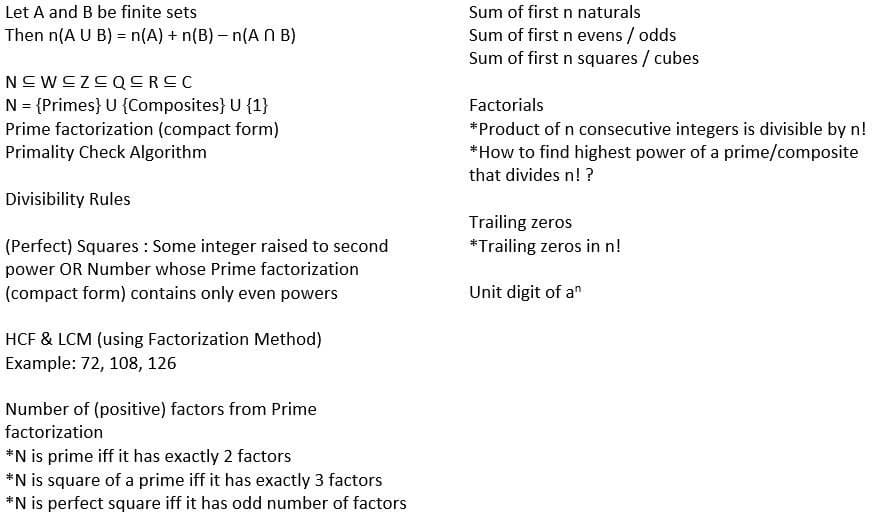
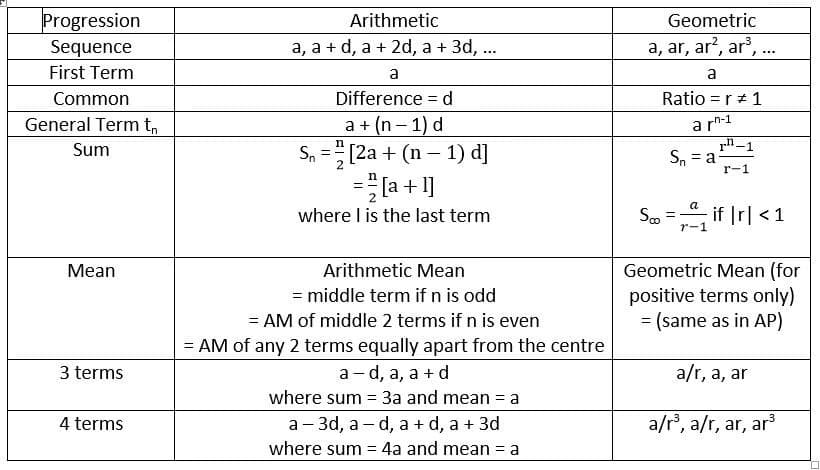
I am Dhaval Furia, a dedicated GMAT tutor with a Master’s degree in Mathematics and over a year of experience tutoring GMAT Quantitative Reasoning. I specialize in helping students master the quantitative section of the GMAT through a structured, concept-driven approach that focuses not only on mathematical understanding but also on effective test-taking strategies. My teaching style emphasizes recognizing common question templates that frequently appear on the GMAT. By learning how to quickly identify these patterns, students can approach problems with a clear strategy rather than relying solely on lengthy calculations. I also teach efficient shortcut techniques and logical problem-solving methods that help students save valuable time during the exam. I particularly focus on helping students who may not consider themselves naturally fast at calculations. Through strategic thinking, simplified approaches, and consistent practice with real GMAT-style problems, I guide students to solve questions more efficiently and confidently within the strict time limits of the test. My sessions are interactive and tailored to each student’s strengths and weaknesses. I aim to build strong quantitative intuition while equipping students with practical exam strategies so they can maximize their performance in the GMAT Quantitative Reasoning section.
Dhaval graduated from Pune University


GMAT tutor specialities

Test prep

Grade improvement

Test taking techniques

Concepts learning
 CoTutor
AI modules
Summary
Podcast
Quiz
Learnings
Flashcard
Spotlight
Zero Risk Guaranteed
15-days refund
Free tutor swap
No cancel fee
1-yr validity
24/7 support

GMAT concepts taught by Dhaval
The tutor and student worked through various mathematical problems, starting with fraction operations including converting mixed numbers and performing division and multiplication. They then tackled word problems involving percentages and discounts, followed by algebraic expression evaluation. The focus was on understanding efficient problem-solving methods.
Mixed and Improper Fractions
Operations with Fractions: Division
Working with Percentages: Discounts
Time Calculations and Unit Rates
Algebraic Expressions: Substitution and Simplification
The tutor and student reviewed fundamental differentiation rules and then delved into the derivatives of exponential and logarithmic functions. They practiced applying these rules, particularly the chain rule, to composite functions and introduced logarithmic differentiation for functions of the form f(x)^g(x). The student was encouraged to practice more problems from a provided worksheet.
Derivative of Exponential and Logarithmic Functions
Logarithm Properties for Differentiation
Chain Rule for Composite Functions
Logarithmic Differentiation
The tutor and student reviewed techniques for approximating definite integrals using Riemann sums, including cases with unequal subinterval widths. They practiced calculating left and right Riemann sums, analyzed their properties for increasing and decreasing functions, and then transitioned to using the limit definition of the definite integral to set up and evaluate integrals from given functions and summation expressions.
Riemann Sums with Unequal Subintervals
Left vs. Right Riemann Sums and Monotonicity
Definite Integrals as Limits of Riemann Sums
Identifying Integrals from Limit Definitions
Evaluating Limits of Summation Formulas
The class focused on the concept of Riemann sums for approximating the area under a curve, exploring left, right, and midpoint sums with a fixed number of sub-intervals. The session then delved into summation notation and its formulas, leading to the evaluation of limits of sums to find exact areas, which connects Riemann sums to definite integrals.
Riemann Sums
Definite Integrals
Summation Notation (Sigma Notation)
Linearity of Summation
The student and tutor worked through various derivative rules, including the sum, difference, product, quotient, and chain rules. They practiced applying these rules to algebraic and trigonometric functions, and the tutor reviewed the definitions of trigonometric functions using right triangles. Further practice with mixed derivative rules was planned.
Derivatives of Trigonometric Functions
Chain Rule for Composite Functions
Quotient Rule for Derivatives
Product Rule for Derivatives
Sum and Difference Rules for Derivatives
The Tutor introduced and the Student practiced applying the product, quotient, and chain rules in calculus. The Student worked through several examples, differentiating functions involving products, quotients, and compositions. The Tutor assigned practice problems involving mixed rule applications for homework and announced plans to cover exponential, logarithmic, and trigonometric functions in the next session.
Power Rule
Product Rule
Quotient Rule
Chain Rule
Sum and Difference Rule
Constant Multiple Rule
Learning tools used by GMAT tutor

Quizzes

Digital whiteboard

GMAT Practice worksheets
Interactive GMAT classes

Open Q&A

Weekend lessons

Pets are welcomed

Chat for quick help

GMAT tutors on Wiingy are vetted for quality
Every tutor is interviewed and selected for subject expertise and teaching skill.