
Dhaval Furia
GMAT Quant Tutor | Master Question Templates & Time-Saving Shortcuts to Boost Your Score
Loading...




Show all photos
Dhaval Furia
Masters degree
/ 55 min
Dhaval - Your GMAT tutor
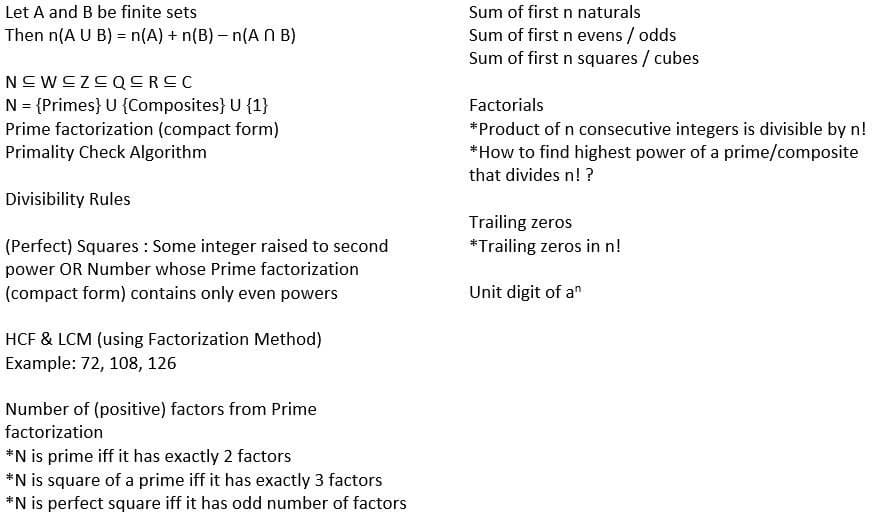
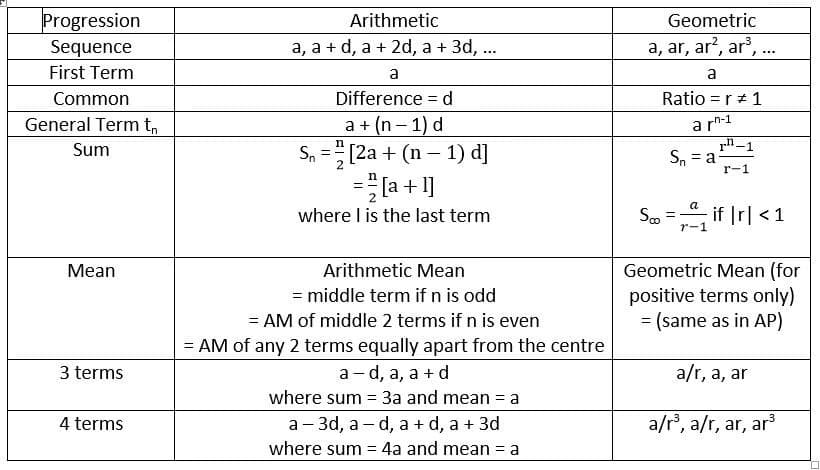
I am Dhaval Furia, a dedicated GMAT tutor with a Master’s degree in Mathematics and over a year of experience tutoring GMAT Quantitative Reasoning. I specialize in helping students master the quantitative section of the GMAT through a structured, concept-driven approach that focuses not only on mathematical understanding but also on effective test-taking strategies. My teaching style emphasizes recognizing common question templates that frequently appear on the GMAT. By learning how to quickly identify these patterns, students can approach problems with a clear strategy rather than relying solely on lengthy calculations. I also teach efficient shortcut techniques and logical problem-solving methods that help students save valuable time during the exam. I particularly focus on helping students who may not consider themselves naturally fast at calculations. Through strategic thinking, simplified approaches, and consistent practice with real GMAT-style problems, I guide students to solve questions more efficiently and confidently within the strict time limits of the test. My sessions are interactive and tailored to each student’s strengths and weaknesses. I aim to build strong quantitative intuition while equipping students with practical exam strategies so they can maximize their performance in the GMAT Quantitative Reasoning section.
Dhaval graduated from Pune University


GMAT tutor specialities

Grade improvement

Test taking techniques

Test prep

Concepts learning

.svg)
15 days Refund
.svg)
Free Tutor Swap

GMAT concepts taught by Dhaval
The tutor and student reviewed Rolle's Theorem, the Mean Value Theorem, and concepts of concavity and inflection points. They practiced applying these theorems by solving problems, including finding values of 'c' and determining intervals of concavity. The next session will involve more challenging problems.
Rolle's Theorem
Mean Value Theorem (MVT)
Concavity and Inflection Points
The Tutor introduced shortcut rules for differentiation, including the Power Rule, Sum Rule, and Coefficient Rule. The Student practiced applying these rules to various functions, including those with fractional and negative exponents, and began exploring higher-order derivatives. The next session will cover the product, quotient, and chain rules.
Sum and Difference Rule
Higher-Order Derivatives
Derivative of a Constant
Constant Multiple Rule
Power Rule
The student and tutor explored the concepts of average rate of change, instantaneous rate of change, and the definition of the derivative. They practiced calculating these values and finding the equations of secant and tangent lines, with a strong emphasis on applying the limit definition of the derivative to various functions. The tutor planned to continue practice with derivative rules in future sessions.
Average Rate of Change (Slope of Secant Line)
Instantaneous Rate of Change (Slope of Tangent Line)
The Derivative
Finding the Equation of a Secant/Tangent Line
The tutor and student reviewed various techniques for evaluating limits, with a strong emphasis on L'Hôpital's Rule. They practiced problems involving indeterminate forms, including rational, trigonometric, and exponential functions, and explored alternative methods like factorization and small-angle approximations. The student was assigned problem number 12 as homework.
L'Hôpital's Rule
Limits at Infinity and Comparing Growth Rates
Trigonometric Limits and Identities
Factorization as an Alternative Limit Method
The Tutor and Student reviewed differentiation techniques, including the chain rule, logarithm properties, quotient rule, and inverse trigonometric functions. They then practiced finding critical points, intervals of increasing/decreasing functions, relative minima/maxima, and absolute minima/maxima for various functions, including polynomial and rational functions. The next session is planned for Thursday to continue with related topics.
Chain Rule with Logarithms and Powers
Quotient Rule and Chain Rule in Trigonometric Functions
Critical Points for Finding Extrema
Intervals of Increase and Decrease
Absolute Extrema on Closed Intervals
The tutor and student focused on the topic of continuity in calculus. They reviewed the definition of continuity at a point, explored different types of discontinuities, and practiced identifying and classifying discontinuities in various functions, including piecewise and rational functions, and trigonometric functions. The next session was tentatively scheduled for Monday.
Continuity of Common Functions
Continuity on an Interval
Types of Discontinuities
Definition of Continuity at a Point
Learning tools used by GMAT tutor

GMAT Practice worksheets

Digital whiteboard

Quizzes
Interactive GMAT classes

Open Q&A

Weekend lessons

Chat for quick help

Pets are welcomed

GMAT tutors on Wiingy are vetted for quality
Every tutor is interviewed and selected for subject expertise and teaching skill.