
Giselle De Leon
Discover your hidden musical talents by learning the piano! With patience and perseverance, let's take off towards your piano goals!



Show all photos
Giselle De Leon
Bachelors degree
/ 55 min
Giselle - Your piano teacher
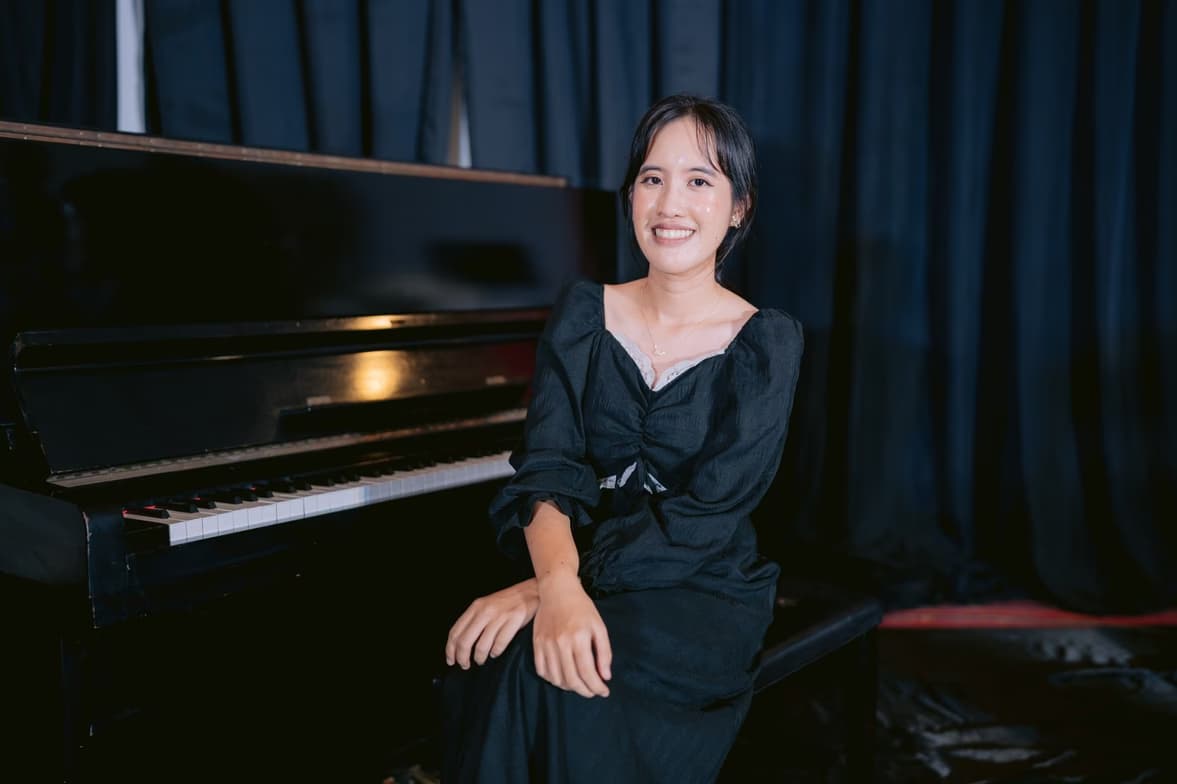
Hi, I'm Giselle, Your Next Piano Tutor! I have more than 5 years piano teaching experience, and a decade of piano playing. I've already handled multiple students from children ages 4 to adults ages 65. There's no age limit to learning as long as you have the persevering heart for it. My forte is classical piano and I play during music recitals, events, and for the church. Most of the time, I love soft and sad music. However, I am a flexible type of musician and can play any genre. My favorite classical musician is Debussy, Chopin, and Tchaikovsky. I love the Romantic era of music where music is used for expression of the emotions we cannot tell. I also love listening to Ghibli songs and anime music. I am a big fan of Frieren, Spy Family and Violet Evergarden. My other hobbies is running, hiking, writing, painting, and crocheting. I am a multi-hobbyist and an adventurer for life.
Meet Giselle
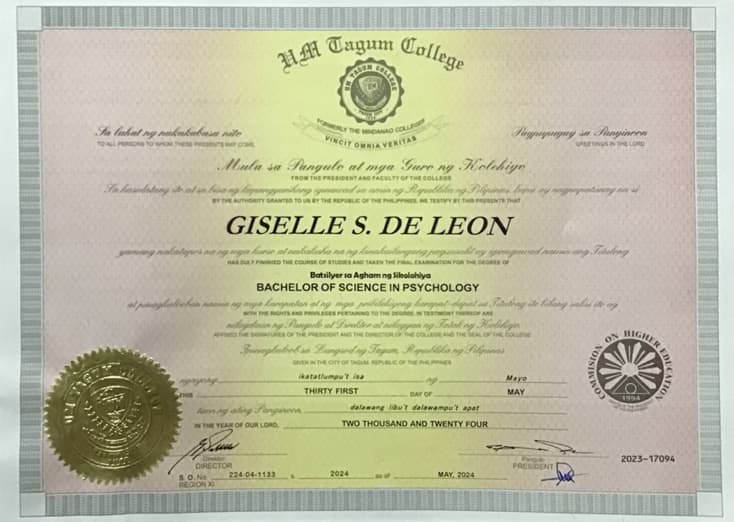
Giselle graduated from University of Mindanao
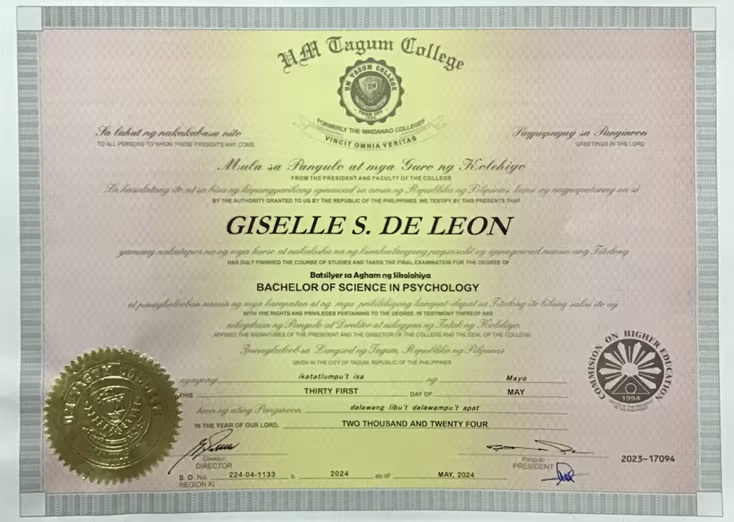

Your piano teacher skills

Sight Reading
Music theory
Finger Placement & Hand Position
Performance Skills

Ear training
Pedaling Techniques
Piano Technique
 CoTutor
AI modules
Summary
Podcast
Quiz
Learnings
Flashcard
Spotlight
Zero Risk Guaranteed
15-days refund
Free tutor swap
No cancel fee
1-yr validity
24/7 support
Types of learners for piano lessons

Piano for adults
Piano for beginners
Piano for intermediate
Piano for kids
Piano lessons at a glance
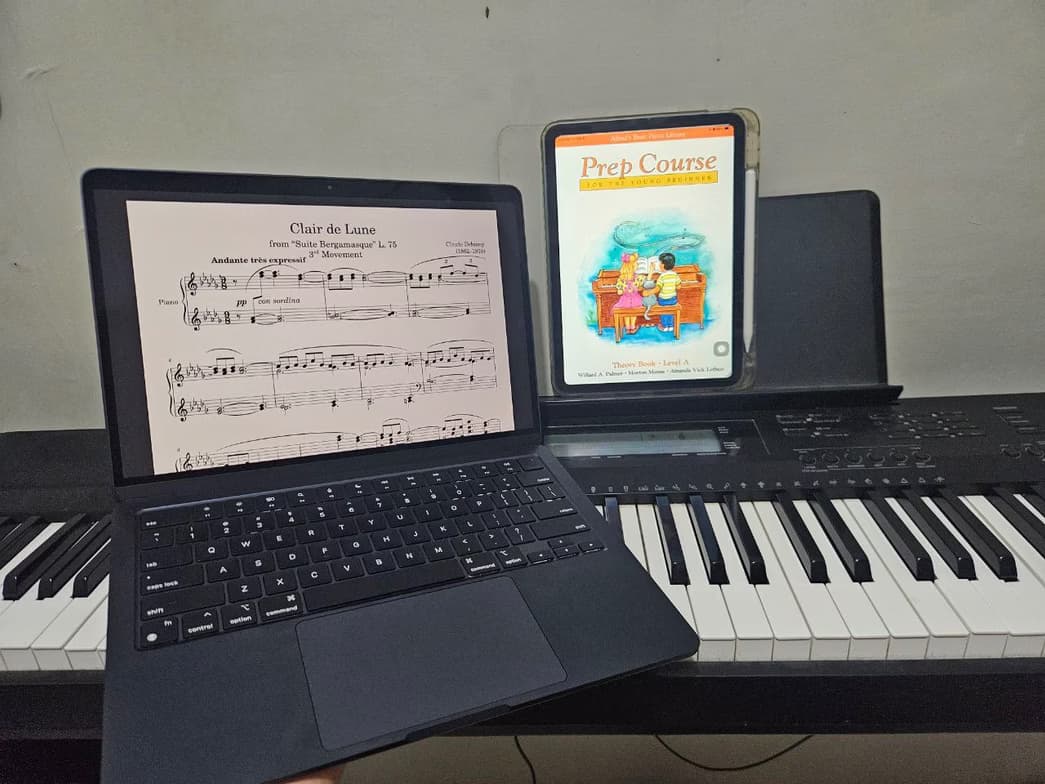
As for my teaching, I make sure you understand both the foundational and the creative side of piano playing. I tailor my piano teaching plans according to the students' and parents' musical endeavors. This includes classical and modern styles of music. As I make lessons engaging and fun, learning the piano is a great way for understanding yourself and expressing your emotions. I utilize a progressive piano learning tools, and a mix of online platforms for ear training and note reading. Creating a musical environment is important for developing your skill in piano that's why you also have to surround yourself with music. With creative discipline, you can enjoy the hard and the creative sides of music. Learning an instrument takes time but with patience and perseverance, we'll take off together towards your piano goals. Let's hit the right notes together!
Different types of piano lessons

Piano
Digital Piano
Upright Piano
Classical Piano
Electric Keyboard
Acoustic Piano

Piano concepts taught by Giselle
The Student and Tutor practiced various piano scales, including A major, G major, and F major, focusing on inversions, fingering, and musical intervals like tetra chords. They applied dynamic markings, accent signs, and repeat structures to several pieces, specifically "Why am I Blue," "Little Brown Jug," "Habang Duhai," and "Moon River." The Student plans to take a break for a concert and resume lessons in January, continuing personal practice in the interim.
Dynamic Gradation & Accents
F Major Scale Construction & Tetrachords
Understanding the Eighth Rest
Differentiating Retardando & Rallentando
The Fermata (Pause) Mark
Interpreting Specific Repeat Signs
The Student and Tutor practiced piano scales, finger drills, and various pieces including "Coupe" and "I Hear The River Flows." They reviewed concepts such as dynamics, time signatures, slurs, and ties, and learned about the proper use of the sustain pedal. Homework was assigned to complete exercises on page 55, practice "Coupe" on page 59, master the first part of "I Hear The River Flows" on page 54, and regularly review older pieces like "C-Mist."
Basic Chords in G Position
Strategies for Practicing and Reviewing Pieces
Effective Use of the Sustain Pedal
Understanding Dynamics in Piano
Fundamentals of Scales and Finger Dexterity
Music Notation: Slurs
Ties
and Time Signatures
The Student and Tutor worked on Piano technique, practicing E major chords and G major scales, including Hanon exercises. They reviewed key musical markings like DC Al Fine, syncopated notes, and various dynamics, applying these concepts to a blues piece and "Moon River." The Student plans to continue lessons after their concert commitments.
Chord Inversions (E Major)
G Major Scale & Hanon Technique
Hanon Variations for Musicality & Transposition
Understanding Syncopated Notes
Expressive Dynamics & Tempo Markings
Primary Chords & Musical Form
The Student and Tutor engaged in a comprehensive piano lesson, reviewing E and G major scales and arpeggios, Hanon exercises, and applying blues rhythm to a piece. They practiced several pieces, focusing on dynamics and finger positioning, and clarified the complexities of 2/2 (cut time) signature. The Student was assigned to practice Hanon exercises with staccato and prepare to transpose them to G major for the next session.
Advanced Fingerings & Hand Positions
Rhythmic Counting & Cut Time (²⁄₂)
Primary Chords (I
IV
V₇) & Progressions
Hannon Exercises: Articulation & Transposition
G Major Scale & Key Signatures
Dynamics & Expressive Playing
Student and Tutor worked on piano technique, scales (C major), and arpeggios. They reviewed pieces from the Alfred book, focusing on rhythm, dynamics, and articulation, and practiced a new song ("River Flows") by dissecting complex sections and applying proper fingering. The Student was encouraged to continue practicing the Hanon exercise with a metronome and to use fingering guides for a challenging piece.
Advanced Notation Elements & Ergonomics
Playing with Both Hands & Note Dissection
Music Notation & Interpretation
Articulation and Phrasing (Slurs & Ties)
Foundational Piano Techniques
The Student and Tutor practiced E major scales and arpeggios, focusing on finger technique. They reviewed C major primary chords and inversions, then delved into blues music theory, including the 12-bar chord progression and the "long-short" swing rhythm. The session involved practicing two blues pieces, and homework was assigned for new blues pieces with a focus on section-by-section memorization.
C Major Primary Chords & Inversions
Performance Psychology: Memorization & "The Neutral Zone"
Musical Interpretation: Dynamics
Staccato
and Tempo
Blues Music Structure & "Swing" Rhythm
Piano Technique: Relaxed Fingers & Tension Management
Approach & tools used in piano classes
Ear Training Software
PDF Sheet Music Libraries
Chord & Scale Reference Apps
Metronome Apps
Interactive piano lessons

Weekend lessons

Open Q&A

Note taking

Record lessons

Parent feedback

Piano teachers on Wiingy are vetted for quality
Every tutor is interviewed and selected for subject expertise and teaching skill.
