
Kelechi Chioma
Expert Biology tutor offering engaging lessons in various topics with interactive teaching and technology
Loading...




Show all photos
Kelechi Chioma
Bachelors degree
/ 55 min
Your biology tutor - Kelechi
I am Kelechi Chioma, my students call me KC, I am an experienced Tutor with over 20 years experience in Biology education. I hold a Bachelors in Biochemistry. My specialties include Biology experiments, lab skills, career guidance , personalised learning plans and more. I excel in teaching Zoology, Microbiology, cell biology and Genetics. I teach students at all levels -- Middle School, High School, College and Elementary. I focus on real-world applications, visual learning, and effective test prep strategies. Whether you need help with home work, assignments, review sessions or want to delve into depths of human anatomy or Ecology, I've got you covered. let's embark on a learning journey tailored made for you. The goal is to take the veil off, and lead you from confusion to confidence. Tailored tutoring that unlocks potential and helps every student master any subject with clarity and confidence.
Meet Kelechi
Kelechi graduated from Nnamdi Azikiwe University


Academic expertise of your biology tutor

Biology experiments

Advanced Placement (AP) Program (USA)

State-Specific Standards (USA)

Homework help
Test prep strategies

Next Generation Science Standards - NGSS (USA)

GCSE (UK)

Australian Curriculum (AU)

International Baccalaureate (IB)

Common Core State Standards - CCSS (USA)
Career guidance

Provincial-specific curriculum (CA)
Types of students for biology class

Middle School students

ASD
High School students
College students
Elementary School students

Anxiety or Stress Disorders

ADHD

Learning Disabilities
Biology class overview
When students learn with me, they gain more than improved grades. They gain clarity, confidence, and the courage to tackle previously intimidating subjects. I transform confusion into understanding and uncertainty into academic strength — one student at a time. built on a simple belief: no subject is too difficult when it is taught the right way, by the right tutor, in a way that fits the learner. Many students struggle not because they lack ability, but because complex topics are often presented in confusing or rigid formats. At PhyChemBio Tutors Limited, we remove the veil from challenging subjects and shine light on the areas students find most difficult. Our goal is not just to help students pass exams, but to help them truly understand what they are learning. I provide personalized tutoring tailored specifically to each student’s needs, pace, and goals. I begin by identifying where the student currently stands academically, then design a structured path to guide them to where they need to be. Whether the objective is exam preparation, skill development, or mastery of a specific subject, our approach ensures measurable progress and growing confidence.
Your biology tutor also teaches
Biology
Botany
Cell biology
Genetics
Microbiology
Zoology

.svg)
15 days Refund
.svg)
Free Tutor Swap

Biology concepts taught by Kelechi
The Tutor and Student reviewed the principles of rigid and non-rigid rotor models in molecular spectroscopy. They discussed energy levels, rotational quantum numbers, degeneracy, selection rules, and various types of molecular rotors. The session also covered the concept of centrifugal distortion and applications in fields like astronomy, with practice questions reinforcing these concepts.
Microwave Spectroscopy: The Study of Rotation
The Rigid Rotor Model
Degeneracy in Rotational Levels
Rotational Spectra and Selection Rules
Types of Rotors and Their Moments of Inertia
Centrifugal Distortion
The student and tutor reviewed the functions, structure, and contraction mechanisms of muscle tissue, including the sliding filament theory, isotonic and isometric contractions, and rigor mortis. They also worked through practice quiz questions to reinforce understanding of skeletal muscle physiology.
Muscle Fiber Structure and Function
Muscle Contraction Mechanism
Types of Muscle Contractions
Neuromuscular Junction and Excitation-Contraction Coupling
Muscle Fatigue and Factors Affecting Force
The session reviewed the nervous system's structure and function, including neuron types, action potentials, and neurotransmitters. The student practiced differentiating between depolarization and hyperpolarization and understanding the roles of sodium and potassium. The Tutor assigned flashcards, and they planned to discuss muscle tissue in the next session to prepare for an upcoming quiz.
Electrical Properties: Resting Membrane Potential and Action Potential
Neurotransmitters and Synaptic Potentials
Neuron Structure and Function
Cells of the Nervous System: Neurons and Neuroglia
Divisions of the Nervous System
Core Functions of the Nervous System
The Tutor and Student reviewed muscle anatomy, neuromuscular junctions, fiber types, and energy systems. The Student practiced defining key terms and answering questions related to muscle contraction, metabolism, and fiber types. The Student was assigned practice questions and diagrams for further review.
Connective Tissue Layers of Muscle
Sarcomere Structure and Function
Neuromuscular Junction and Muscle Contraction
Muscle Fiber Types: Slow Twitch vs. Fast Twitch
Muscle Energy Systems and Exercise
Muscle Actions and Movements
The Crossbridge Cycle
The Student and Tutor engaged in a detailed review of concepts related to chemical bonding and molecular structure, focusing on electron delocalization, resonance, conjugation, and electronegativity. They practiced identifying polar bonds and molecules and calculating bond order. The session involved solving various practice problems to reinforce these topics.
Electron Delocalization and Resonance
Conjugation and Pi Bonds
Electronegativity and Polarity
The class covered stoichiometry, including calculating limiting reactants, moles of products, masses of reactants and products, and percent yield. The student practiced solving problems involving balanced chemical equations, mole ratios, molar masses, and conversions between mass and moles, as well as density calculations. The next session will continue these topics, potentially with new material.
Limiting Reactant Calculation
Stoichiometric Calculations: Mass-to-Mass
Percent Yield Calculation
Density and its Application in Stoichiometry
Teaching tools used by biology tutor

Digital whiteboard

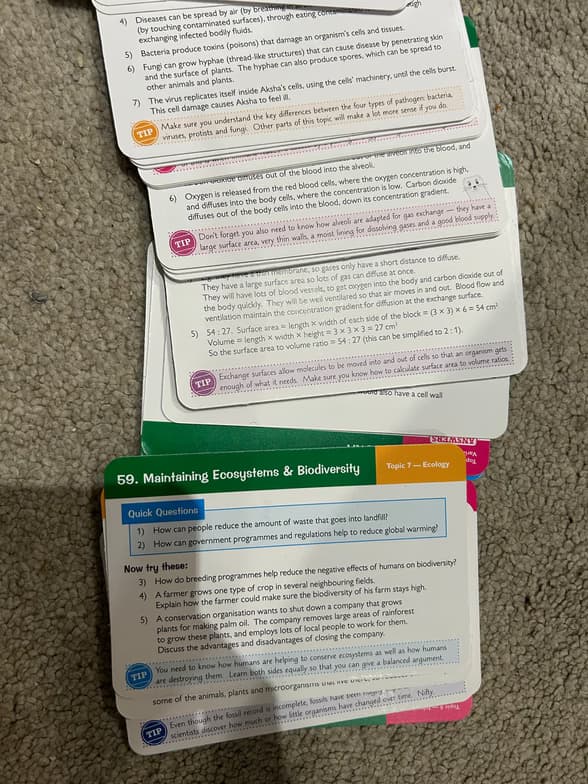
Flashcards

Assessments

Quizzes
Hands-on biology lessons

Mobile joining

Pets are welcomed

Note taking

Open Q&A

Parent feedback

Biology tutors on Wiingy are vetted for quality
Every tutor is interviewed and selected for subject expertise and teaching skill.