
Chirani Thammita
Hi, I am Chirani Lennon! Let’s navigate chemistry together. Let me know what is bothering you and I will let you in on the chemistry secrets!


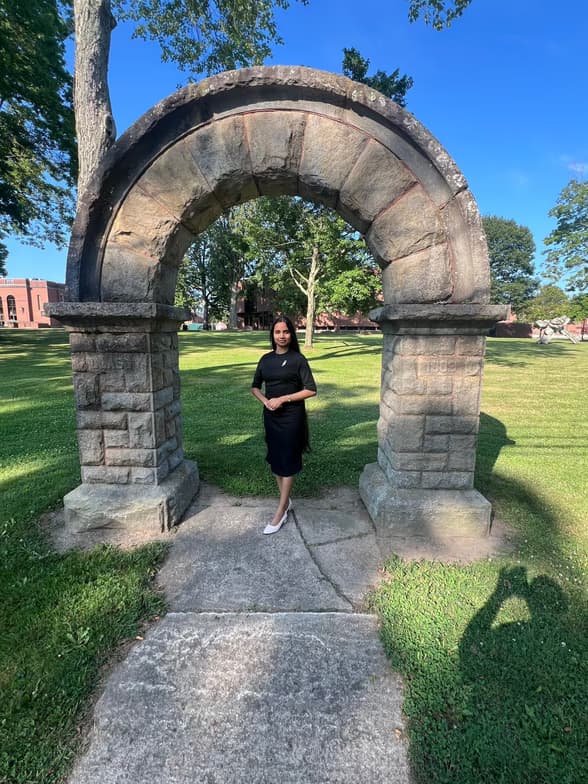



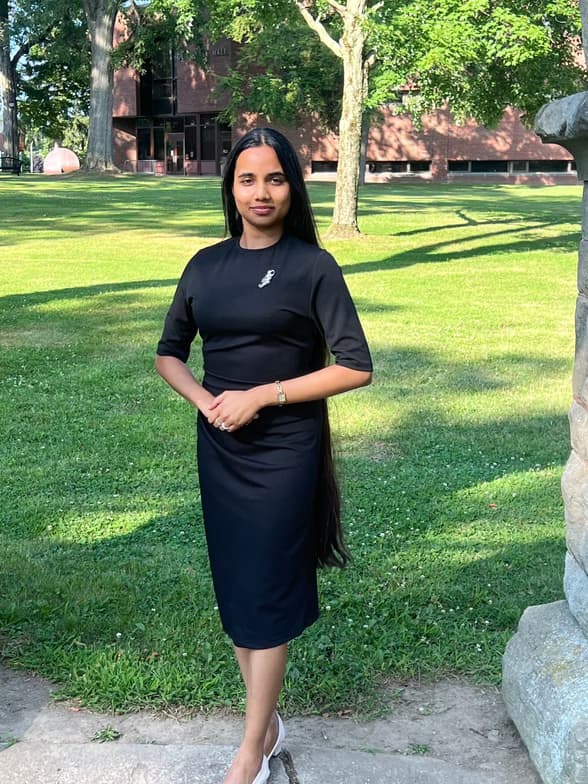
Show all photos
Chirani Thammita
Bachelors degree
/ 55 min
Chirani Your chemistry tutor
I am Chirani Thammita Lennon who is an experience chemistry tutor for nearly a decade. I an experienced in guiding high school and college students with any needs through the guidance to make chemistry an enjoyable subject. I specialize in subjects like biochemistry, organic chemistry, atomic structure, and more in depth knowledge on the lab skills. Grasping complex concepts in chemistry is nothing to do with your knowledge but the way you approach it. Make chemistry a story, game or a fantasy novel. You just need to know the easy tricks all chemists use to gain their success. That’s where I come to play. I excel in covering all bases that is needed for you to excel in homework, lab assignments, group work and assignments that get You points and bonus points. Grades will be nice but understanding the concepts of chemistry is more important. Make sure you are comfortable with this “hard” subject!
Chirani graduated from PennWest University Edinboro
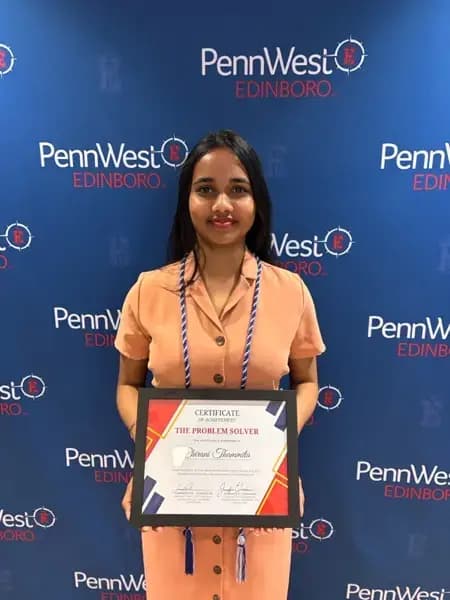
Specialities of your chemistry tutor

Advanced Placement (AP) Program (USA)

Chemistry lab skills

Review sessions

GCSE (UK)

A-Levels (UK)
 CoTutor
AI modules
Summary
Podcast
Quiz
Learnings
Flashcard
Spotlight
Zero Risk Guaranteed
15-days refund
Free tutor swap
No cancel fee
1-yr validity
24/7 support
Types of learners for chemistry class

High School students
College students
None of the above
Chemistry class overview
My tutoring style structured, patient, interactive, and engaging, focusing on hands on learning experiences. I specialize in teaching chemistry in all sub groups such as states of , acid, bases and pH. It doesn’t matter if you want help in general chemistry or organic chemistry, i will help you succeed by making you understand the concept with the technique you prefer. Everyone studies and retain information different, spring feel afraid to reach out to tell me what you are compatible and comfortable with. My teaching techniques all include presentations, diagrams, note taking, color coding and many more. The most important method of teaching is communication. I like when You can contact me when you have any questions about any material we covered or any material you don’t understand but needs ur get help with. Therefore, let’s navigate chemistry together!
Your chemistry tutor also teaches

Chemistry
Organic Chemistry
Chemical Reactions
Atomic Structure
Chemical Bonding
Biochemistry

Chemistry concepts taught by Chirani
The Student provided an update on their recent chemistry exam and discussed the upcoming group project for their biology class. The Tutor and Student then initiated a new chemistry unit on bonding, covering ionic and covalent bonds, electronegativity, formal charge calculations, and an introduction to VSEPR theory. They scheduled the next session to delve into more advanced theories of covalent bonding.
Ionic and Covalent Bonding Basics
Electronegativity and Bond Polarity
Lewis Structures and the Octet Rule
Formal Charge Calculation
Bond Strength and Enthalpy
VSEPR Theory and Molecular Geometry
The Student and Tutor reviewed core Chemistry concepts for an upcoming exam, focusing on periodic table trends, quantum numbers, and electronic configurations. The Student actively practiced writing electronic configurations and gained clarity on previously confusing topics. They planned a two-hour session for an extensive practice exam on Wednesday, where the Student will also bring any reference sheets or questions for review.
Electron Configuration & Noble Gas Shorthand
Electron Filling Rules: Pauli's & Hund's
Quantum Numbers: Electron Address
Periodic Table Trends
The Student and Tutor continued their piano lesson, focusing on improving the Student's performance of "Ode to Joy" by addressing timing, note accuracy, and chord holding techniques. They then introduced a new piece, "Waltz in A minor," with the Student beginning to learn its right-hand melody and counting. Homework includes practicing "Ode to Joy" slowly with precise counting and mastering the first two lines of "Waltz in A minor."
Performance Confidence & Consistent Tempo
Understanding Time Signatures and Note Durations
Effective Practice Strategies
Correct Chord Holding & Articulation
Introduction to Waltz in A Minor (Challenging Repertoire)
The session focused on Organic Chemistry, specifically on aldehydes and ketones. The Tutor instructed the Student on naming conventions, preparation methods, oxidation, and seven different nucleophilic addition reactions, including their mechanisms and key differences. The Student practiced applying these concepts by working through a series of 15 practice questions. The next session is planned to cover carboxylic acids and related reaction mechanisms.
Aldehydes & Ketones: Structure
Naming
& Reactivity
Preparation of Aldehydes & Ketones
Oxidation Reactions of Aldehydes & Ketones
Nucleophilic Addition Reactions: General Mechanism & Hydration
Nucleophilic Addition: Alcohol & Imine/Enamine Formation
Advanced Nucleophilic Additions: Acetals & Wittig Reaction
The Student and Tutor reviewed and practiced identifying SN1, SN2, E1, and E2 organic reactions in preparation for the Student's upcoming exam. They worked through numerous practice problems, applying decision rules based on heat, solvent, and substrate structure. Additionally, they briefly revisited chiral centers, radical mechanisms, and reaction energy diagrams, with the Tutor offering further support for exam preparation.
Chiral Centers and Stereochemistry
Radical Reaction Mechanisms
Differentiating SN1/SN2/E1/E2 Reactions
SN1 Reaction Mechanism
SN2 Reaction Mechanism
E1 and E2 Elimination Reactions
The Tutor and Student reviewed core concepts in thermochemistry, including definitions of energy, thermal energy, temperature, and heat, along with the Law of Conservation of Energy and phase changes. They delved into enthalpy, practicing calculations, understanding Hess's Law, and defining standard enthalpies of combustion and formation. The session concluded with an introduction to Gibbs free energy, its relationship with spontaneity, and practice problems. For the next session, they plan to cover reaction mechanisms and alkyl halides, followed by a general review and practice questions on Thursday.
Energy & Its Forms
Thermal Energy
Temperature & Heat Transfer
Exothermic & Endothermic Processes
Enthalpy (ΔH) & Hess's Law
Gibbs Free Energy (ΔG) & Spontaneity
Tools & techniques used by chemistry tutor

Practice worksheets
Video conferencing
Interactive diagrams

Presentations

Quizzes
Interactive chemistry lessons

Parent feedback

Open Q&A

Record lessons

Mobile joining

Chat for quick help

Chemistry tutors on Wiingy are vetted for quality
Every tutor is interviewed and selected for subject expertise and teaching skill.
