
Chirani Thammita
Let’s learn to paly a melody! Personalized Piano Lessons, 3+ Years of Teaching Experience


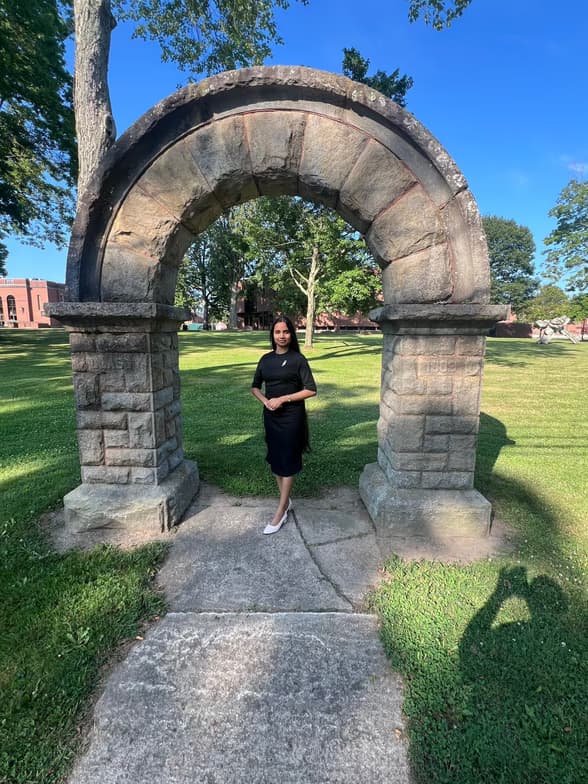



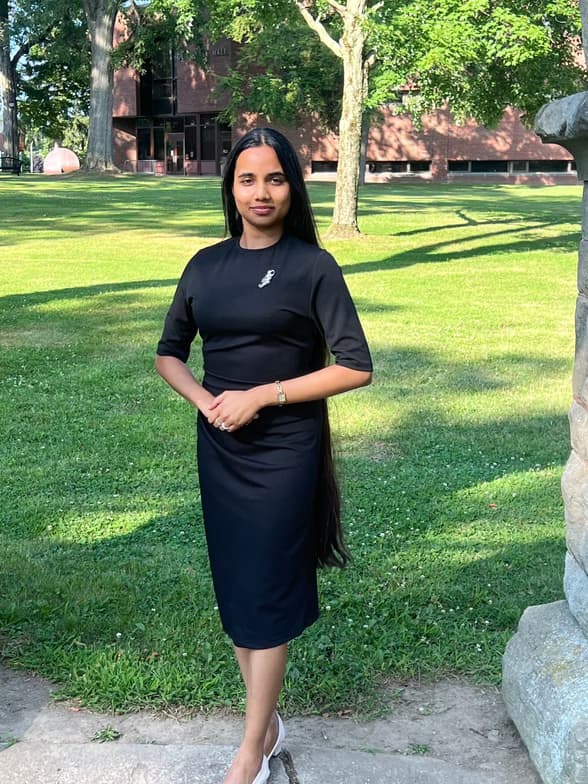
Show all photos
Chirani Thammita
Bachelors degree
/ 55 min
Chirani - Your piano teacher
Hello! My name is Chirani Thammita, and I have over three years of experience teaching piano. I love helping students discover the joy of music while building their confidence and skills at their own pace. Whether you're a complete beginner or looking to improve your technique, I strive to create a supportive, engaging, and enjoyable learning environment tailored to your individual goals. Teaching piano is rewarding because I get to watch my students grow, not only as musicians but also in their creativity, discipline, and self-confidence. I believe that every student learns differently, so I personalize each lesson to match their learning style, interests, and progress. My goal is to inspire a lifelong love of music while making every lesson both fun and meaningful. Make your music dream come true. Let me know what you want when learning this wonderful instrument. Do not feel intimidated. Playing the lovely notes on the piano to make a melody will make you feel as if you are making your own music. Sometimes composing might be easier but other times perfoming might feel easier. Let’s figure out which path works best for you. I look forward to helping you begin or continue your musical journey!
Chirani graduated from PennWest University Edinboro

Your piano teacher skills

Scales and Arpeggios

Ear training
Finger Placement & Hand Position
Sight Reading
 CoTutor
AI modules
Summary
Podcast
Quiz
Learnings
Flashcard
Spotlight
Zero Risk Guaranteed
15-days refund
Free tutor swap
No cancel fee
1-yr validity
24/7 support
Types of learners for piano lessons

Piano for beginners
Piano for intermediate
Piano for kids

Piano concepts taught by Chirani
The Student and Tutor reviewed advanced atomic structure in Chemistry, covering the Bohr model, applying the Rydberg equation, and performing De Broglie's wavelength calculations. They further explored quantum numbers, the Pauli exclusion principle, Hund's rule, and practiced electronic configurations, including exceptions for chromium and copper. For follow-up, the next session is scheduled for Wednesday to cover stoichiometry, and the Student is tasked with reviewing periodic table trends in preparation for upcoming midterm discussions.
The Bohr Model of the Atom: Quantized Energy Levels
Rydberg Equation and Energy Transitions
De Broglie Wavelength: Particles as Waves
Quantum Numbers: Electron 'Addresses'
Electron Configurations and Exceptions
Student and Tutor had an introductory piano session. They began practicing 'Ode to Joy,' covering note identification, rhythm, key signatures, and the treble clef. The Tutor also demonstrated foundational C major scale practice for both hands and discussed selecting future songs for practice.
Student Profile & Goals
Foundational Fingering: The C Major Scale
Rhythm Basics: Counting & Note Duration
Understanding Sharps (#) and Flats (♭)
Music Notation Fundamentals: Treble Clef Staff
The Student and Tutor engaged in a comprehensive chemistry session, covering the nature of light, wave properties, electromagnetic energy, and an introduction to the photoelectric effect and line spectra. They also discussed the foundational concepts of the Bohr model, specifically differentiating between grounded and excited electronic states. The next session is planned to continue with the Bohr model, quantum theory, and electronic configurations, focusing on a one-hour format.
Rydberg's Formula & Bohr's Atomic Model
Atomic Emission Spectra: Line vs. Continuous
Electromagnetic Spectrum & Wave Properties
The Photoelectric Effect & Quantum Energy
The Student and Tutor discussed the Student's current General Chemistry lab, which involves identifying an unknown compound through various tests, and compared it to more rigorous STEM lab formats. The majority of the session was dedicated to the Student completing a practice paper on fundamental chemistry concepts, followed by a thorough review of the answers. For the next session, they plan to cover bonding, molecular structures, and VSEPR theory.
General Chemistry Lab Experience & Structure
Qualitative Analysis: Identifying Unknown Compounds
The Mole Concept and Avogadro's Number
Calculating Molar Mass
The Student and Tutor discussed the Student's General Chemistry lab and lecture experiences, covering lab procedures, group dynamics, and the slow pace of the lecture class. They then focused on reviewing and practicing calculations related to molarity and dilutions, including defining key terms like solvent and solute. The session concluded with planning a practice exam on foundational chemistry topics and outlining future lessons on molecular geometry and stoichiometry.
Solute and Solvent Basics
Lab Safety: Protecting Your Phone
Digital Lab Notebook: Lab Archives
Determining Lab Glassware Accuracy
Dilution Equation
Molarity (M)
The Student and Tutor reviewed key General Chemistry concepts, including formula mass, molecular mass, the mole concept, Avogadro's number, percent composition, and empirical and molecular formulas. The Student actively practiced various calculations related to these topics. For follow-up, the next session is scheduled for tomorrow at 7 PM CST to cover molarity and solution concentrations, and a unit exam (practice questions) covering the first three chapters was planned for future review.
Formula Mass & Molecular Mass
The Mole Concept & Avogadro's Number
Molar Mass Calculations: Moles
Mass
& Particles
Percent Composition
Empirical Formula Determination
Molecular Formula Determination
Approach & tools used in piano classes
Chord & Scale Reference Apps
PDF Sheet Music Libraries
Virtual Piano Apps
Interactive piano lessons

Chat for quick help

Parent feedback

Weekend lessons

Note taking

Mobile joining

Piano teachers on Wiingy are vetted for quality
Every tutor is interviewed and selected for subject expertise and teaching skill.
