
Ryan Krause
Train with a Columbia College Chicago graduate guiding you through a comprehensive musical journey.


Show all photos
Ryan Krause
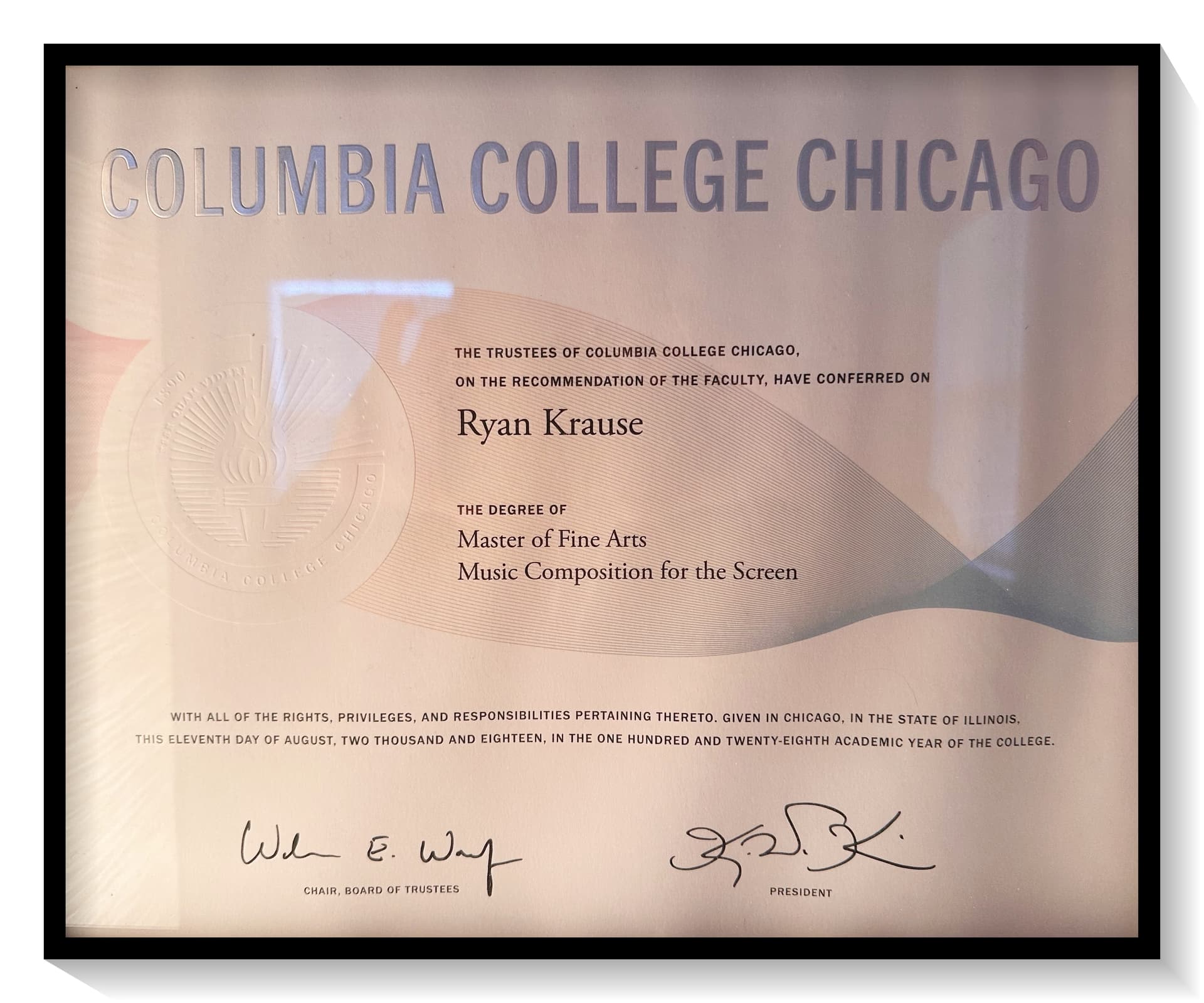
Masters degree
/ 55 min
Ryan - Your piano teacher
I'm Ryan Krause, a seasoned Piano tutor with over 5 years of experience. Holding a Masters degree in music, I offer personalized Piano lessons for kids, beginners, adults, and all levels of expertise. My specialities include Chord Theory, Ear training, Improvisation, and more. I aim to make learning engaging and supportive, fostering creativity and patience in mastering the art of music. Whether you're delving into the fundamentals or seeking a deeper understanding of advanced concepts, my guidance has led many to success and fulfillment. Ready to unlock your musical potential and embrace the joy of music? Let's embark on this incredible journey together. Book your session today, and let's create beautiful music harmoniously.
Meet Ryan
Ryan graduated from Columbia College Chiago

Your piano teacher skills

Finger Placement & Hand Position
Pedaling Techniques
Chord Theory
Rhythm and Timing
Scales and Arpeggios
 CoTutor
AI modules
Summary
Podcast
Quiz
Learnings
Flashcard
Spotlight
Zero Risk Guaranteed
15-days refund
Free tutor swap
No cancel fee
1-yr validity
24/7 support
Types of learners for piano lessons

Piano for beginners

Learning Disabilities

Anxiety or Stress Disorders

Home schooled
Piano for adults
Piano for kids
Piano lessons at a glance
As a piano tutor, I offer a unique teaching approach that integrates music theory, performance coaching, creativity, technique enhancement, and ear training into engaging and motivational lessons. I specialize in teaching a wide range of subjects including classical piano, jazz piano, digital piano, and more, catering to students of all levels from kids to adults. I utilize a variety of tech tools such as DAWs, ear training software, metronome apps, and virtual piano apps to create interactive and personalized online learning experiences. By combining these tools with a tailored curriculum based on individual student needs and preferences, I ensure that each student receives a customized learning plan to help them excel. My teaching style is supportive and patient, focusing on enhancing students' skills and confidence while providing constructive feedback. I aim to make lessons fun and interactive by incorporating backing track libraries, chord & scale reference apps, and looping software to keep students motivated and engaged throughout their piano learning journey.
Different types of piano lessons

Piano
Grand Piano
Player Piano
Digital Piano
Upright Piano
Jazz Piano

Piano concepts taught by Ryan
The Student and Tutor reviewed piano technique, focusing on trills and relaxation, and developed a structured practice plan using a pyramid model to optimize energy allocation across exercises, pieces, and theory. They analyzed phrasing in the current piece, "Important Event," and decided to introduce a new piece, Grieg's Nocturne, which will address multiple technical goals.
Mastering Trills: Baroque
Classical
and Metered Approaches
Optimizing Practice: The Pyramid Structure for Energy Allocation
Discerning Musical Phrasing and Voices
Learning Technique Through Repertoire
The Value of Deep Listening and Interpretation
The Student and Tutor focused on advanced piano techniques, specifically dynamic control for voicing melodies over accompaniment. They extensively practiced sections from the "Pathetique" Sonata, working on precise key attack, fingering for a challenging trill, and musical interpretation. Follow-up included continued practice on the piece and listening to professional recordings.
Trill Interpretation & Fingering for *Pathétique* Sonata
Rhythmic Flexibility in Ornaments (Trills)
Mastering Key Touch & Control
Dynamic Voicing: Bringing Out the Melody
Student and Tutor worked on piano technique using Czerny exercises, focusing on precise articulation and dynamics. They also analyzed the harmonic structure and interpretative phrasing of Schumann's "Important Event." The Student committed to dedicating more practice time to the Schumann piece, and the lesson schedule was confirmed for the following week.
Phrasing and Dynamic Interpretation in Performance
Czerny Exercises: Technique & Articulation Focus
Piano Articulation Nuances: Staccato
Detached
Accent
Understanding Chord Progressions for Memorization
Student and Tutor discussed the introduction of a new piece, Philip Glass Etude 6, focusing on its rhythmic complexities and melodic structure. They also reviewed the student's progress on A flat major scales and arpeggios, and the E minor prelude, and assigned E flat major scales and arpeggios for homework with specific dynamic challenges. Additionally, the Pathetique Sonata was practiced, with guidance on chord voicing and interpreting trills.
Two-against-Three Rhythm (Polyrhythm)
Dynamic Control in Scales & Arpeggios (E♭ Major)
Voicing & Chord Blocking Technique (Beethoven Pathetique)
Classical Trills & Interpretive Rhythm (Pathetique Sonata)
Dynamic Shaping & Direction (E Minor Prelude Critique)
The Student and Tutor reviewed rhythm exercises, focusing on eighth-note subdivision and rhythmic anticipation. They then practiced D and G major scales, receiving corrections on fingering, and introduced the A major scale. The session concluded with the introduction of a new piece in 6/8 time, where the Student learned about the new counting system, strong beats, dotted notes, and key signatures while practicing the initial measures.
Rhythm Subdivision & Reading Ahead
Refining D Major Scale Descent Fingering
Introducing the A Major Scale
Accidentals and Measure Boundaries
Dotted Notes and Accents in 6/8
Exploring 6/8 Time Signature
The Student and Tutor worked on advanced piano technique and music theory, analyzing the Schumann piece for phrasing, dynamics, fingering, and pedaling. They delved into improvisation concepts, discussing harmonic decisions, predominant chords, and different types of cadences. The Student also practiced arpeggios and received a new technical assignment: Czerny etudes, with a follow-up task to research cadences.
Fundamentals of Harmonic Improvisation
Musical Phrasing & Dynamic Control
Predominant Chords & Harmonic Substitution
Understanding Cadential Harmony
Efficient Technique: Wrist Movement & Fingering
Introduction to Czerny Etudes
Approach & tools used in piano classes
Backing Track Libraries
Ear Training Software
Chord & Scale Reference Apps
Piano Tuner Apps
PDF Sheet Music
Interactive piano lessons

Weekend lessons

Parent feedback

Piano teachers on Wiingy are vetted for quality
Every tutor is interviewed and selected for subject expertise and teaching skill.
