
Aryan Bubna
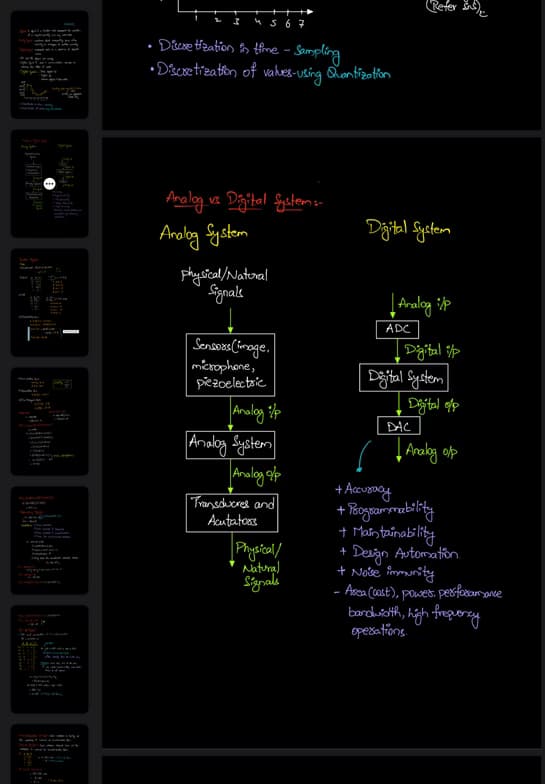
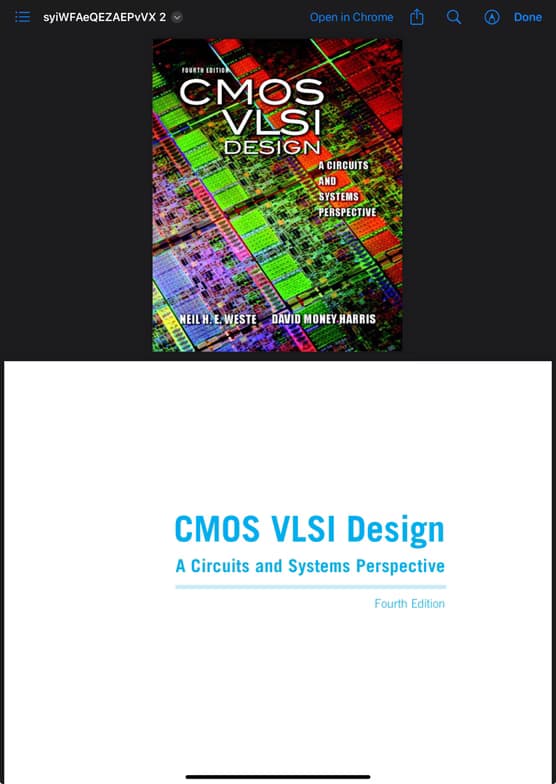
Master Basic electrical eng of Uni level, Digital and Analog electronics with understanding of VLSI from experience of STMicroelectronics




Show all photos
Aryan Bubna
Bachelors degree
/ 55 min
About your engineering tutor
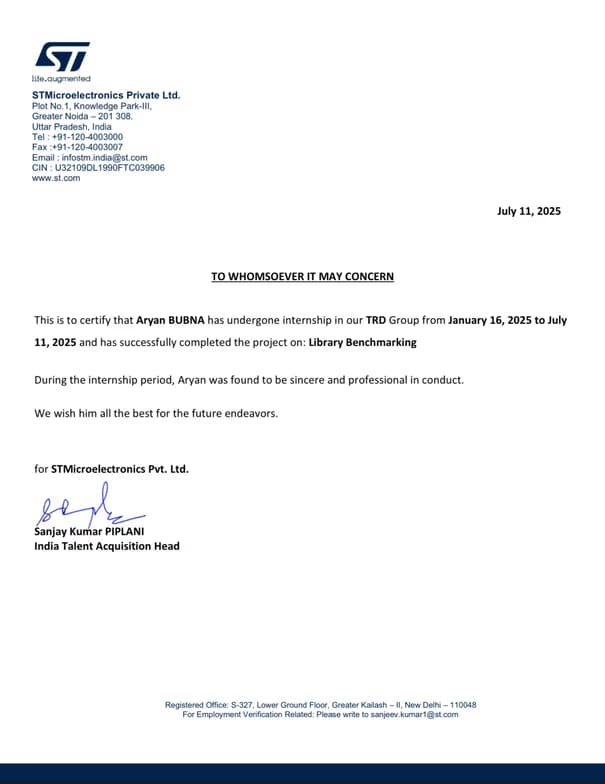
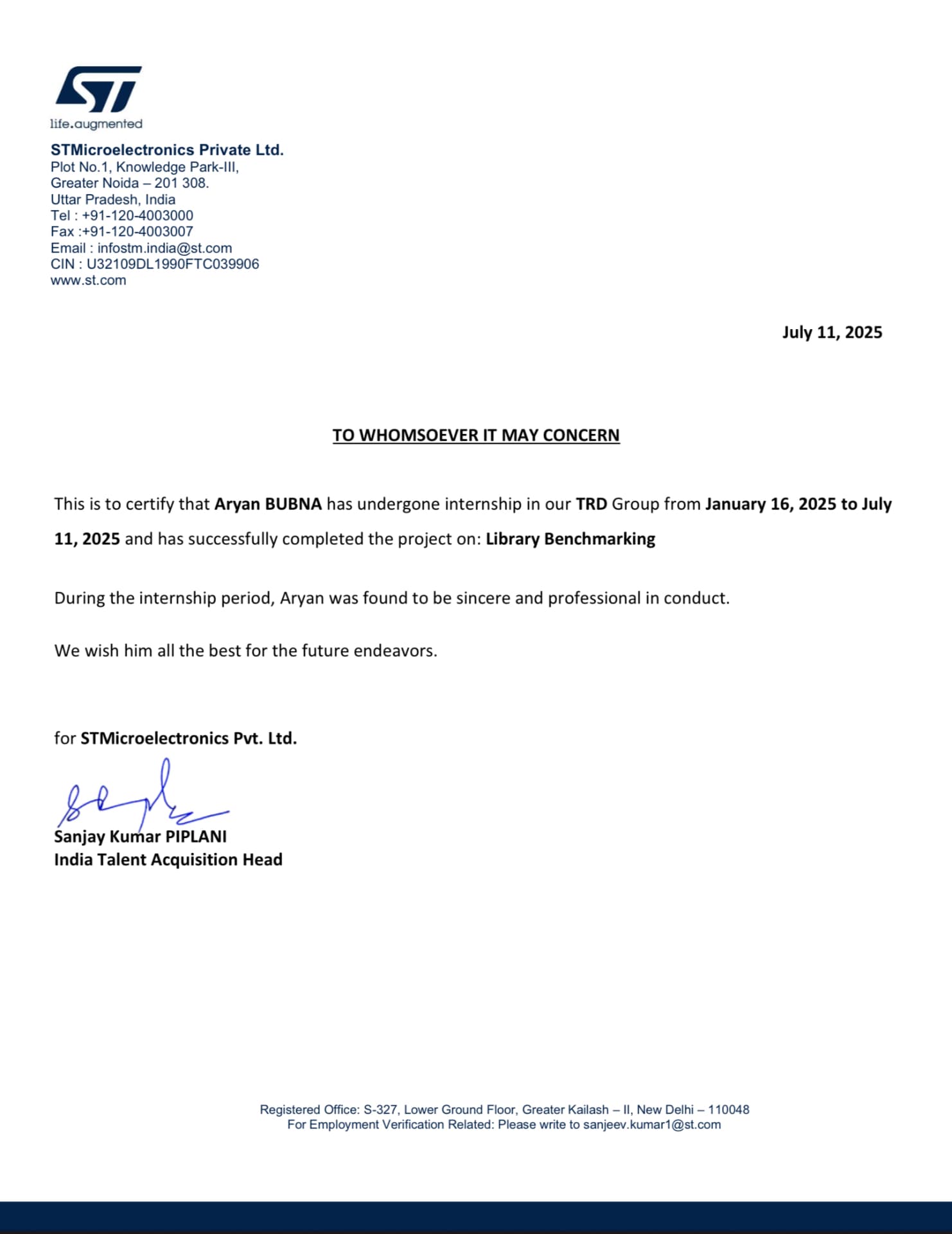
Hello! I'm Aryan, a final-year BTech student in the Electrical Engineering department at IIT Hyderabad(Best Institute in India). My core passion lies in strong and basic electrical Engineering and hardware design, specifically within the realms of digital and analog VLSI, alongside a strong foundation in basic electrical engineering. Recently, I completed a six-month internship at STMicroelectronics, where I gained invaluable, hands-on industry experience tackling logic synthesis and navigating performance, power, and area (PPA) trade-offs. I am a builder at heart—my practical work ranges from designing a 5-stage pipelined RISC processor to executing the full RTL-to-GDS implementation of a 4-bit counter. I am excited to bring this blend of academic rigor and real-world application to my students, helping them master both the theory and the practical realities of electronics. My Teaching Style • Industry-Integrated Learning: I focus on bridging the gap between textbook theory and the professional world. Drawing directly from my experience at STMicroelectronics, I regularly weave industry tips, current market practices, and real-world engineering constraints into my lectures. • Fundamentals First: Before tackling advanced VLSI architectures, we make sure that basic electrical engineering concepts are rock solid. I build up complexity step-by-step so that even the most difficult topics become highly approachable.
Meet Aryan
Aryan graduated from IIT Hyderabad
Engineering tutor specialities

Visual learning

Homework help

Technical presentation
Real world application

Exam prep
 CoTutor
AI modules
Summary
Podcast
Quiz
Learnings
Flashcard
Spotlight
Zero Risk Guaranteed
15-days refund
Free tutor swap
No cancel fee
1-yr validity
24/7 support
Student types for engineering class

Your engineering tutor also teaches

Electrical Engineering
Electronics Engineering

Engineering concepts taught by Aryan
The Tutor and Student analyzed the behavior of active filters, specifically an active high-pass filter, by calculating its transfer function and applying it to multiple sinusoidal inputs. They also discussed the construction of a band-pass filter from cascaded low-pass and high-pass filters. The session concluded with exam preparation advice.
Active High-Pass Filter Transfer Function
RC Circuit Transient Response
Band-Pass Filter Construction
Superposition Principle for Signal Processing
The tutor and student reviewed filter concepts, including calculating filter gain from the voltage transfer function and identifying filter types. They also practiced designing an active low-pass filter by determining component values based on desired specifications. The student was assigned further practice problems with a plan to review them in a subsequent session.
Active Low-Pass Filter Design
Filter Type Identification
Filter Gain Calculation
The student and tutor worked through several practice problems involving diodes and AC circuit analysis. They reviewed methods for determining diode states, calculating AC circuit parameters like V_out and average power, and designing amplifier circuits. The tutor provided guidance on problem-solving strategies and clarified concepts.
Phasor Analysis and Time-Domain Conversion
Diode Behavior: Forward and Reverse Bias
AC Circuit Analysis: Impedance and Phasors
Student and Tutor reviewed specific errors in a practice exam focusing on DC circuit voltage calculation and RC circuit transient analysis. They corrected the application of Ohm's Law and the formula for capacitor voltage over time, along with the time constant calculation. The Student was given AC analysis steps and assigned to work on AC circuit questions from another practice exam for the next session.
RC Time Constant (τ) Calculation
Steps for AC Circuit Analysis
Capacitor Transient Response Formula (VC(t))
Calculating Voltage Across a Resistor
Initial and Final Conditions for Capacitors
The Student and Tutor practiced solving problems from a practice exam and a tutorial warm-up exercise, focusing on AC circuit analysis, phasor conversions, Bode plots, and filter design. The Student also reviewed their recent assessment results. For follow-up, the Student was tasked with re-solving a specific problem and revising filter concepts, with plans for additional exam practice and tutorial sessions.
AC Circuit Analysis with Phasors
Ideal Op-Amp & KCL for Voltage Ratio
Bode Plot Magnitude Sketching
Filter Identification & Active Filter Design
RMS
Peak Values
and Average Power
The Student and Tutor reviewed advanced circuit analysis concepts, including Thevenin/Norton equivalents and AC steady-state analysis using phasors and impedances. They worked through problems involving RTH, VTH, supermesh analysis, and deriving AC voltage and current expressions from waveforms. The session also covered calculating total impedances for complex RLC circuits and identifying component types from impedance characteristics, with plans to continue with remaining tutorials.
Thevenin/Norton Equivalent Resistance (R_TH/R_ON)
Supermesh Analysis for Shared Current Sources
AC Circuit Analysis: Phasors & Impedance
Identifying Passive Elements from V-I Waveforms
Voltage Divider Rule
Learning tools used by engineering tutor

Assessments

Presentations

Practice worksheets

Quizzes

Engineering tutors on Wiingy are vetted for quality
Every tutor is interviewed and selected for subject expertise and teaching skill.
