
Abdulrahman Magdy
Computer Science Tutor: AI, Machine Learning, Data Structures, Algorithms & Coding for All Levels


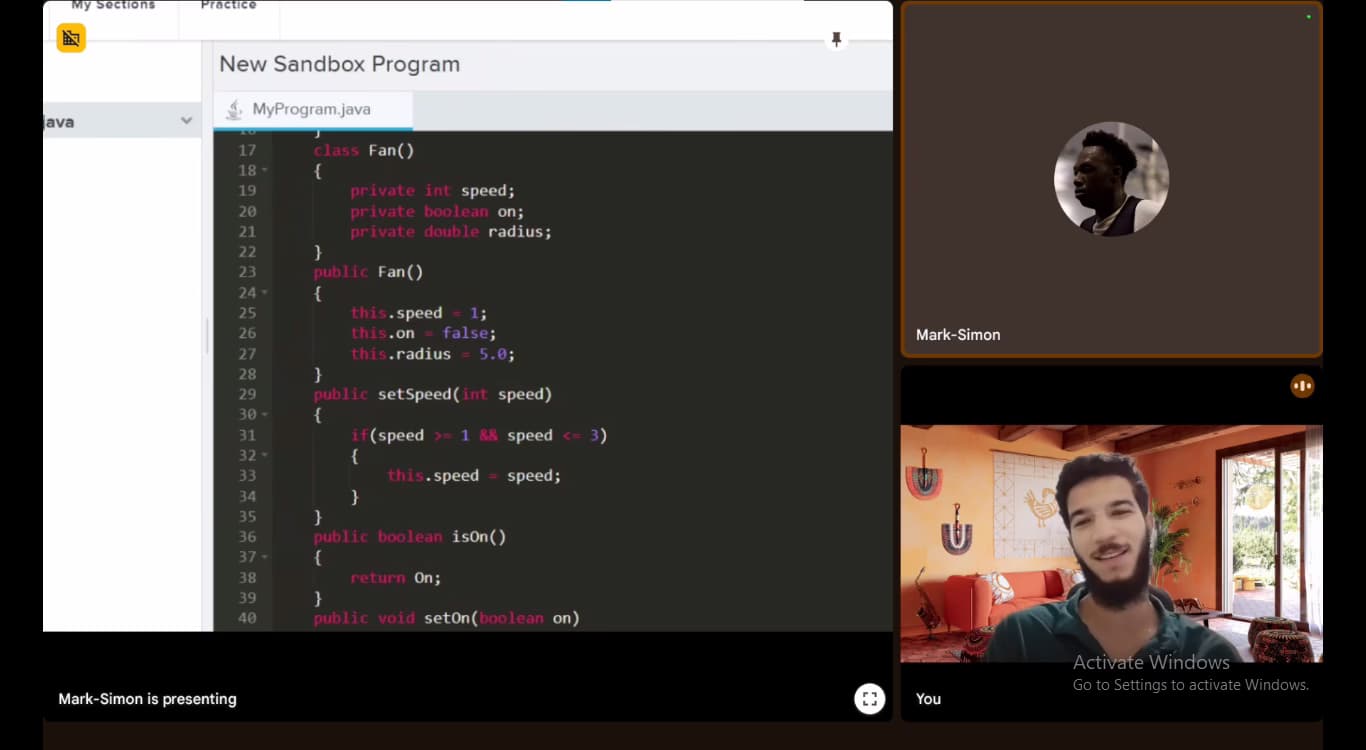




Show all photos
Abdulrahman Magdy
Bachelors degree
/ 55 min
Abdulrahman - Know your tutor
I am a dedicated and experienced Computer Science tutor with a strong academic background in Communication and Information Engineering, currently ranked at the top of my class. My technical foundation spans Artificial Intelligence, Machine Learning, Databases, and core Computer Science fundamentals, and I bring that depth into every lesson I teach. Over the years, I have tutored students at every level, from those writing their very first lines of code to advanced learners working through algorithms, data structures, and competitive programming challenges like USACO. I have guided students through topics such as prefix sums, BFS/DFS, greedy algorithms, Union-Find, and 2D geometry, always breaking complex ideas down into clear, manageable steps. My teaching style is built around active problem-solving rather than passive listening. I provide fully commented solutions, tiered hints that let students struggle productively before getting unstuck, and bug-analysis sessions framed as guiding questions so students learn to debug independently rather than just receiving the answer. I also create custom homework assignments, practice exams, and diagnostic assessments tailored to each student's curriculum and pace. Whether you are a complete beginner trying to understand your first "Hello World" program, a student preparing for AP Computer Science or a competitive programming contest, or someone aiming to build real project and job-readiness skills, I focus on building genuine understanding, not just getting through the syllabus. I am patient, detail-oriented, and committed to helping every student reach their goals with confidence.
Meet Abdulrahman
Programming tutor specialities

Upskilling

Paired coding

Exam prep

Project help

Assignment help

Code Optimization
 CoTutor
AI modules
Summary
Podcast
Quiz
Learnings
Flashcard
Spotlight
Zero Risk Guaranteed
15-days refund
Free tutor swap
No cancel fee
1-yr validity
24/7 support
Learner for programming class

High School students
Elementary School students
College students
Middle School students

Rated 5 stars consistently
Students appreciate how lessons simplify complex coding concepts.

Project-based learning for real-world skills
90% of students complete relevant coding projects.

Flexible lesson scheduling
90% of students find it easy to schedule lessons.
Your programming tutor also teaches

Artificial Intelligence
Computer Science
Databases
Machine Learning

Computer Science concepts taught by Abdulrahman
The class primarily focused on Python programming, where the Student worked on designing and implementing a Hangman game. They practiced translating an English algorithm into code, debugging display logic, managing guess tracking, and handling game termination conditions. The Tutor and Student also discussed the Student's upcoming math exam and collaboratively adjusted the schedule for future programming lessons.
Algorithmic Thinking: English First
User Experience: Input Normalization & Feedback
Dynamic Word Display Logic
Main Game Loop and Guess Validation
Hangman Game State Variables
The Student and Tutor collaborated on navigating and completing tasks within "Lesson Five Lab" of their Computer Science unit. They focused on understanding interactive lab procedures, including downloading and executing "Process Explorer" software, and discussed the importance of verifying software download sources.
Navigating Structured Lab Modules
Importance of Software Download Verification
Mastering Interactive Lab Prompts
Introduction to Process Explorer Utility
Sequential Lab Procedure Execution
The session primarily focused on Python dictionaries, with the Student practicing various operations such as initialization, modification, and looping. They solved several programming challenges using dictionaries, including frequency counters, a contact book, a voting system, a stock checker, and merging dictionaries. The Hangman game was assigned as homework to encourage independent problem-solving, and initial concepts for a Tic-Tac-Toe game board were explored.
Python Dictionaries: Initialization & Structure
Introduction to Game Board Representation (Tic-Tac-Toe)
Practical Dictionary Applications: Frequency Counters & Lookup Tables
Manipulating Dictionary Elements (Adding & Updating)
Iterating Through Dictionaries with `.items()`
The Student and Tutor reviewed foundational algebraic methods and absolute functions in preparation for an upcoming exam. They extensively practiced factoring and solving quadratic equations from homework, including those with complex solutions. Compensatory time for a missed session was scheduled for the upcoming Sunday and Tuesday classes.
Solving Quadratic Equations for Roots (Real & Complex)
Factoring vs. Solving Quadratic Equations
Factoring Quadratic Expressions (a=1)
Factoring Quadratic Expressions (a≠1) - The AC Method
The Tutor gained access to the Student's online university portal to assist with outstanding lab assignments for a Computer Science course. The session involved navigating the lab interface and a detailed demonstration of a lab focused on Windows Server configuration, including adding roles and features, and performing a server backup within a virtual machine environment. The plan is for the Tutor to complete these labs in upcoming sessions.
Virtual Lab Environment Essentials
Windows Server Role & Feature Installation (Example: Backup)
Multi-Factor Authentication (MFA) for Secure Access
The Student and Tutor worked on a Computer Science assignment, focusing on understanding and implementing the A* search algorithm in Python. They reviewed theoretical concepts, discussed detailed implementation steps for the algorithm and its heuristic function, and then practiced solving coding problems. Homework was assigned for the next session, covering problems 5.1 and 5.2.
Efficient State Representation and Pythonic Optimizations
Step-by-Step A* Algorithm Flow
Designing Heuristic Functions (h(n)) for Stack Sorting
A* Cost Function: f(n) = g(n) + h(n)
A* Search Algorithm Fundamentals
Teaching tools used by tutor

Git & GitHub

PyCharm

Jupyter Notebook

Google Colab

Visual Studio Code

Coding tutors on Wiingy are vetted for quality
Every tutor is interviewed and selected for subject expertise and teaching skill.
