
Sunal Pathania
🧬Biology with 🎨Creativity and 🧠Imagination ! I simplify complex IB, IGCSE, and AP Biology using vibrant, 🦠colourful diagrams.




Show all photos
Sunal Pathania
Masters degree
/ 55 min
About your science tutor
Hello! I am Sunal, and I am thrilled to help you explore the wonders of the living world. Biology is more than just a subject to me; it is a passion that I love to share. I am a dedicated educator who believes that learning should be an inspiring and personalized experience. Outside of teaching, I am an enthusiast of animation and creative projects, which often helps me bring a unique, visual energy to the way I explain complex biological processes. I hold a Master’s degree in Biology, which provides me with a deep and rigorous understanding of the field. My experience spans across all levels, from introducing younger students to the basics of life sciences to guiding undergraduate students through advanced biological theories. I am well-versed in a variety of international curricula, including Cambridge O Level, IGCSE, IB, and AP Biology. This background allows me to adapt quickly to your specific syllabus and academic requirements, ensuring our lessons are always relevant and effective. Biology can sometimes feel like a mountain of vocabulary and intricate systems, but it doesn't have to be overwhelming. My mission is to help you see the "big picture" so that the details fall naturally into place. Whether you are preparing for a major exam, struggling with a specific lab report, or simply want to improve your grades, I am here to provide the support and clarity you need. We will work at your pace, turning your challenges into strengths and building the confidence you need to excel.
Meet Sunal
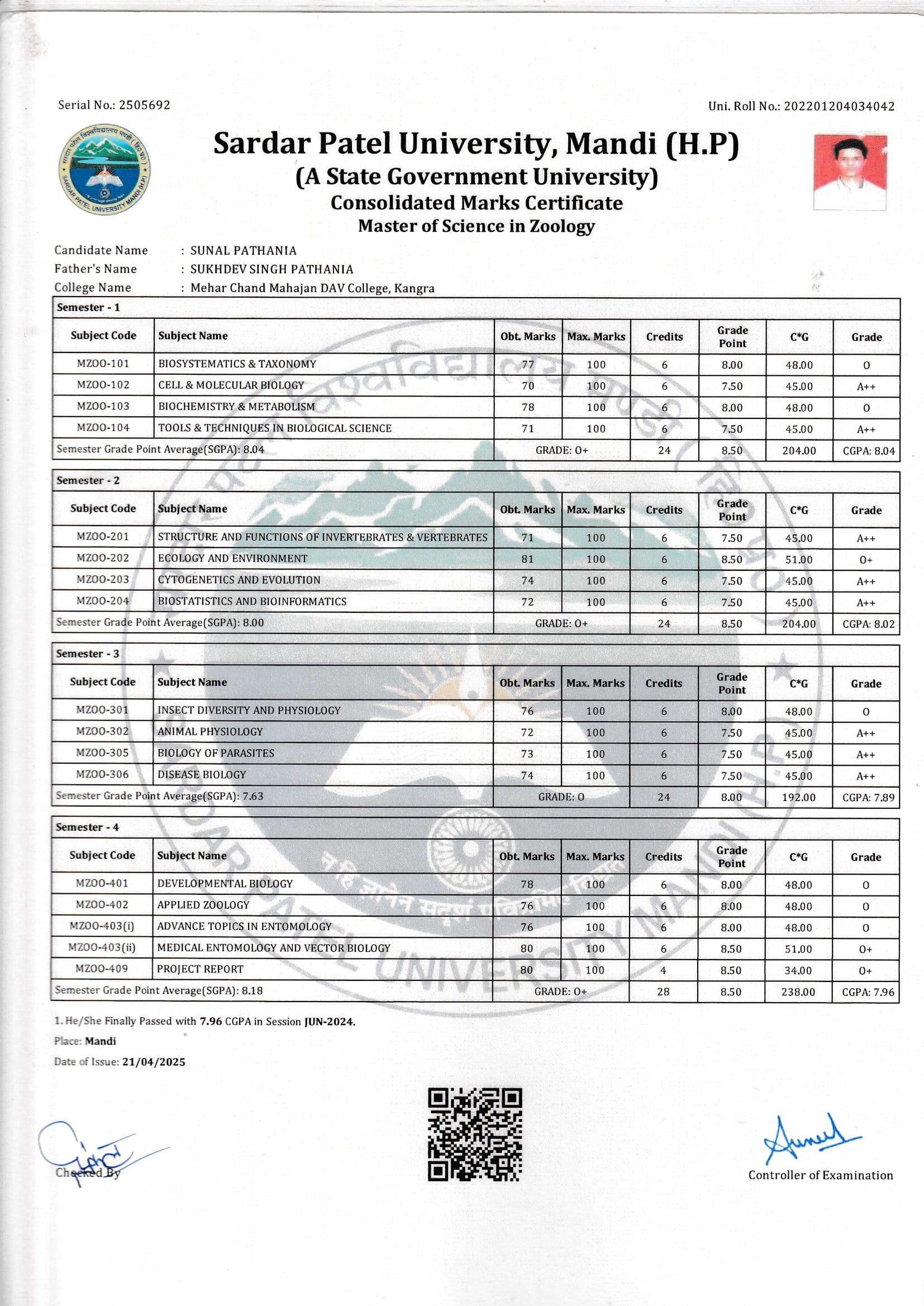
Sunal graduated from SARDAR PATEL UNIVERSITY, MANDI
Specialities of your science tutor

Provincial-specific curriculum (CA)

Advanced Placement (AP) Program (USA)

Personalized learning plans

Homework help
Career guidance

Science experiments

State-Specific Standards (USA)
Review sessions
Real world application
Visual learning

A-Levels (UK)

GCSE (UK)
 CoTutor
AI modules
Summary
Podcast
Quiz
Learnings
Flashcard
Spotlight
Zero Risk Guaranteed
15-days refund
Free tutor swap
No cancel fee
1-yr validity
24/7 support
Student types for science class

Elementary School students

Learning Disabilities

ASD
Middle School students

Anxiety or Stress Disorders

Home schooled

ADHD
High School students
Your science tutor also teaches
Earth Science
Life Science
Environmental Science
Astronomy
Health Science
School Science

School Science concepts taught by Sunal
The Student and Tutor reviewed different types of RNA and delved into the process of transcription, including the roles of RNA polymerase, promoter regions, and template strands. They also had an introductory discussion on translation and gene expression. The Student and Tutor scheduled a follow-up, potentially longer session for the next day to continue with the topic.
Transcription: DNA to mRNA
RNA Polymerase: The Master Enzyme
The Promoter Region: Starting Point
Template Strand: The DNA Blueprint
Elongation of the mRNA Chain
Termination of Transcription
The Student and Tutor reviewed nucleic acids (DNA and RNA) and then delved into the three types of RNA: mRNA, tRNA, and rRNA. They covered the structure and function of each, including processes like transcription, translation, mRNA splicing, and the role of codons and anticodons in protein synthesis. They briefly discussed revisiting the topics later if needed.
Transcription & Translation: Central Dogma Overview
Messenger RNA (mRNA) Structure & Splicing
Transfer RNA (tRNA) Function & Structure
Ribosomal RNA (rRNA) & Ribosomes
Codons and Anticodons: The Genetic Language
The session covered the structure and function of nucleic acids, focusing on nucleotides as monomers and the double helix structure of DNA. The Tutor explained DNA and RNA composition, base pairing, and the process of transcription and translation, including the role of mRNA. The student practiced identifying these concepts and their relationships.
The Central Dogma: Transcription and Translation
Nitrogenous Bases: Purines and Pyrimidines
DNA Polarity and Antiparallel Strands
Structure of a Nucleotide
Nucleic Acids and Nucleotides
The Student and Tutor reviewed molecular biology concepts including restriction enzymes, plasmid vectors, reporter genes, and DNA ligase. They practiced identifying outcomes of gene insertion and learned about artificial methods for bacterial transformation, with plans to continue the topic in future sessions.
Restriction Endonucleases and DNA Ligation
Reporter Genes and Identifying Recombinants
Bacterial Transformation
Plasmid Vectors and Gene Insertion
The Student and Tutor discussed the key components of plasmid vectors, including restriction sites, antibiotic resistance genes, origin of replication, and reporter genes. They practiced identifying these components and their functions, as well as understanding how restriction enzymes create sticky ends for gene insertion. The next steps will involve further exploration of these concepts.
Plasmid Vector Components
Restriction Endonucleases and DNA Cutting
Gene of Interest Insertion
Observable Traits for Plasmid Selection
The tutor and student reviewed the concept of recombinant plasmids, their components, and the process of bacterial transformation. They discussed the practical applications of this technology in producing proteins like insulin and explored the essential DNA sequences within a plasmid vector, including restriction sites and antibiotic resistance genes. The tutor also briefly introduced bioethics and demonstrated the use of petri dishes in bacterial culture.
Recombinant Plasmid
Transformation
Plasmid Vector DNA Sequences
Restriction Endonucleases and Ligases
Selection using Antibiotic Resistance
Teaching tools used by science tutor

Digital whiteboard

Quizzes

Presentations

Note taking
Interactive diagrams

Assessments

Flashcards

Science tutors on Wiingy are vetted for quality
Every tutor is interviewed and selected for subject expertise and teaching skill.