
Veena Hegde
Chemistry Tutoring for Strong Concepts and Academic Success, Chemistry Made Easy, Fun, and Stress-Free.
Loading...





Show all photos
Veena Hegde
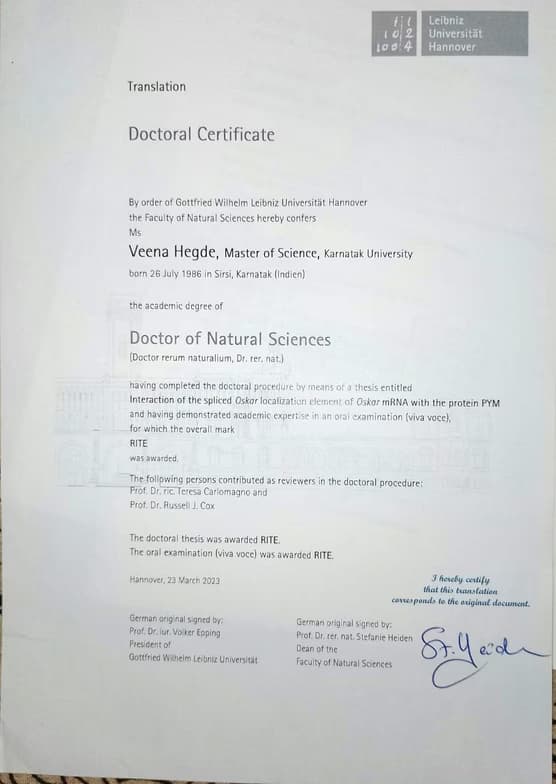
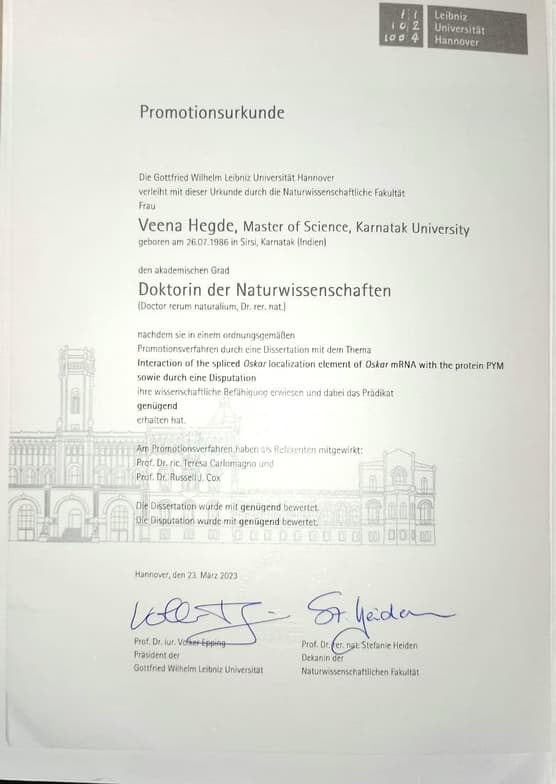
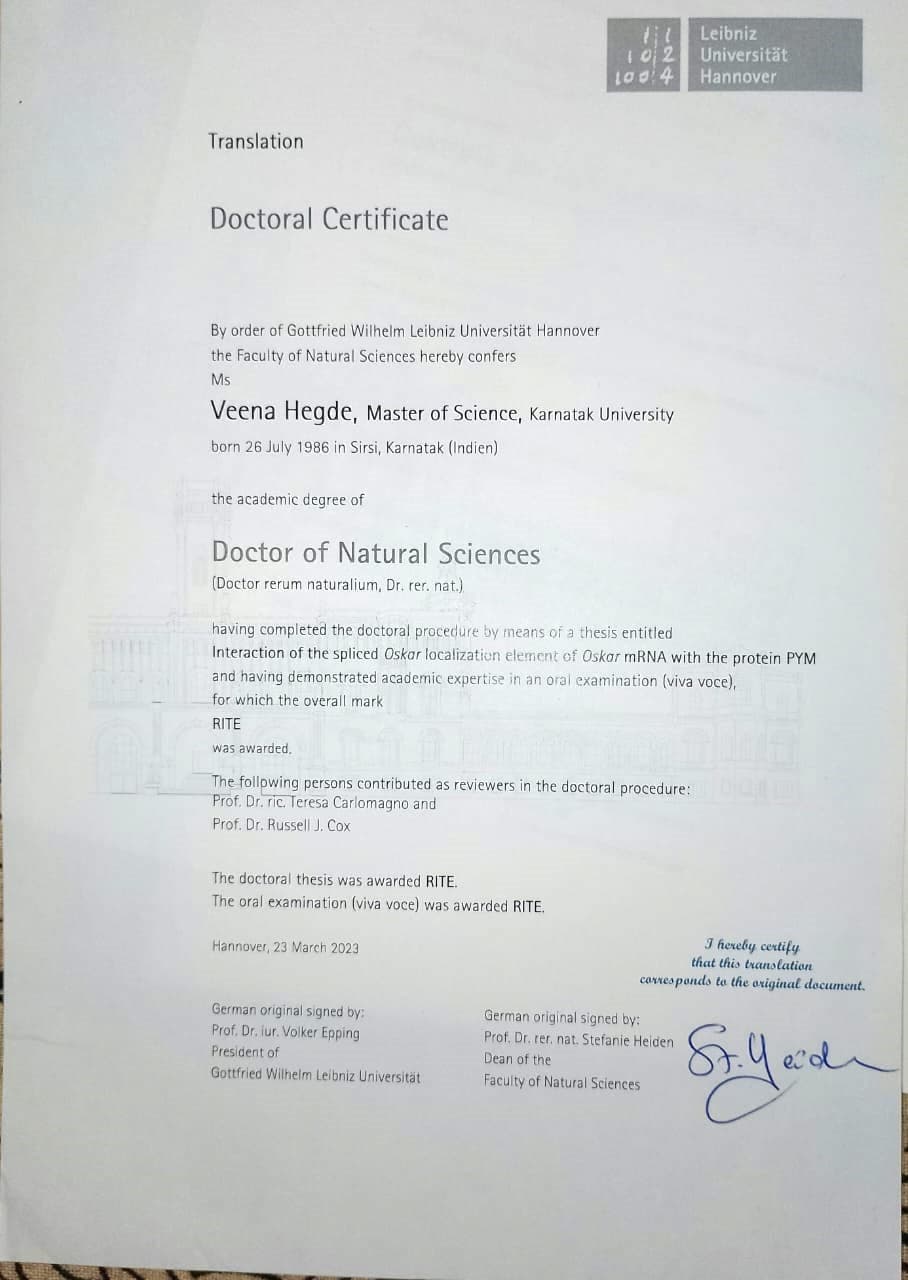
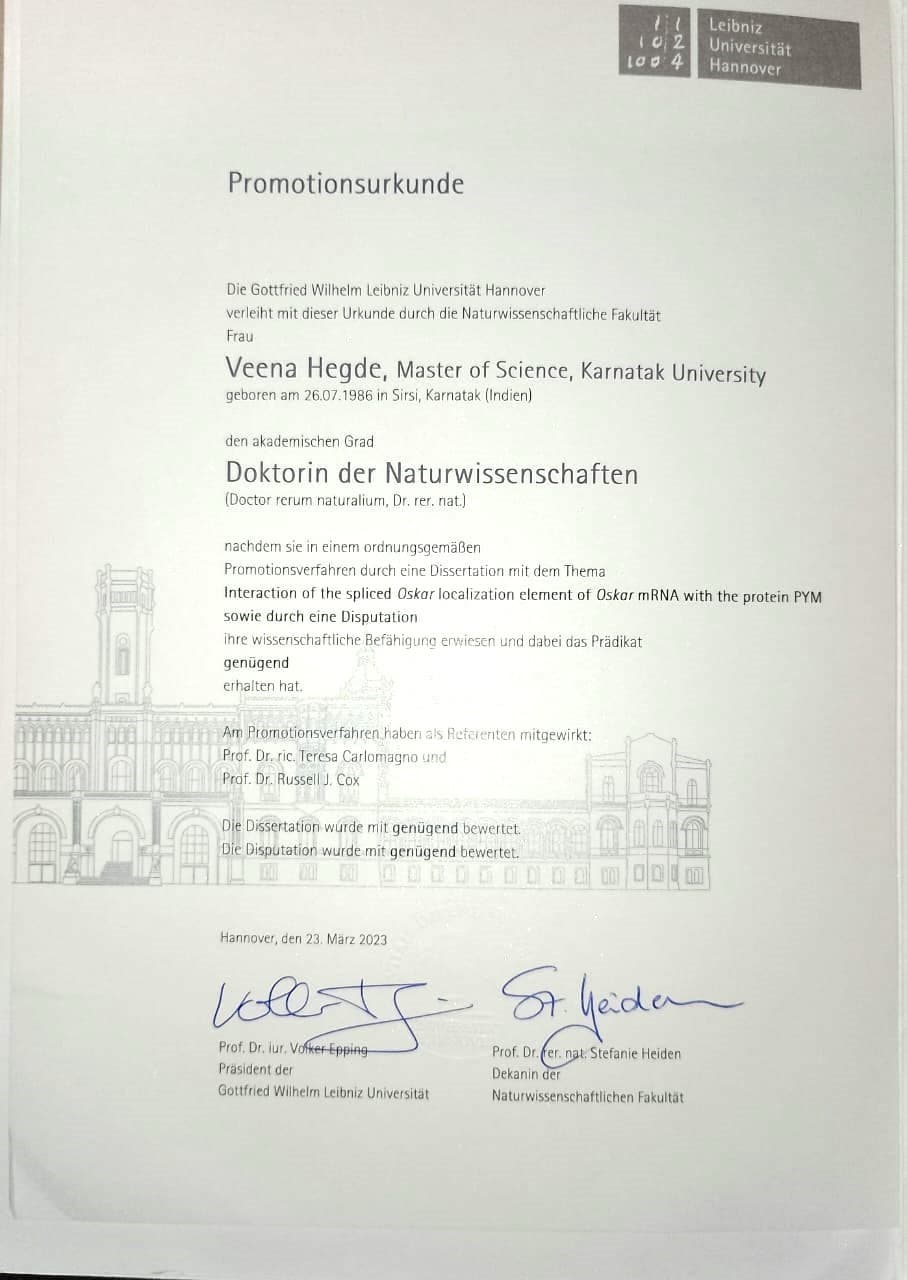
Doctorate degree
/ 55 min
Veena - About your AP tutor
I have over 5 years of experience teaching chemistry to students at school and college levels, helping them develop a strong understanding of core concepts in organic, inorganic, and physical chemistry. I focus on creating a supportive and engaging learning environment where students feel comfortable asking questions and exploring ideas. My teaching approach emphasizes clear explanations, step-by-step problem solving, and the use of visual aids to simplify complex topics. I design personalized lesson plans, assignments, and revision strategies tailored to each student’s goals, whether for exams or concept building. By integrating real-world examples and interactive discussions, I encourage critical thinking and curiosity. I also provide continuous feedback and progress tracking to ensure steady improvement, helping students build confidence and achieve consistent academic success in chemistry.
Veena graduated from Leibniz Universität Hannover
AP tutor test prep specialities

Mock Tests

Concepts learning

Test prep

Study Plans

Grade improvement
Teaching methodology
My chemistry teaching method focuses on building strong conceptual foundations while connecting theory to real-world applications. I use a step-by-step approach to explain complex topics in organic, inorganic, and physical chemistry, ensuring students understand the logic behind each concept. Visual aids, interactive problem-solving, and practical examples are integrated into every lesson to enhance engagement and retention. I adapt my teaching style to each student’s learning pace and goals, combining exam-oriented strategies with deep conceptual clarity. Regular assessments, feedback, and revision sessions help track progress and strengthen weak areas. By encouraging questions and critical thinking, I create a supportive learning environment where students gain confidence and develop strong analytical skills in chemistry.

.svg)
15 days Refund
.svg)
Free Tutor Swap

AP concepts taught by Veena
The tutor instructed the student on the principles of NMR spectroscopy, covering nuclear spin, magnetic fields, shielding/deshielding, chemical shift, and signal splitting (multiplicity). They discussed how to interpret NMR spectra to determine molecular structure and the differences between proton and carbon NMR, including practical considerations like deuterated solvents and Fourier transforms. The session also touched upon exceptions like aromatic anisotropy and introduced concepts like J coupling.
Shielding and Deshielding in NMR
Chemical Shift and Reference Standards
Signal Splitting and the n+1 Rule
Anisotropy and Aromatic Rings
NMR Spectroscopy: The Basics
The tutor and student extensively reviewed Infrared (IR) spectroscopy, covering fundamental principles, characteristic absorption bands for various functional groups (like C-H, C=O, O-H, N-H), and the impact of hydrogen bonding. They practiced identifying organic compounds by analyzing IR spectra in conjunction with molecular formulas and mass spectrometry data through multiple example problems.
Infrared (IR) Spectroscopy Basics
Vibrational Frequencies of Functional Groups
Hydrogen Bonding and IR Spectra
Signal Intensity and Molecular Structure
The Tutor and Student reviewed the principles and applications of Mass Spectroscopy and Infrared (IR) Spectroscopy. They covered topics like molecular ion identification, fragmentation patterns, isotopic effects, and vibrational analysis of functional groups using IR. The session concluded with plans to review common fragments and rearrangements in mass spectrometry and further practice IR spectral interpretation.
Mass Spectrometry: The Basics
Infrared (IR) Spectroscopy: Vibrational Analysis
Interpreting IR Spectra: Key Regions and Bands
Mass Spectrometry: Fragmentation and Interpretation
The Tutor and Student reviewed various organic reaction mechanisms, focusing on oxidation, reduction, substitution, elimination, and addition reactions. They specifically analyzed reactions of alkanes and alkenes, including Markovnikov's rule and the stability of carbocations, and discussed the importance of memorizing specific reagents and their functions for predicting reaction products. The Student will send lecture slides for future session planning.
Organic Reaction Types
Markovnikov's Rule and Carbocation Stability
Reagent Functions: Acids and Bases
Characteristic Reactions of Alkenes
The Tutor and Student reviewed concepts in organic chemistry, focusing on chirality, enantiomers, diastereomers, and assigning R/S configurations to chiral centers. They also discussed electronic configurations of atoms and the definition of electrical neutrality, with plans to send supplementary reading material on chirality.
Assigning Configuration (R/S)
Electrically Neutral Atoms
Electronic Configuration and Atomic Orbitals
Chirality and Stereoisomers
Practical aids used by AP tutor

AP Practice worksheets

AP Assessments

Digital whiteboard

Presentations
Effective AP classes

Weekend lessons

Mobile joining

Note taking

Open Q&A

Chat for quick help

AP tutors on Wiingy are vetted for quality
Every tutor is interviewed and selected for subject expertise and teaching skill.